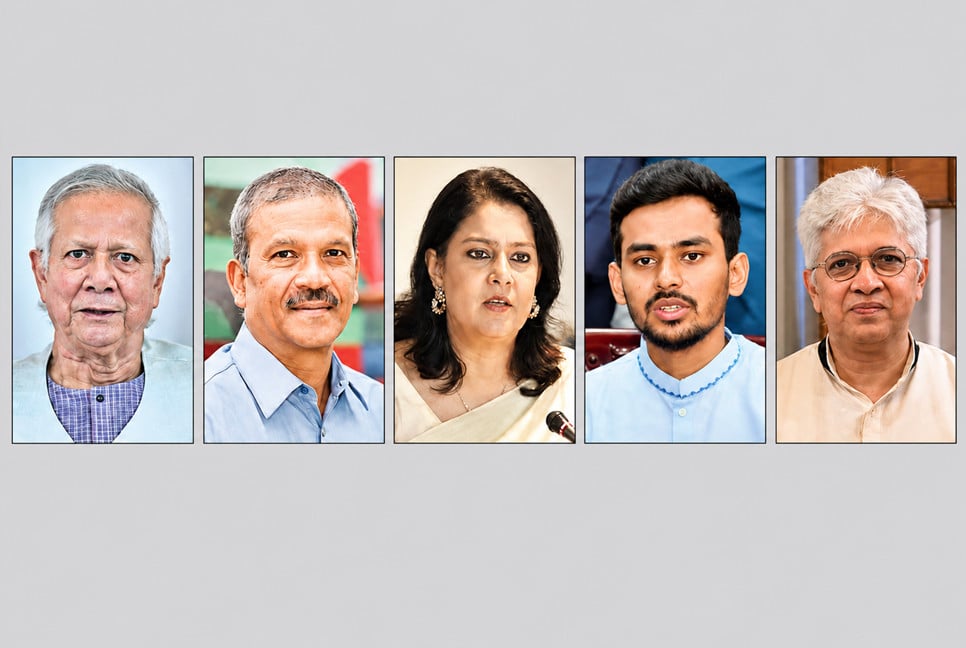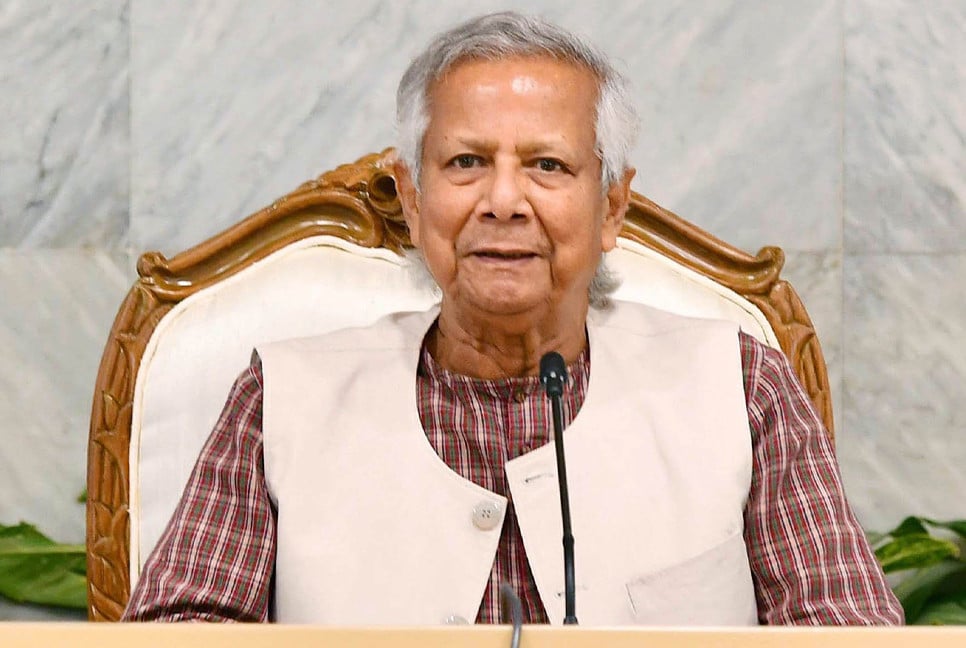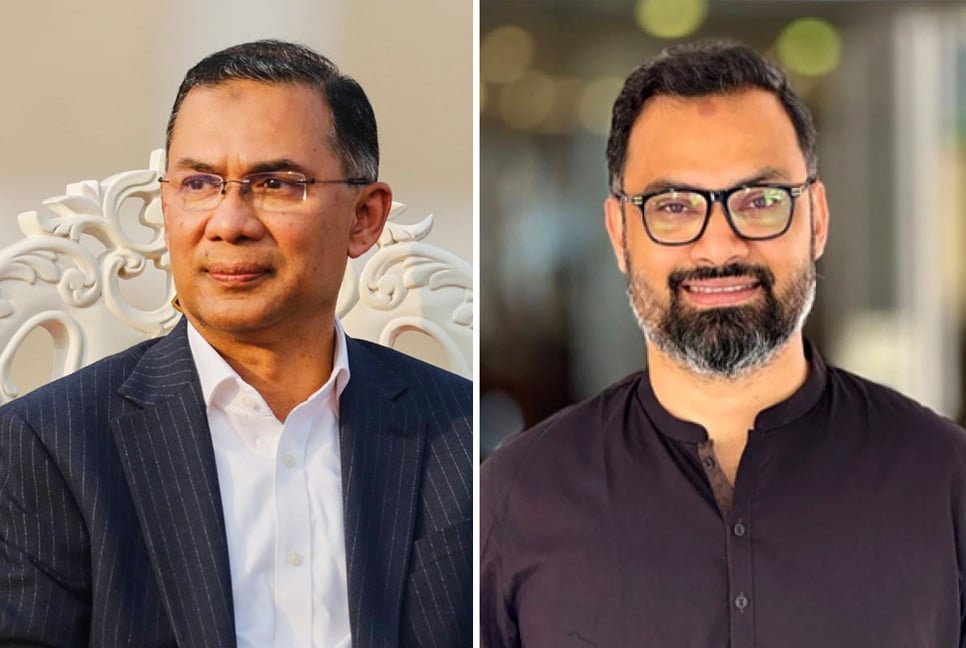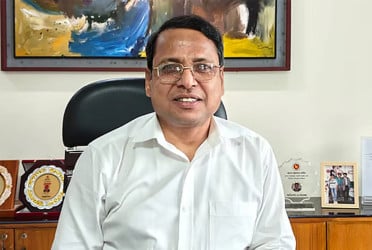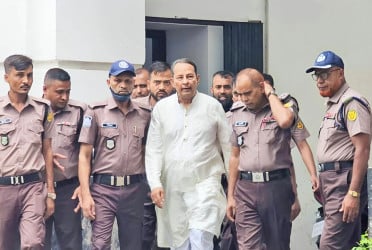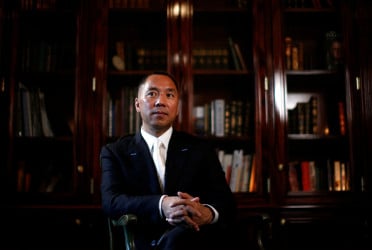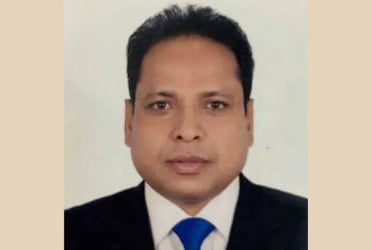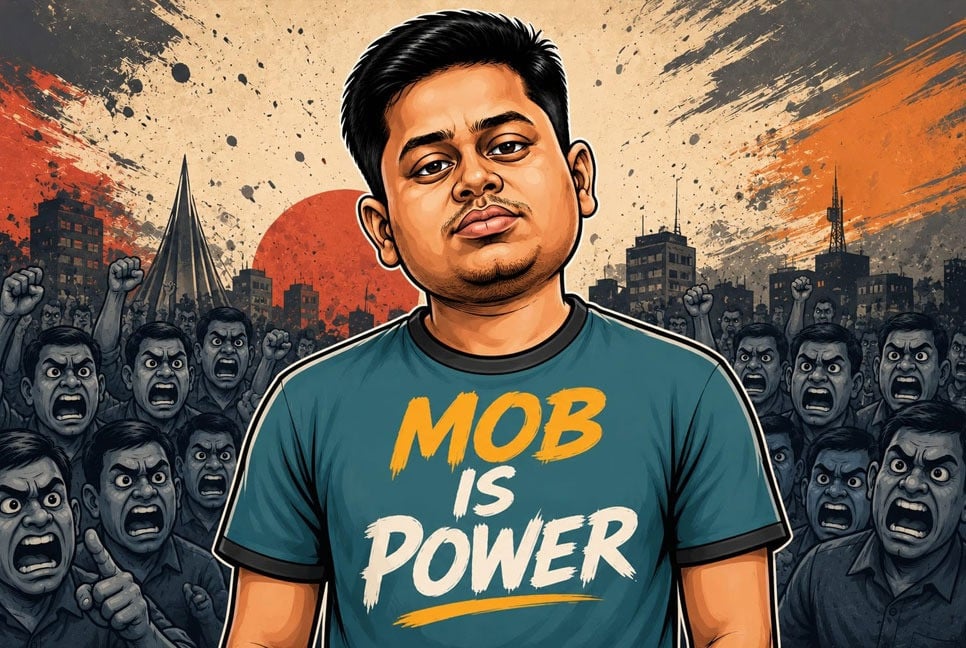
Hasnat Abdullah, an NCP leader and current Member of Parliament, emerged as one of the most prominent faces of the July movement, winning widespread support among students and young activists. However, nearly two years after the movement, he has become one of the country's most polarising political figures, facing persistent criticism over his rhetoric, political conduct and alleged promotion of "mob culture".
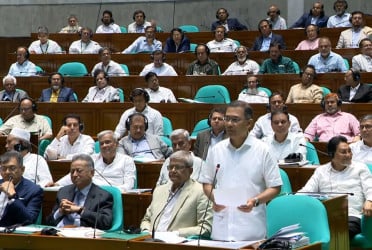
Abdullah recently returned from London, where reports suggested he had become embroiled in a police-related controversy linked to a "mob" issue. Upon his return, he quickly reignited debate in Parliament, once again drawing attention to his confrontational political style.
During the July movement, his youthful vigour and energetic presence won him widespread trust, prompting many people to join the protests. Young students, regarding him and his fellow organisers as something akin to the Pied Piper of Hamelin, left their homes and took to the streets. The movement succeeded, victory was achieved, and an interim government broadly in line with their aspirations was formed. Yet, everything changed almost overnight.
The movement had been driven by demands for individual liberty, tolerance of dissent, a discrimination-free and exploitation-free society, and the protection of students' rights. These ideals were subsequently abandoned in favour of a determined effort to suppress opposing views. The public gradually came to see just how forceful and confrontational Hasnat Abdullah could be. He became increasingly associated with threats and intimidation rather than measured action.
A new culture of disparaging journalists, members of the police and armed forces, civil society figures, artists, Baul singers and freedom fighters rapidly emerged. Abdullah did not hesitate to belittle even the armed forces, despite the fact that, whenever he found himself in difficulty or faced public anger, it was the military that came to his rescue.
Whenever Abdullah decides that someone needs to be "dealt with", he adopts an altogether different demeanour, delivering thunderous warnings and threats. Observing such behaviour, many ordinary people have begun to conclude that leaders like Hasnat Abdullah are no longer championing people's rights. Rather, these leadersmobilised people through the movement for their own political advancement and, having attained power, have sought to enjoy its privileges while undermining social values and eroding the historical, cultural and liberation-war heritage built up over generations.
Abdullah possessed considerable promise and qualities as a future leader, but that it did not take long for those qualities to be misused. Once significant power came into his hands, he began elevating his own views above all others. Guided by what they describe as a belief that "his own opinion is the best opinion", Abdullah is accused of using his leadership skills to elevate "mob politics" to an unprecedented level across the country.
As the son of a village mason, Hasnat Abdullah once viewed himself as part of the "proletariat". However, he quickly adopted a "bourgeois" mindset. He is also accused of developing an appetite for wealth and luxury, particularly cars and money. Resources and privileges appeared to come within his reach with remarkable ease, with allocations worth hundreds of millions of taka allegedly becoming available to him in no time.
Questioning such matters became difficult, as anyone raising concerns would allegedly face intimidation. Few people were willing to speak out because of a climate of fear surrounding "mob politics". Hasnat Abdullah and fellow NCP leader Asifinfluenced the allocation of Tk250 crore from the Cumilla District Council. It claims that after local District Council Administrator Mostak Mia inadvertently mentioned the matter publicly, the issue was quickly silenced following the pressure from Abdullah. It seems like former Prime Minister Sheikh Hasina's oft-cited remark about dealing with political opponents: "Two motorcycles, six thugs, and the opposition will be silenced."
Hasnat Abdullah, a leading proponent of "mob politics", eventually became an MP. However, he never distanced himself from such tactics. Instead, he came to regard mob mobilisation as a highly effective political instrument that could be used to silence opponents whenever necessary.
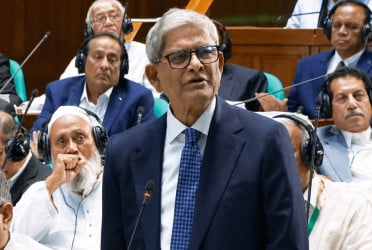
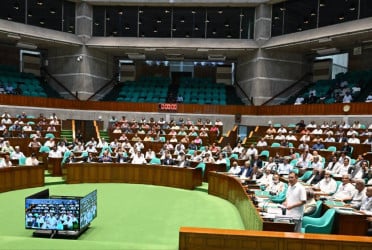
During the two years of the interim administration, Abdullah became adept at exerting pressure on government offices and institutions in order to achieve his objectives. Even after becoming an MP, he did not abandon these methods and, given the opportunity, sought to turn Parliament itself into another "Shahbagh". It notes that one of his colleagues had already been reminded from the Speaker's chair that Parliament should not be turned into "Shahbagh".
An analysis of political developments during the two years following the July movement suggests that although Abdullah played a leading role as a coordinator during the protests, allegations of promoting a “mob culture” and engaging in provocative behaviour emerged after he moved closer to the centre of power.
Despite having been expected to champion press freedom, allegations that he pressured media organisations to dismiss journalists and threatened a national daily after it published reports on his allegedly lavish lifestyle haveraised questions about his public image. Many observers also view the practice of labelling critics as “Awami collaborators” or “agents of India” as a form of intimidation that poses a threat to democracy.
Allegations that Hasnat Abdullah has incited “mob violence” have become a significant topic of discussion in the current political and social context. Although he spoke of justice during the protest movement, his subsequent actions have reflected a culture of mob politics or vigilante-style political behaviour rather than the principles of justice he once advocated.
The most serious allegation against Hasnat Abdullah is that he and his followers do not directly attack political opponents or critics but instead seek to isolate them socially through “labelling”. Analysts contend that individuals whom he or his supporters dislike are quickly branded as “Awami collaborators”, “agents of India”, or “fascist forces”. Such labels generate public hostility towards those individuals, indirectly creating conditions conducive to mob violence or vigilante-style attacks.
Rather than advocating for press freedom, Hasnat Abdullah has been accused of exerting pressure on media professionals. When particular news outlets or journalists publish reports concerning his allegedly lavish lifestyle or alleged corruption, instead of pursuing legal remedies, efforts are made to incite hostility against them through social media campaigns. As a result, the targeted journalist or media organisation allegedly becomes subjected to social harassment and, in some cases, is eventually compelled to withdraw the report, regarding this as an indirect method of silencing the media through “mob tactics”.
Statements made by Hasnat Abdullah regarding political opponents, particularly leaders and activists of the BNP and other parties in Cumilla and elsewhere, have been viewed by many as provocative. When he declares at public rallies that certain individuals or groups should have no space to conduct political activities, his supporters or local activists interpret such remarks as justification for intimidation. Although he may not directly employ organised enforcers, the rhetoric of his speeches allegedly encourages grassroots supporters to engage in “mob violence”.
One of the defining characteristics of mob violence is taking the law into one’s own hands. Hasnat Abdullah has been accused, in many instances, of encouraging a culture of summary justice or immediate punishment in the name of the movement, rather than following due legal process. Human rights activists believe that his alleged tendency to use his influence in various government institutions or administrative offices to have individuals dismissed or harassed is fuelling a culture of mob politics.
A major allegation of inconsistency against Hasnat Abdullah is that, on the one hand, he publicly denounces opposition political leaders and activists as “fascists” or “corrupt, money-taking groups” and is accused of inciting mob behaviour, while, on the other hand, he has himself been accused of secretly reaching understandings with controversial Awami League figures, including the former mayor of Chattogram.
This apparent double standard demonstrates that “mob violence” serves as a political instrument for him—one that can be used to conceal his own alleged wrongdoing or weaknesses.
The allegations that coordinators such as Hasnat Abdullah have incited “mob violence” are not confined merely to questions of individual conduct. According to a significant number of political analysts, the failure of the interim government to take effective action, coupled with its alleged tacit support, has been a major factor behind the expansion of this trend.
Whenever incidents of mob violence have surfaced in different parts of the country, the government has often remained silent rather than taking firm action to suppress them. Following allegedly provocative remarks by Hasnat Abdullah and other leaders, incidents of violence and intimidation have reportedly occurred at the grassroots level, yet the administration has seldom been seen taking any visible legal measures. This inaction has conveyed the message to the public that the practice of such a “mob culture” may enjoy official patronage.
As one of the principal organisers of the July movement, Hasnat Abdullah was effectively placed beyond accountability by the government. Because neither he nor his followers were allegedly required to answer for their actions, he gradually came to regard himself as being above both the law and public criticism. The “soft corner” or special indulgence shown by government policymakers encouraged leaders such as Abdullah to become increasingly reckless.
When major political parties such as the BNP held press conferences or issued ultimatums in response to Abdullah’s remarks, the government or the administration should have sought an impartial resolution to the matter. However, the government at the time failed to play any mediating or restraining role. Such indulgent behaviour by the authorities heightened political tensions and further encouraged mob violence.
Political analysts believe that such behaviour poses a serious threat to the democratic system for several reasons.
First, it fosters a culture of fear. When people become more inclined towards aggression than rational debate, healthy political discourse becomes impossible.
Second, it undermines the rule of law. When mob violence becomes commonplace, the effectiveness of the judiciary and law-enforcement agencies is diminished.
Third, it erodes public trust in the coordinators. Many students and ordinary citizens who placed their trust in them during the July movement have become deeply disappointed and frustrated by the prevalence of this mob culture.
Whenever questions have been raised in the media or political arena regarding Hasnat Abdullah’s controversial lifestyle, alleged abuse of power, or alleged promotion of mob culture, the government has tended to treat these matters as isolated incidents. However, members of civil society and political analysts argue that these are not isolated occurrences but rather part of a deliberate political strategy in which mob violence is used to suppress opponents.
The government’s indulgence has placed Hasnat Abdullah in a position where he now feels sufficiently emboldened to make provocative remarks against political parties, government agencies, institutions and even the armed forces.
In broad terms, the central allegation against Hasnat Abdullah is that, while he once championed an anti-authoritarian stance during the movement, he is now accused of using the very power he once opposed to suppress dissent and employ mob culture as a political instrument.
Bd-pratidin English/TR