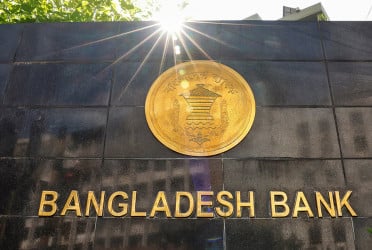
Bangladesh Bank is set to keep its benchmark policy rate unchanged at 10% when it unveils its Monetary Policy Statement (MPS) for the first half of FY27 on Tuesday, reinforcing its commitment to taming stubborn inflation despite growing concerns that prolonged high borrowing costs are stifling private investment and slowing economic recovery.
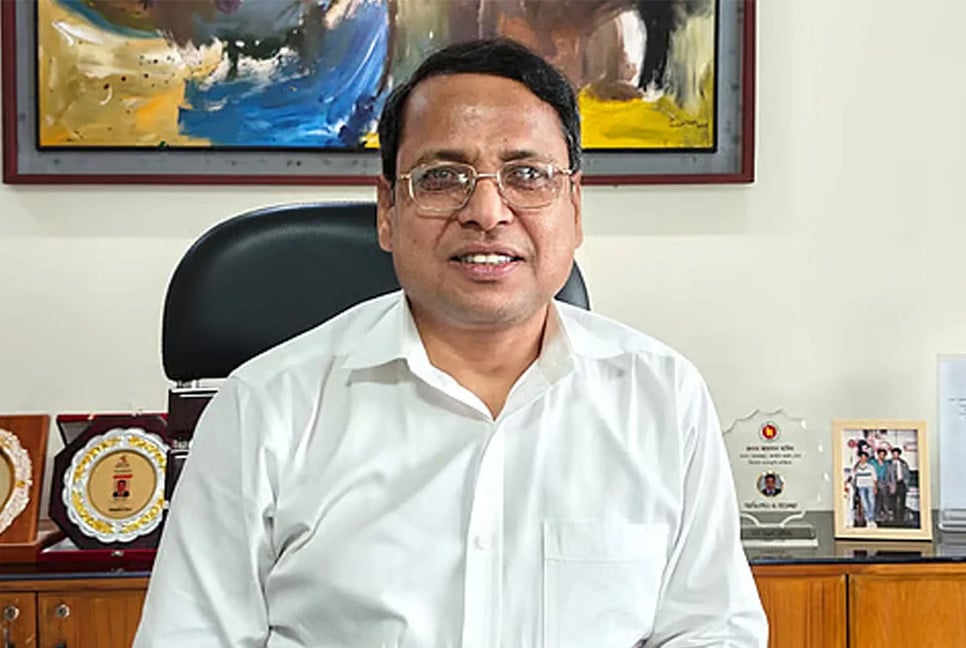
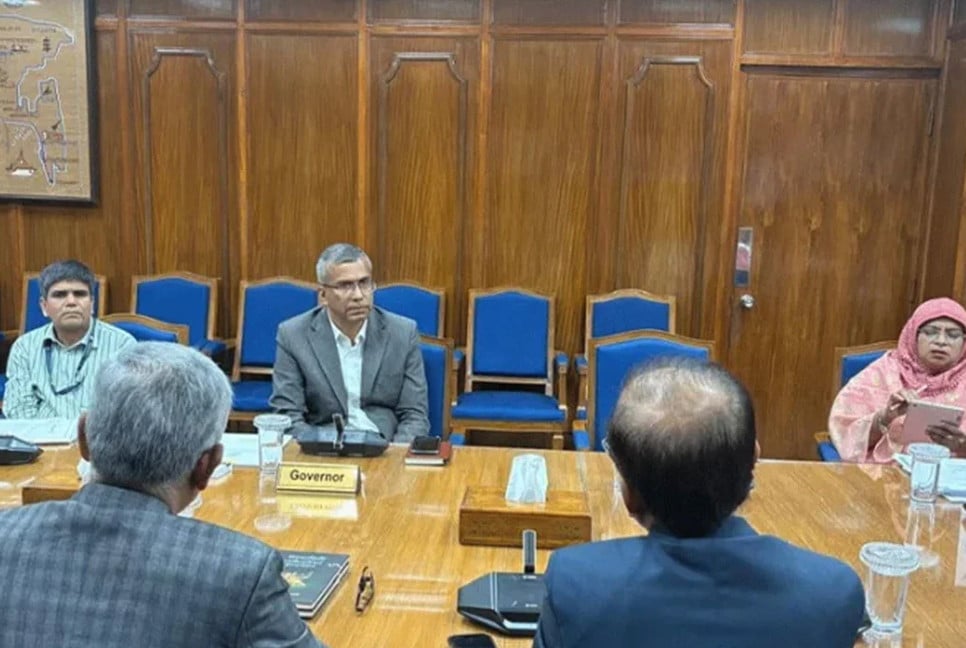
Governor Mostaqur Rahman is scheduled to announce the July-December monetary policy at 3pm after it received approval from the Bangladesh Bank board.
Officials familiar with the policy said the central bank is unlikely to lower the benchmark rate until inflation shows a sustained decline towards the government’s target of 7.5%.
The decision is expected to extend Bangladesh Bank’s tight monetary stance even as the government pursues an ambitious agenda of 6.5% GDP growth, higher private investment and stronger job creation.
Inflation remains the central bank’s biggest concern.
According to the Bangladesh Bureau of Statistics (BBS), point-to-point inflation rose to 9.42% in May, the highest since February 2025.
Food inflation stood at 9.06%, while non-food inflation climbed to 9.71%, indicating that price pressures have spread across the economy.
Against this backdrop, the MPS is expected to reaffirm price stability as the central bank’s primary objective, while seeking to revive investment through stronger private-sector credit growth.
However, economists question whether meaningful investment can recover under the prevailing high-interest-rate environment.
The FY27 budget aims to accelerate economic growth through higher private investment and employment generation, backed by nearly Tk60,000 crore in incentives and other policy support measures.
The policy or repo rate – the benchmark at which commercial banks borrow from the central bank – has remained at 10% since October 2024.
Although Bangladesh Bank is expected to raise its private-sector credit growth target in the new MPS in anticipation of a gradual recovery in business activity, actual lending continues to lag well behind expectations.
The previous monetary policy revised the June target for private-sector credit growth upward to 8.5% from 8%. Yet Bangladesh Bank data show credit growth slowed further to just 4.7% in April.
Bankers and analysts attribute the slowdown to high borrowing costs, rising production expenses, weak business confidence, policy uncertainty and cautious investment decisions by entrepreneurs.
Economists remain divided over whether Bangladesh Bank should maintain its restrictive monetary stance.
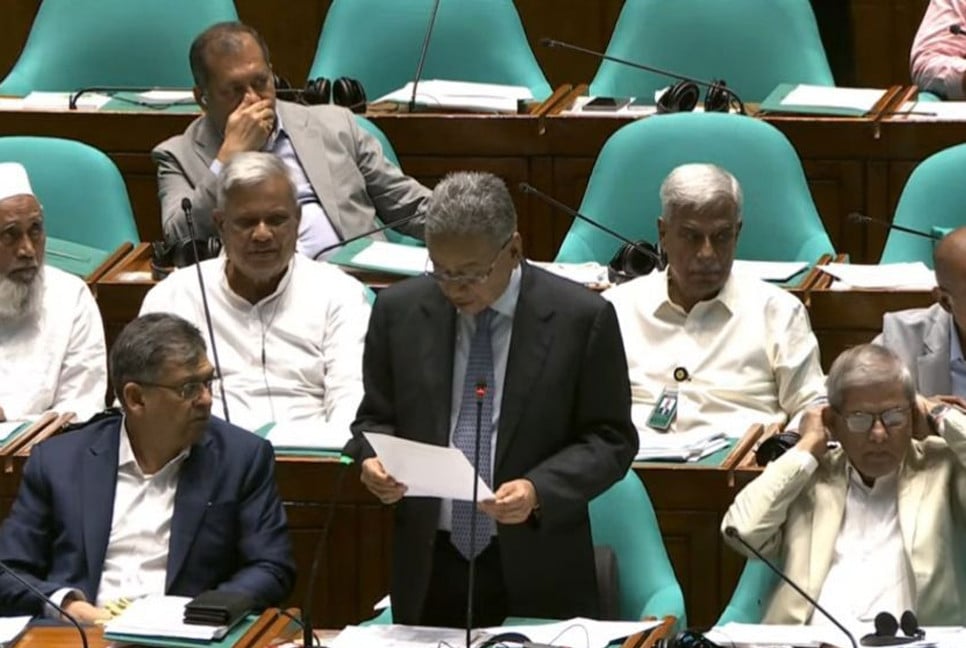
Md Ezazul Islam, director general of the Bangladesh Institute of Bank Management (BIBM), supports retaining the 10% policy rate, arguing that lowering interest rates while the government is pursuing an expansionary fiscal policy could further fuel inflation.
He said Bangladesh Bank had already provided targeted liquidity support and refinancing schemes, offering indirect monetary accommodation without cutting the benchmark rate.
Former Bangladesh Bank chief economist Mustafa K Mujeri, however, argued that inflation cannot be controlled through monetary policy alone.
He told the media that tax reforms, stronger market oversight, greater competition and tougher action against market manipulation are equally essential to ease price pressures.
“If inflation remains persistently high despite elevated interest rates, policymakers should reconsider relying primarily on the policy rate,” he said, calling for fiscal and structural reforms alongside monetary measures to encourage private investment and economic activity.
Bangladesh Bank’s “Monetary Policy Review 2025” presents a challenging global environment that supports a cautious policy approach.
The review cites escalating tensions in the Middle East, higher global energy and commodity prices, US tariff-related trade disputes and the prolonged Russia-Ukraine war as major risks to inflation and global growth.
Rising geopolitical tensions, it says, have heightened inflation expectations for 2026, particularly for commodity-importing economies such as Bangladesh.
The report also warns that excessively aggressive monetary tightening could weaken consumer confidence, dampen business sentiment, discourage investment and increase downside risks to economic growth.
Many advanced economies have therefore adopted a more cautious approach.
The United States cut its policy rate by 25 basis points in the final quarter of 2025 and has kept it unchanged since, with further easing expected by 2027. Japan is gradually normalising interest rates, while the United Kingdom is expected to make modest rate cuts during 2026 as growth slows.
The euro area maintained its policy rate at 2.0% through late 2025 and early 2026, although the latest IMF outlook projects a cumulative 50-basis-point increase during 2026.
Among emerging economies, China lowered its policy rate by 10 basis points to 3.0% between March 2025 and March 2026. Malaysia reduced its benchmark rate by 25 basis points, while India also cut its policy rate by 25 basis points to 5.25%.
Bangladesh Bank believes the near-term outlook remains highly uncertain because of possible supply-chain disruptions and higher energy prices, including risks to oil shipments through the Strait of Hormuz.
The review projects slower global growth in 2026 while inflation remains elevated due to higher commodity and energy prices, although price pressures are expected to ease gradually in 2027 if supply conditions improve.
As a commodity-importing economy, Bangladesh remains vulnerable to higher import costs, persistent inflation, pressure on the current account and weaker demand in major export markets.
Nevertheless, the central bank expects political stability following the 2026 general election, continued financial-sector reforms, stronger private investment, robust remittance inflows, recovering global trade and improving domestic demand to support economic recovery.
It concludes that prudent monetary and fiscal policies, exchange-rate stability, stronger foreign exchange reserves and accelerated structural reforms will be essential to shield the economy from external shocks, while improving the business climate, diversifying exports, creating jobs and strengthening the financial sector will be critical for sustaining long-term, inclusive growth.
Courtesy: Daily Sun.
Bd-pratidin English/TR