Thank you, home minister.
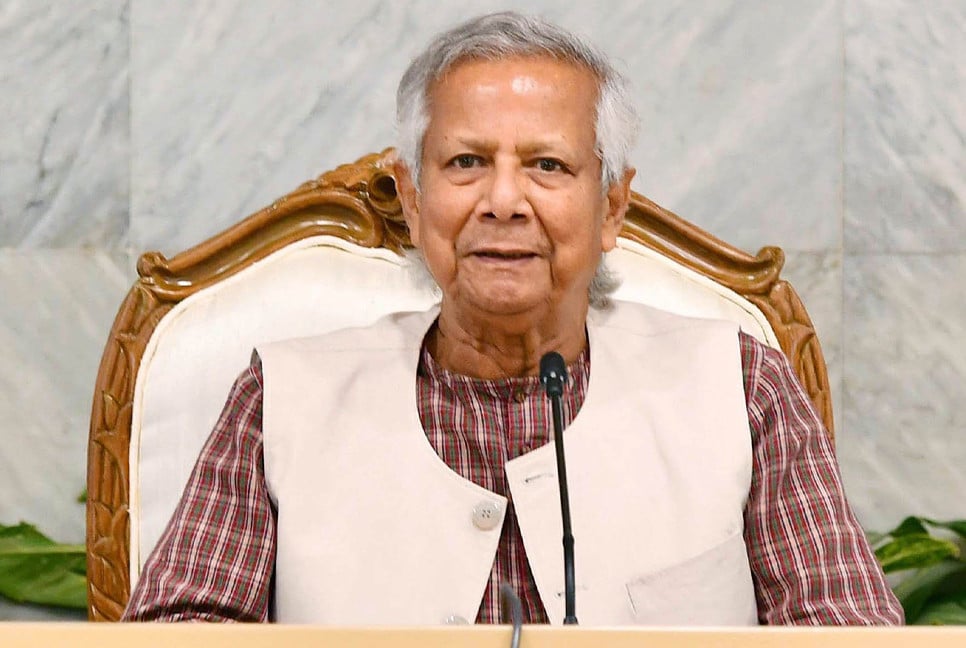
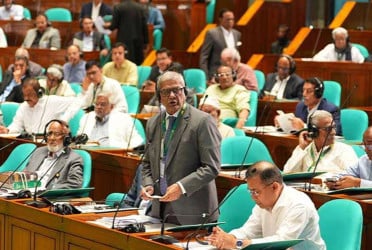
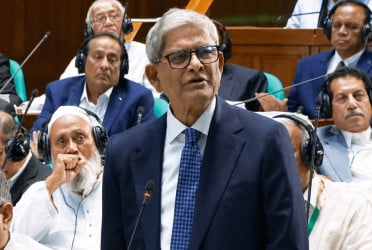
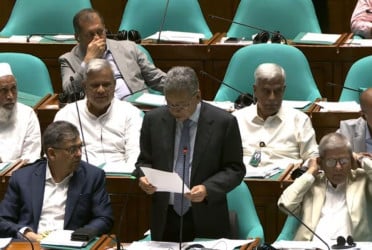
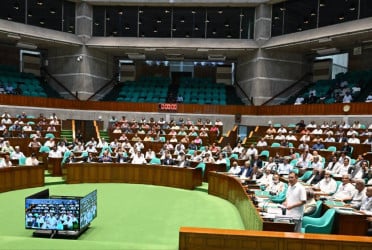
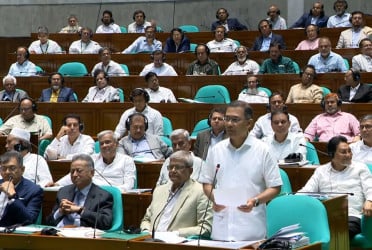
Last Sunday, during the budget session of the national parliament, the home minister gave voice to what many believe to be a widely held public sentiment. He stated that the highest level of corruption occurred during the tenure of the interim government and that widespread allegations of irregularities must be investigated. According to him, such an investigation could be based on the findings of the White Paper report led by Debapriya Bhattacharya.
After a year and a half under the leadership of Prof Yunus, the scars of the interim government’s alleged misdeeds and misrule are now visible across the country. From politics to the economy, foreign policy to defence strategy, law and justice, education, healthcare, culture and sports—few sectors have escaped what many perceive as the damaging legacy of the Yunus administration.
A close examination of Yunus’s governance suggests that he and his associates appeared to be engaged in dismantling the country’s institutions. Much like a gang of looters and arsonists descending upon a village, setting it ablaze and plundering its wealth, the Yunus clique, it is alleged, did the same to Bangladesh over the past eighteen months.
Following 5 August 2024, the leaders of the Anti-Discrimination Movement selected Prof Muhammad Yunus as Chief Adviser. The people of Bangladesh hoped that, under the leadership of the Nobel Peace Prize laureate, the country would embark on a new journey. They expected peace and order to be restored, the rule of law to prevail, and human dignity and rights to be upheld. Instead, many believe that shortly after assuming office, Yunus’s carefully cultivated image began to unravel. The man once celebrated as a messenger of peace came to be viewed by his critics as presiding over an administration that divided the nation and squandered its resources. Over the past eighteen months, the interim government, they argue, excelled in two things: dividing the country and plundering the nation’s wealth.
The events of 5 August 2024 symbolised an unprecedented moment of political unity in Bangladesh. Political parties, regardless of affiliation, stood alongside ordinary citizens. The July Mass Uprising demonstrated the extraordinary power of that unity. Yunus’s mandate was straightforward: to oversee free, fair and impartial elections at the earliest opportunity and transfer power to the people’s elected representatives. Instead, critics argue that his administration sowed political division throughout the country. Under the banner of reforms, it systematically fostered political distrust and disunity, allegedly to prolong its stay in power. What was presented as reform gradually became, in the eyes of many, a prolonged political drama that left deep scars on the country.
The home minister rightly observed in parliament that all stakeholders endorsed the July Charter in the interests of both the nation and the forthcoming elections.
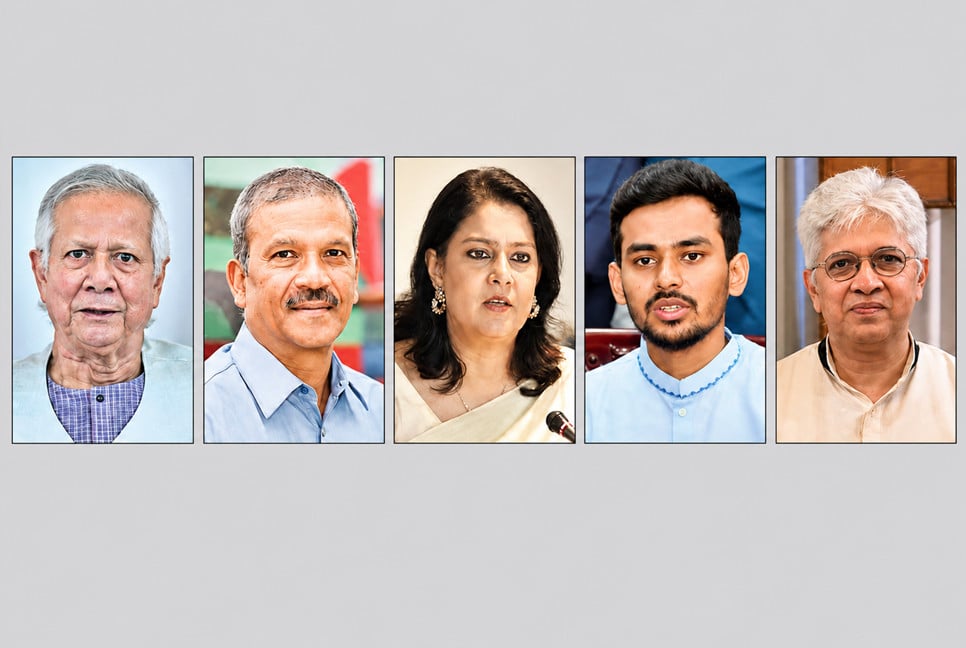
While political attention was diverted towards the reform agenda, allegations of corruption involving the Yunus administration and several advisers gained increasing prominence. Transparency International Bangladesh reported that bribery reached record levels during the Yunus era. Swiss banking records reportedly showed an unprecedented volume of deposits during the same period. Allegations concerning Yunus’s own conduct have already been widely reported in the Bangladeshi media and need not be repeated here. Nor, critics argue, was Yunus alone. Advisers including Asif Nazrul, Syeda Rizwana Hasan and Adilur Rahman Khan have also faced allegations of corruption and financial misconduct. When an adviser is accused of drawing nearly Tk1 crore from public funds for personal medical treatment within eighteen months, it raises serious questions about the ethical standards of the interim administration.
Where, critics ask, did corruption not occur under the interim government? From judicial appointments to the posting of government officials, allegations of corruption surfaced across the administration. Controversies ranging from the procurement of measles vaccines for children to the police uniform scandal have become enduring symbols of what opponents describe as systemic corruption. This combination of corruption, irregularity and authoritarianism appeared to redefine governance itself—as though attaining power meant acquiring a licence to abuse it. Assume office, engage in corruption, sell out national interests, launder money abroad, and then lecture the public about morality—this, critics contend, became the defining ethos of the Yunus administration.
Such a precedent poses a serious challenge to democratic governance and the rule of law. The Yunus government, critics argue, not only engaged in widespread corruption but also undermined the institutions of the state by disregarding established laws, procedures and administrative norms. This is precisely why an impartial investigation into the administration’s eighteen-month tenure is essential.
The home minister, a distinguished former student of the Faculty of Law at the University of Dhaka, understands the foundations of the rule of law. Now entrusted with maintaining law and order, he has no doubt gained first-hand insight over the past four months into the obstacles to restoring justice and strengthening public confidence in the legal system.
One of the cardinal principles of the rule of law is that every crime must be investigated and every offender held accountable. A criminal is defined not by status or position but by criminal conduct. The Constitution of Bangladesh clearly states that all citizens are equal before the law. That constitutional principle can only be upheld if influential figures—including Prof Yunus and his advisers, should credible evidence warrant it—are subjected to the same legal scrutiny as everyone else.
In carrying out his responsibilities, the home minister must recognise that allowing one injustice to go unpunished weakens the moral authority to prosecute others. Legal scholars have long argued that impunity breeds further wrongdoing. If the allegations surrounding the Yunus administration remain unresolved, it risks sending the message that those in power can act with impunity. Such a perception would erode public confidence in democratic institutions and encourage opportunism within government itself. Some may well conclude that if an entire administration can escape accountability for large-scale corruption, lesser abuses will also go unpunished.
It should also be remembered that Bangladesh has reinstated the caretaker government system. Although Yunus’s administration was officially described as an interim government, it functioned in many respects as a caretaker administration. If the alleged irregularities of that period are left unexamined, future caretaker governments may be tempted to follow the same path.
Critics further argue that Yunus and his advisers have tarnished the reputation of civil society. After eighteen months of their rule, many ordinary citizens now view the term “civil society” with scepticism, associating it with self-interest and corruption rather than public service. For that reason alone, a thorough and impartial investigation into the conduct of the Yunus administration would serve not only the interests of justice but also the credibility of civil society itself.
Last Sunday, the home minister spoke in a manner that many believe reflected the voice of the nation. Before the election, the BNP made three major commitments to the people: restoring the rule of law, adopting zero tolerance towards corruption, and ending the waste of public resources. Fulfilling those commitments requires a comprehensive investigation into the alleged misconduct of the Yunus administration.
According to its critics, the rule of law was seriously undermined during the Yunus era through mob violence, lawlessness and widespread looting. Restoring confidence in state institutions therefore requires confronting the legacy of that period. Likewise, combating corruption demands a thorough examination of the alleged abuses committed during those eighteen months.
The government has already initiated the process of establishing the Anti-Corruption Commission. It is to be hoped that the new commission will be constituted without delay. One of its first responsibilities should be to investigate the allegations made against Prof Yunus and his advisers.
The Yunus administration has also been accused of extensive waste of public funds. Allegations ranging from Prof Yunus’s frequent use of government aircraft to the religious affairs adviser’s medical expenses of Tk82 lakh have been cited as documentary evidence of the misuse of state resources. Without properly investigating such matters, it will be difficult to introduce effective safeguards against future waste.
For the present government to fulfil its commitments, it must ensure a comprehensive and impartial investigation into all allegations of irregularities during the tenure of the Yunus administration. There is no credible alternative.
Audite Karim is a writer and playwright. Email: [email protected]