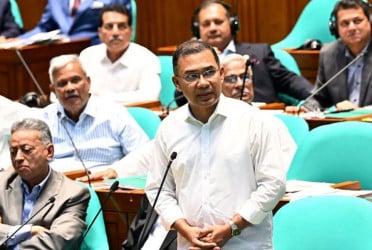
It has not even been four months since the BNP government, led by Tarique Rahman, assumed power following the 13th National Parliamentary Election. Yet, a sense of restlessness is already visible within Jamaat-e-Islami. In an attempt to destabilize the country and grab power, Jamaat—the defeated force of '71—is announcing new political programs one after another. At a time when the country is facing various crises and a new government is literally standing on ruins trying to rebuild the nation, Jamaat is attempting to create a political crisis by making statements like "the government cannot be given any more time" or "we must prepare for another July Revolution."
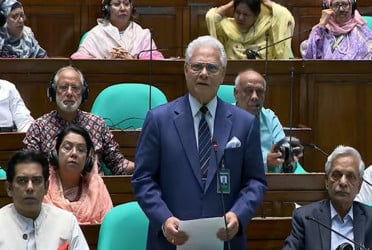
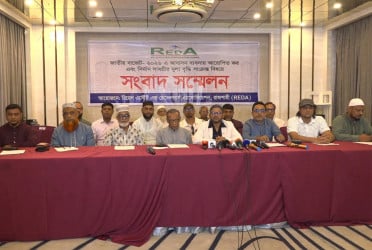
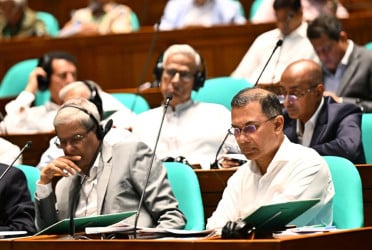
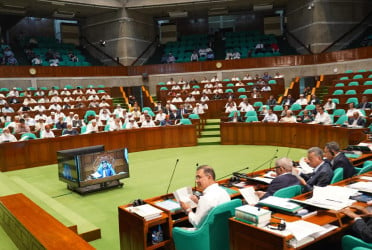
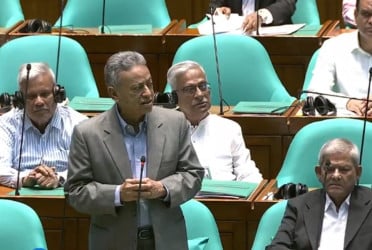
In the last four months since the parliamentary election, the Jamaat-led 11-party alliance has held protest marches, rallies, and leaflet distribution campaigns for at least 10 days in the capital. Programs have also been held at the metropolitan and district levels outside Dhaka. On May 16, the 11-party alliance kicked off its divisional rallies from Rajshahi division, which is scheduled to conclude on July 25. Following this, they plan to hold a mass rally in Dhaka in October. This is unprecedented in any democracy across the world. Especially given the context in which this election was held, it was the responsibility of Jamaat and the NCP to strengthen the parliament and democracy through parliament-centric politics. However, Jamaat is not only obstructing the parliament from functioning effectively but is also pushing the country toward division once again. Up until the second session of parliament, Jamaat has criticized various government decisions, raised objections on multiple issues, and staged walkouts four times.
Jamaat is focused more on its political and personal interests than on public issues or regional problems. While Jamaat MPs demand the implementation of the July National Charter and the referendum verdict in parliament, they have refused to join the committee formed to implement the July Charter. This begs the question: how will the July Charter be implemented if they do not participate in the constitution reform committee?
Political analysts believe that Jamaat is deliberately obstructing the implementation of the July Charter to trigger a constitutional crisis in the country. Shedding crocodile tears for the July Charter on the surface while non-cooperating with its implementation from within—this is the core of Jamaat’s politics.
While the political party, whose role in 1971 remains highly questioned, fails to speak up strongly for the people, they have made sure to demand washing machines, microwave ovens, and curtains for the flats allocated to them.
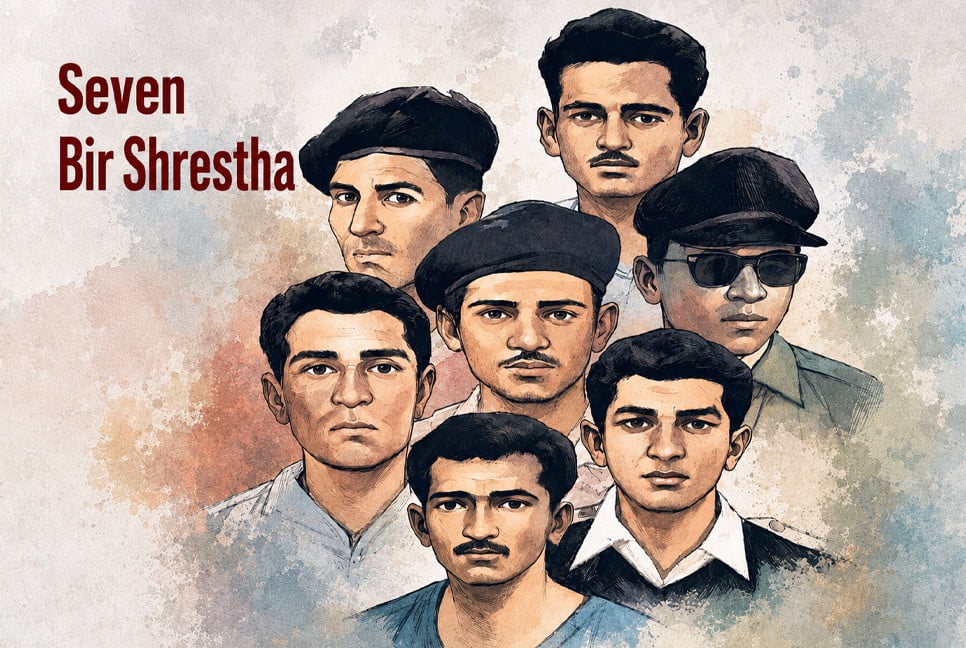
Since its inception, the party has practiced the politics of duplicity. This party opposed the 1947 partition of the country. Under the guise of preaching Maududism, it attempted to create communal division in the country. By opposing the glorious Liberation War of 1971, it became an accomplice to the Pakistani genocide and brutal atrocities. In 1971, when brave Bengalis were spilling their fresh blood for independence, Jamaat joined the military junta's cabinet. The party's leader, Abbas Ali Khan, served as the education minister, and AKM Yunus served as the revenue minister. Jamaat was directly involved in the 1971 genocide and crimes against humanity by forming the Razakar, Al-Badr, Al-Shams, and Peace Committees. The International Crimes Tribunal (which is still functional) identified Jamaat as a criminal organization. Exactly thirteen years ago, on Monday, July 15, 2013, Tribunal-1 made this observation during the verdict on Ghulam Azam. The tribunal observed that considering the documentary evidence and circumstantial surroundings, it can be said that Jamaate-e-Islami, under the leadership of Professor Ghulam Azam, deliberately acted as a criminal organization as a political party, particularly during the 1971 Independence War. Several verdicts delivered by the International Crimes Tribunal have referred to Jamaat-e-Islami, the political party that opposed the Liberation War, as an 'auxiliary force' of the Pakistani military. In the observations of these verdicts, the tribunal held Jamaat responsible alongside the Pakistani military for wartime atrocities. Yet, Jamaat has never apologized for its role in 1971. According to political analysts, Jamaat can never win the trust and confidence of the people of Bangladesh without clarifying its stance on its 1971 role. Jamaat remains the bearer of anti-Bangladesh sentiment regarding 1971 and the politics of duplicity. Consequently, belittling the glorious Liberation War and spreading misinformation about 1971 whenever an opportunity arises is a key characteristic of Jamaat’s politics. After the victory of the '24 mass movement, Jamaat had the audacity to compare a mass uprising to the Liberation War. At that time, Jamaat’s propaganda failed due to the firm stance and attitude of the BNP. However, multiple field investigations have revealed that Jamaat was directly involved in the nationwide vandalism of Liberation War monuments and sculptures. Over the past two years, one thing has become clear: Jamaat does not embody the spirit of the glorious Liberation War. The very foundation of Jamaat's political ideology is to deny '71. Jamaat seeks to establish that political thought whenever it gets the chance. The ordinary people of this country will never accept this. Jamaat has always been against the spirit of the Liberation War. For this reason, Jamaat seeks to rise to power through alternative tactics rather than the public mandate. Its political strategy is structured around that very plan.
The misdeeds committed by Jamaat in '71 are part of their ideological practice. Whenever the party gets a chance, it ruthlessly suppresses dissent. The culture of underground enforcement wings and brutal treatment of dissenting voices in Bangladesh's politics are intrinsically intertwined with Jamaat's politics.
The martyred President Ziaur Rahman believed in an open democracy. That is why he gave opportunities to all political parties. Taking advantage of this, Jamaat found the opportunity to rehabilitate itself in politics. However, research shows that since '71, Jamaat and Shibir introduced underground politics to Bangladesh. Today, several Jamaat leaders, including its Ameer, were once associated with Jasad and radical left-wing groups.
Despite returning to politics through the grace of the BNP, Jamaat has broken trust whenever the opportunity arose. In 1986, even though the BNP called for a boycott of the election under Ershad, Jamaat, lured by the spoils of power, participated in the election under Ershad alongside the Awami League. When the BNP formed the government in 1991, Jamaat allied with the Awami League to launch a movement to topple the government. This dual behavior is the defining characteristic of Jamaat's politics.
When the Awami League initiated the trials of war criminals, Jamaat-Shibir infiltrated the Awami League and Chhatra League as an underground force. The Chhatra League's "Helmet Force" was actually Chhatra Shibir.
After resuming politics post-1975, Jamaat initiated a politics of terrorism and tendon-slashing at various universities to establish its dominance. Now, their violent nature is being exposed once again. After July '24, Jamaat's underground operatives came out in the open across the country and resorted to terrorism just as before to establish dominance. The latest example of this is the terrorist attack on a journalist in Dhanmondi on June 23.
Following the ascension of the Yunus government, Jamaat's underground operatives infiltrated all tiers of the government, including the administration, police, educational institutions, and the judiciary. Backed by the interim government, Jamaat formed a parallel government. These underground elements are still present in many places. They remain active to put the elected government in a tight spot whenever they get a chance. The recent simultaneous resignation of 17 law officers at the Attorney General's office in the Supreme Court is just a small example of this. Under the patronage of the Yunus government, Jamaat’s student wing has captured all public universities. Various crucial financial institutions are under Jamaat's control. Since August '24, several media outlets have fallen into the hands of Jamaat.
Jamaat has its underground forces within the administration, police, and judiciary. And that is exactly why Jamaat leaders are dreaming of coming to power. Jamaat never cares about public opinion. They want to capture power according to their own blueprints. Jamaat believes that the mass uprising of '24 has brought them close to power. Many Jamaat leaders are now tasting the scent of power. Thus, a sense of arrogance and pride is evident in their speech and behavior. However, Jamaat still lacks acceptability among the general public. Jamaat and the Liberation War remain adversaries. For this reason, it is impossible for Jamaat to come to power through the public mandate. Therefore, they are busy looking for backdoors to power. This explains their extreme intolerance. That is why they are unwilling to give time to a newly elected government. But unless they clarify their role in 1971, the people of this country will never accept Jamaat.
Jamaat always downplays '71; they still haven't accepted the Liberation War—this is their mistake. This is their sin. As long as Bangladesh exists, '71 will remain. The Liberation War never loses. Why doesn't Jamaat understand that?