Bangladesh’s economy has struggled with a persistent slowdown throughout the year. High inflation, rising unemployment, stagnant exports, and declining investment growth have dominated discussions. Yet, amid these challenges, remittances sent by expatriates have provided some relief to the economy.
According to Bangladesh Bank, last year legally remitted expatriate earnings amounted to nearly $33 billion, the highest in the country’s history for a single year. Experts believe this growth in remittances has helped increase foreign reserves amid economic slowdown and global uncertainty.
For the first time in Bangladesh’s history, remittances exceeded $20 billion in a calendar year in 2020. Even amid the global COVID-19 crisis, expatriates sent $21.74 billion that year. The following year, 2021, this amount rose to $22.07 billion.
However, legal remittance inflows began to decline thereafter. In 2022, expatriates sent $21.28 billion, lower than the previous year. Although there was some recovery in 2023, remittances totalled $21.91 billion.Experts have expressed concern over how long this remittance flow will continue, citing contraction in the international labour market.
Over the past year, although remittances increased, manpower exports did not rise correspondingly. In fact, exports were halted in several countries, raising fears of a major crisis in the future. Over the past year, Bangladesh’s labour exports in the global market fell by roughly 30%. Meanwhile, the country’s labour market has steadily contracted on the international stage over the past few years.
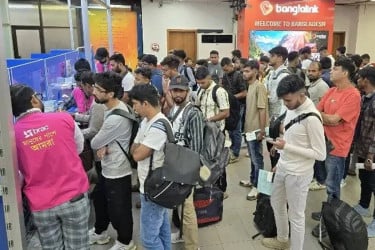
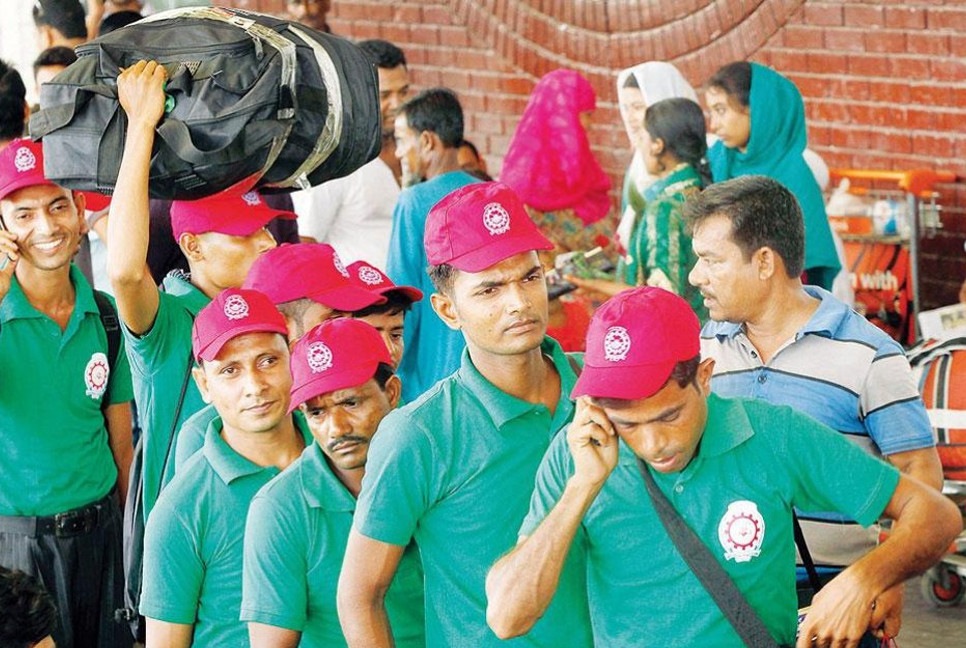
According to the Bangladesh Bureau of Manpower, Employment and Training (BMET), 1,011,869 workers went abroad in 2024. Of these, 95% went to just five countries – Saudi Arabia, Malaysia, Qatar, Singapore, and the UAE – a roughly 30% drop compared to 2023.
Overall, 1,128,000 Bangladeshi workers went abroad in 2024, indicating a slight recovery from the previous year but still lower than in 2023. About 70% of these workers went to Saudi Arabia. Experts warn that such heavy dependence on a single country exposes Bangladesh to major risks if policies there change.
The remaining expatriates mostly went to Qatar, Singapore, Kuwait, the Maldives, and other Middle Eastern and Asian countries. In short, Bangladesh’s labour exports are concentrated in just a few countries.
The closure of three major labour markets – Malaysia, Oman, and the UAE – has been a key reason for the decline in overseas worker deployment. Additionally, reduced recruitment in Saudi Arabia and Qatar, and closed markets in Malaysia, Oman, and Bahrain, have made the situation more complex.
While the government is trying to open new labour markets, success has been limited. Experts say diplomatic efforts are essential to keep existing markets operational.In 2023, over 125,000 workers went to Oman, but in 2024 only 358 were able to travel due to market closure. Similarly, in 2023 nearly 100,000 workers went to the UAE, but this fell to 47,000 in 2024. Bahrain has not recruited workers from Bangladesh since 2017. Even though skilled labour is in demand globally, the rate of sending skilled workers from Bangladesh remains low.
Countries like South Korea and Japan offer promising labour markets, but language barriers and professional skill gaps prevent many from accessing these opportunities. South Korea announced the recruitment of 10,000 workers from Bangladesh in 2023, but only 4,496 were deployed. From 2024 to now, only 2,918 workers have gone.
Dr Tasnim Siddiqui, acting executive director of the Refugee and Migratory Movements Research Unit (RMMRU), said, “The government claims Bangladeshi workers are being sent to 168 countries, but in reality, 95% go to just six countries. In the rest, only token numbers are sent, sometimes only 2%-4%.”
She explained that Malaysia’s labour market was closed due to a syndicate involving Bangladeshi and Malaysian recruiting agencies. Many workers were unable to find jobs, prompting Malaysia to stop recruitment from Bangladesh.
She urged the government to resolve the issue through talks with Malaysia. Similarly, infrastructure projects in the UAE have slowed, reducing recruitment. In Saudi Arabia, 600,000 workers went last year, reducing demand this year.
Dependence on a handful of labour markets poses major economic risks. A policy change or closure in any one country could severely impact Bangladesh’s labour exports and remittance inflows.
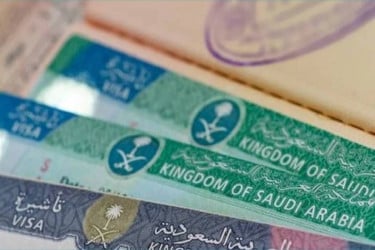
According to BMET, in 2024, 1,011,869 workers went abroad with BMET approval. Of these, 966,000 went to Saudi Arabia, Malaysia, Qatar, Singapore, and the UAE – 89% of total labour exports. Exports are declining even in major labour markets. Slower construction growth has already reduced recruitment in the UAE. Demand in Saudi Arabia has also declined, especially as many workers went on free visas without employment contracts or job guarantees. Those on contracts are not receiving expected wages and benefits.
Meanwhile, recent large-scale recruitment of Bangladeshis in Saudi Arabia has led employers to prioritise workers from Pakistan and India. Most skilled labour demand exists, but Bangladesh mainly sends semi-skilled or unskilled workers.
Qatar recruited large numbers of Bangladeshi workers for the 2022 FIFA World Cup, but the post-World Cup job crisis has led to shrinking opportunities. In 2022, 24,447 workers went to Qatar; in 2023, 56,148; and in 2024, 74,422 – though the flow is now declining. Singapore seeks skilled workers, posing another challenge. Many are willing to go, but opportunities are limited. Nonetheless, Bangladeshi workers continue to go: 64,383 in 2022, 53,265 in 2023, and 56,878 in 2024.In the UAE, 101,775 and 98,422 Bangladeshi workers went in 2022 and 2023 respectively, but this fell to 47,166 in 2024. In the first two months of this year, only 1,150 went.
Stagnation in the construction sector has further reduced recruitment. Bangladesh’s investigation shows that the main cause of this global labour market collapse is corruption. Recruiting agencies’ widespread corruption and malpractice are threatening manpower exports. Most agencies ignore regulations, raising migration costs.
Workers who pay extra often become involved in illegal activities abroad to recover expenses, affecting overall labour exports.
Agencies focus more on unskilled workers, who are easier to exploit financially. Many overseas workers with fake employment letters or certificates are unskilled, trapping Bangladesh’s labour exports in a vicious cycle.
The number of female expatriates fell to slightly above 60,000 in 2024. According to the latest Overseas Employment Platform data, from 1 January to 6 December 2025, 56,292 women went abroad – a 47% decrease compared to 2022.
No clear strategy has yet emerged to reverse this trend or to safely send skilled female workers.Budgets for expatriate welfare have also decreased.
The Ministry of Expatriates’ Welfare allocation fell from BDT 12.17 billion to BDT 8.55 billion. Over the past five years, the sector has received only 0.08% of the national budget on average. Dr Tasnim Siddiqui of RMMRU said, “This reduction clearly shows that expatriate welfare has not been treated as a priority.”
She added that recent government initiatives – expatriate lounges, overseas postal voting, or bilateral labour agreements with Saudi Arabia – have not brought structural changes.“Voting initiatives are symbolically important, but long-term planning was needed. Instead, the ministry has remained limited to day-to-day administration and missed a historic opportunity to reform migration management.”
After the previous government fell, experts had advocated a “National Migration Decade” focusing on skill development, welfare, recruitment reform, and labour diplomacy, but no such initiative has materialised in practice.