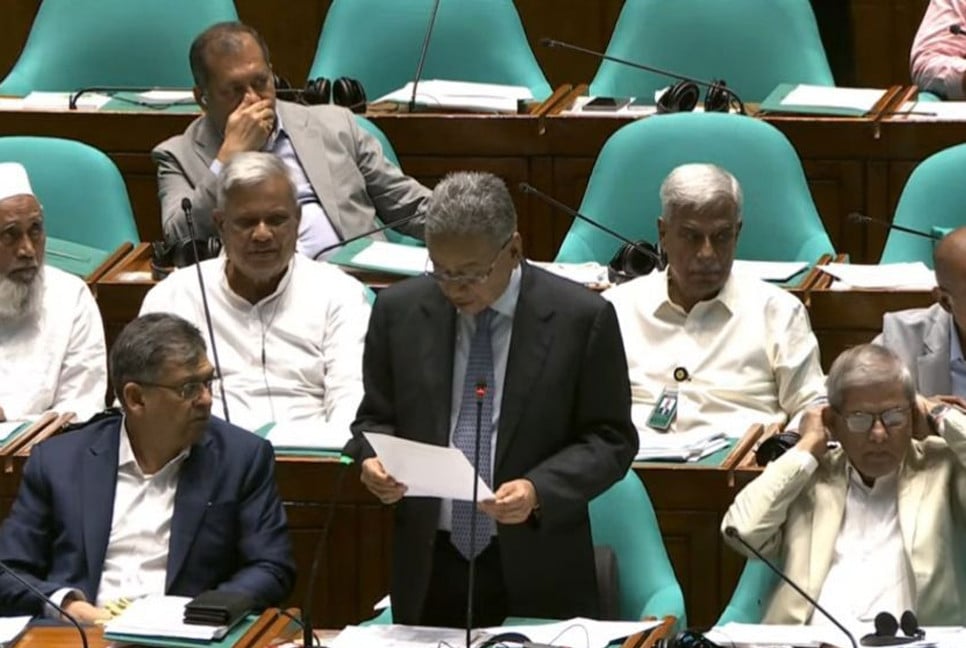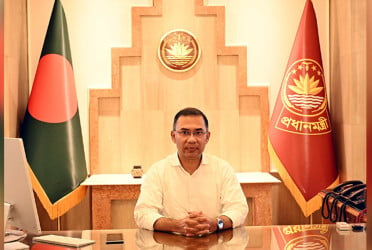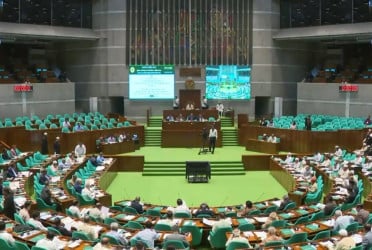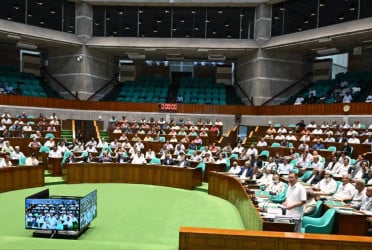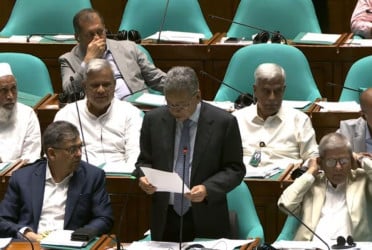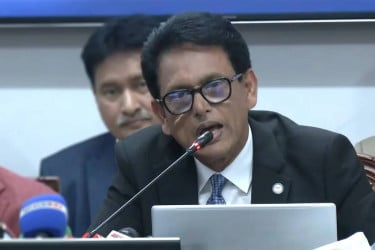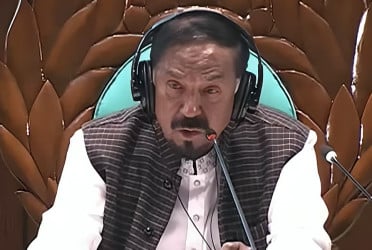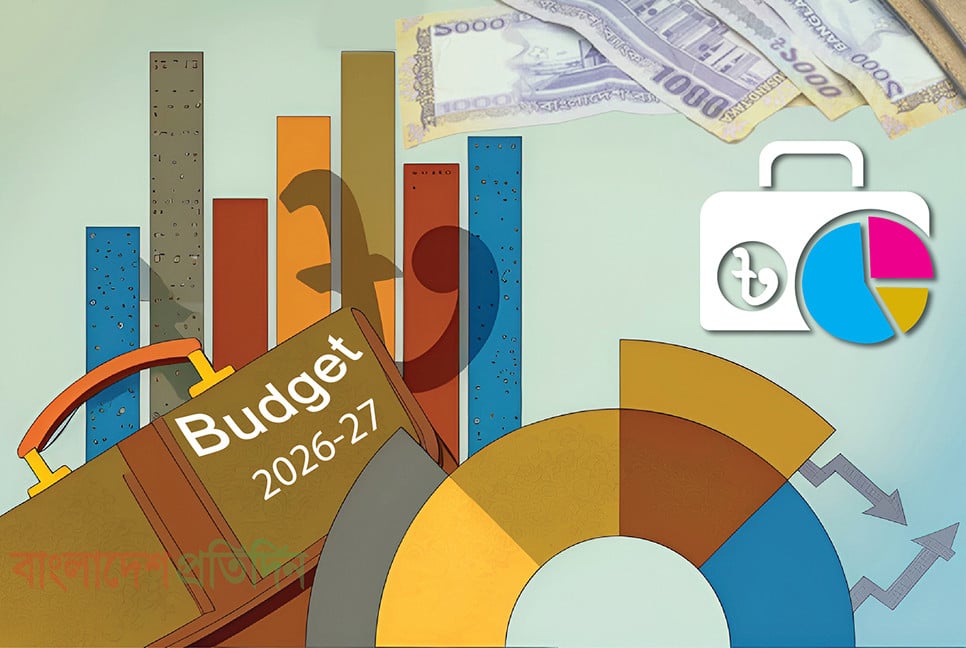
Parliament has approved Bangladesh’s record Tk9.38 lakh crore budget for FY27, the first presented by Finance Minister Amir Khosru Mahmud Chowdhury. It is 19% larger than the original Tk7.90 lakh crore budget for the outgoing fiscal year.
It received final approval on Tuesday after two days of debate on the Finance Bill and the Appropriation Bill.
The FY27 budget targets 6.5% economic growth, inflation of 7.5%, and lays out the government’s three-phase “3R Strategy” – Recovery and Stabilisation, Restoration, and Reconstruction for Acceleration – to steer Bangladesh towards becoming a $1 trillion economy.
Economists say that the government's real challenge is only beginning as the country’s largest-ever spending plan sets ambitious targets for growth, inflation, investment and employment.
Analysts also argue that delivering the budget objectives will require significant improvements in revenue mobilisation, public expenditure management, investment facilitation and inflation control.
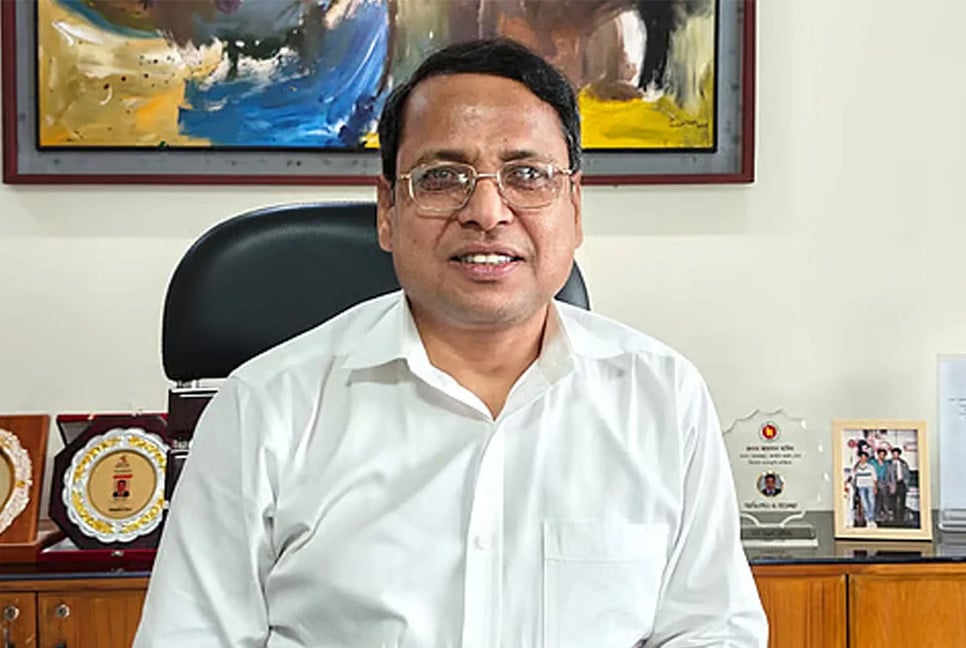
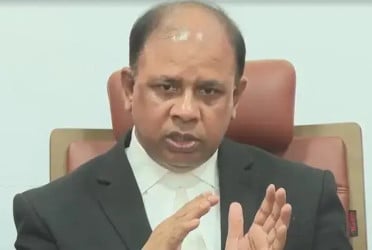
“This is an inclusive budget prepared by a newly elected government at a difficult economic moment. It provides a broad development roadmap. But passing the budget is only the first step. Its success will entirely depend on implementation,” said Dr Mustafa K Mujeri, former chief economist of Bangladesh Bank and executive director of the Institute for Inclusive Finance and Development (InM).
Before its passage, parliament incorporated several significant revisions to the proposed budget following recommendations from businesses, economists and lawmakers, including raising the tax-free income threshold, withdrawing the controversial property disclosure provision, reducing the capital gains tax on gold sales, removing the mandatory Taxpayer Identification Number (TIN) requirement for opening bank accounts and providing additional tax relief for several sectors.
Revenue mobilisation biggest challenge
The government expects the National Board of Revenue (NBR) to collect Tk6.04 lakh crore, representing a 17% increase over the outgoing fiscal year and one of the highest revenue targets in Bangladesh's history.
Dr Mujeri believes achieving that target will require comprehensive institutional reforms rather than incremental adjustments.
“The existing revenue administration has never been able to generate collections on this scale. Bangladesh has consistently fallen short of its revenue targets over the years,” he said.
He said expanding the tax base, improving compliance, digitalising tax administration and reducing leakages should receive greater priority than introducing new taxes.
Unless these reforms are implemented quickly, economists warn, financing the government's ambitious expenditure programme could become increasingly difficult without placing additional pressure on borrowing.
Economists also say attention should now shift from the size of the budget to how efficiently public money is spent.
They also said improving monitoring systems, strengthening accountability and enhancing the capacity of implementing agencies will be critical if the FY27 budget is to achieve its objectives.
Inflation remains a difficult target
Reducing inflation to 7.5% remains one of the government's central policy objectives after several years of elevated prices that have significantly eroded household purchasing power. The challenge has become even steeper after Bangladesh's point-to-point inflation climbed back to a 16-month high of 9.42% in May 2026, driven mainly by persistently high food prices and continuing supply-chain disruptions.
However, economists remain cautious about whether the target can be achieved within a single fiscal year.
Dr Mujeri said that, “Bangladesh Bank has maintained a very tight monetary policy for nearly three years. Yet inflation has remained elevated. This clearly shows that monetary tightening alone is insufficient.”
“Supply chain management, food distribution, market supervision and revenue policies all need to support inflation control. Without coordinated action, bringing inflation down to the target level will be difficult,” he added.
Investors seek policy certainty
Business leaders say sustaining investment momentum will require far more than fiscal incentives announced in the budget.
Mostafa Azad Chowdhury Babu, former senior vice-president of the Federation of Bangladesh Chambers of Commerce and Industry (FBCCI), said attracting both domestic and foreign investment depends primarily on a stable, predictable and business-friendly operating environment.
“Foreign investors first look for policy stability, affordable financing, uninterrupted energy supply and a predictable regulatory environment. Tax incentives alone are not enough to attract long-term investment,” he said.
Source: Daily Sun
Bd-pratidin English/ ANI