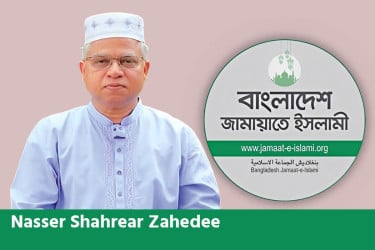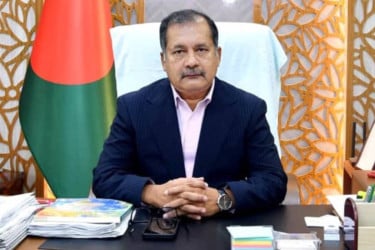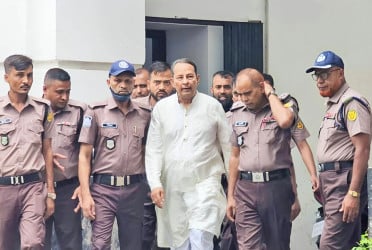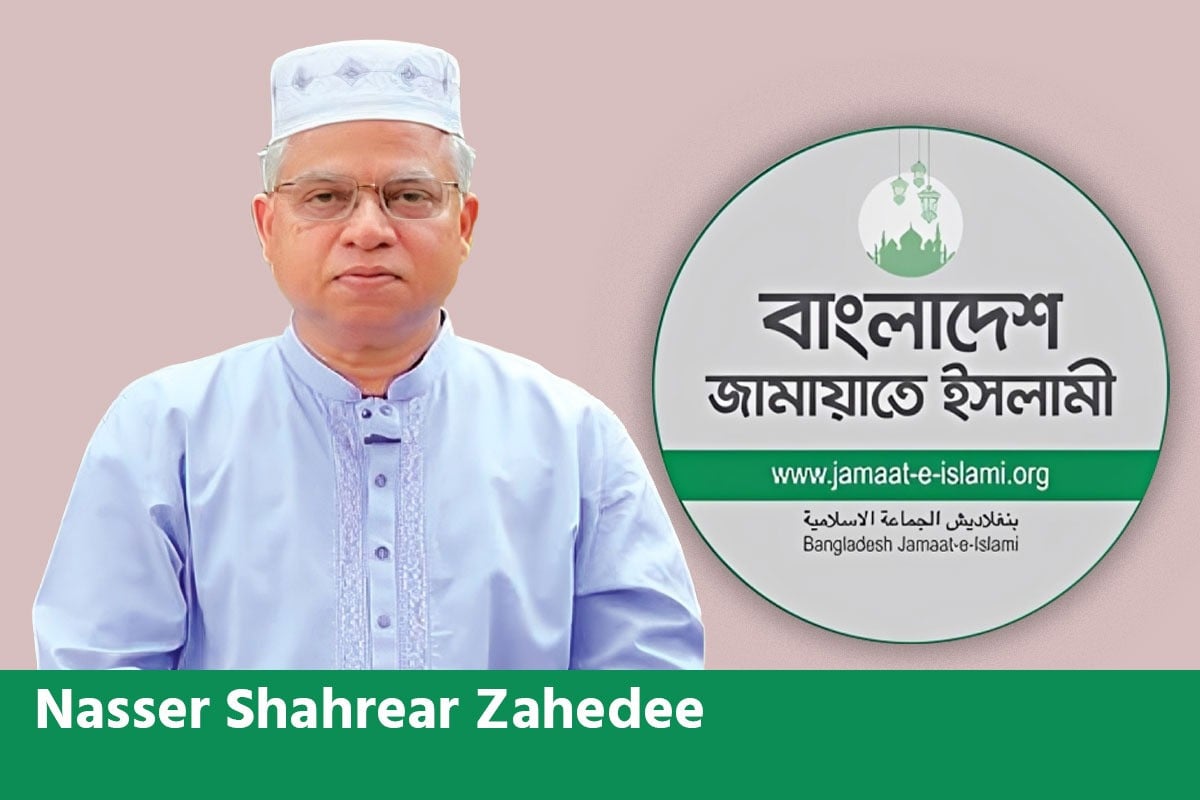
Aeromate Services Limited is the General Sales Agent (GSA) of Turkish Airlines in Bangladesh. There are strong rumours in Jhenaidah recently that Md Nasser Shahrear Zahedee, the chairman and one of the key figures of this institution, has joined Jamaat-e-Islami. Although Nasser Shahrear Zahedee has denied it, his close relationship with the party is well known to everyone, whether he has officially joined or not.
Prior to 5 August 2024, he served as the vice president of the Jhenaidah District Awami League. In the controversial “dummy” election of 2024, Zahedee had sought the Awami League’s nomination. However, he was ultimately denied the ticket. Following this, he contested as an independent candidate and won. Before 2008, however, Nasser Shahrear Zahedee was involved with the politics of the BNP. During the 1/11 caretaker government in 2007, he became highly powerful courtesy of his friend, the then CGS general (retd) Sinha Ibn Jamali.
At that time, numerous BNP leaders and activists, including leader Mashiur Rahman, suffered torture at his hands. Zahedee is not only the head of Aeromate but also the owner of Radiant, one of the country’s leading pharmaceutical companies. Common people in Jhenaidah say that Zahedee sets up camp wherever he smells power. They worry: does this mean Jamaat is coming to power soon? Zahedee has also conveyed a message in his locality that Jamaat is ascending to power.
Many believe that the entry of an owner of one of the country’s major industrial conglomerates into Jamaat carries far-reaching political implications. This event serves as evidence that Jamaat is now building alliances beyond its traditional boundaries.
However, behind this simple formula lies a deeper web of conspiracy. Zahedee’s association with Jamaat is an example of the relationship between Turkey and the defeated forces of 1971. He is involved in multiple businesses with Turkey, including managing Zakat funds coming from the country, in addition to being the GSA for Turkish Airlines. Like Zahedee, several Turkey-centric businessmen have now established close ties with Jamaat. This poses a significant challenge to democratic politics in Bangladesh.
For the past 23 years, Turkey’s politics have been controlled by an Islamist party called the Justice and Development Party (AK Party). The party’s chief leader Recep Tayyip Erdogan assumed power as Turkey’s Prime Minister in 2003. He gradually shifted Turkey from its liberal, democratic, and secular character towards an Islamist state. Since being elected President in 2014, he has continued to hold the office. President Erdogan relies heavily on his religiously conservative and nationalist supporters. Under his leadership, a hardline Muslim nationalist force has risen in Turkey. According to a section of international geopolitical and security analysts, Ankara is alleged to have links with various rebel or Islamist armed groups as part of its strategic interests and regional influence-building efforts in Syria, Libya, and parts of the Middle East. As part of this broader strategy, a covert relationship is said to have formed between Turkey and Jamaat in Bangladesh. During this period, Turkey’s ruling party increased communication with Jamaat and began providing financial patronage. The relationship between Jamaat and Turkey’s ruling party first became public in 2016, when Turkey condemned the war crimes verdict against Jamaat leader Motiur Rahman Nizami and sent a letter to the then-government urging them not to execute the sentence.
Selcuk Colakoglu, an advisor to the Turkish think-tank Center for Strategic Research, wrote in an article published in the Middle East Institute in 2019 that the country’s ruling Justice and Development Party had adopted an Islam-based political ideology in 2011. As part of this, just as Turkey’s ruling party supported Egypt’s Muslim Brotherhood, they also extended their support to Bangladesh’s Jamaat-e-Islami, according to Mr. Colakoglu.
Since 2016, Turkey has been providing financial assistance to Jamaat through various business entities in Bangladesh. Aeromate is one such establishment. During this period, Turkey also boosted its commercial ties with Bangladesh. The $1 billion trade relationship surged to $2 billion. Bangladesh started purchasing everything from onions to military equipment from Turkey. Jamaat reaped the benefits of this increased commercial relationship during the Awami League regime. Behind the facade of this trade relationship, Turkey revived Jamaat. Many experts believe that today’s Jamaat is essentially a brain-child of Turkey.
Investigations reveal that over this past decade (2016–2026), Jamaat has structurally reorganized itself. The primary financiers behind this were Bangladeshi businessmen trading with Turkey. A specific portion of their profits was funneled into Jamaat-controlled madrasas and various institutions under the guise of CSR (Corporate Social Responsibility).
Turkey’s ruling Justice and Development Party (AK Party) and Bangladesh’s Jamaat-e-Islami share the same ideology. This is why the once-secular Turkey has become a close ally of Jamaat. In 1928, Hassan al-Banna and Sayyid Qutb founded the Ikhwanul Muslimin (Muslim Brotherhood) in Egypt. According to historian Philip Jenkins, the Brotherhood was founded drawing inspiration from the ideology of Jamaat’s founder, Sayyid Abul A’la Maududi. However, Maududi founded Jamaat in 1940. Following Maududi’s death in 1979, the Brotherhood became the symbol of unity for parties that believed in his philosophy and operated under his ideology. Parties adhering to Maududi’s ideology remain active in politics under different names across various countries. In Bangladesh, India, Pakistan, and Afghanistan, they operate under the name Jamaat-e-Islami. In Muslim-majority countries of the Middle East and North Africa, they are active under different names. While they are coalition partners in power in a few countries, they rule single-handedly in Sudan and Turkey. Although the Brotherhood does not exert direct control over these parties, it maintains significant influence.
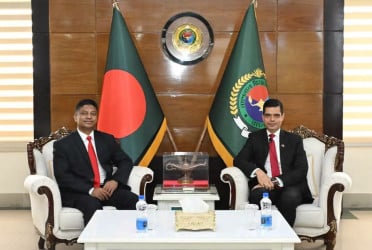
Following the February 12 elections, the current government of Turkey has been directly backing Jamaat. During his visit to Bangladesh in the first week of June, Turkish Foreign Minister Hakan Fidan held a lengthy meeting with the ameer (chief) of Jamaat. Earlier in May, Huseyin Emir, the central vice chairman and head of the International Department of Turkey’s Huda Par, and Fikir Karavil, the head of the NGO Department, held a courtesy meeting with the leaders of Bangladesh Jamaat-e-Islami.
The multifaceted relationship between Jamaat and Turkey is now visible. Numerous members of Chhatra Shibir (Jamaat’s student wing) are traveling to Turkey for higher education, backed by scholarships. Jamaat is reaping most of the benefits of the growing trade between Bangladesh and Turkey. Regular political training sessions for Jamaat workers are being organized in Turkey. Most importantly, the ruling party of Turkey is working to modernize Jamaat modeled after Turkey’s Justice and Development Party. The Turkish ruling class is advising them on various aspects, such as developing relations with Western countries, projecting a liberal democratic stance outwardly, and adopting modern attire. They have designed a blueprint to bring Jamaat to power in Bangladesh, which is currently being implemented.
However, Jamaat’s biggest obstacle in Bangladesh is its past political history. Political analysts believe that just as the relationship between Jamaat and Turkey warrants deep scrutiny, a fresh discussion regarding Jamaat’s role in 1971 must also be initiated. The rhetoric of liberalism and modernity that Jamaat is preaching today is, in reality, nothing but a mask.