Chinese President Xi Jinping is expected to seek concessions on Taiwan and US tariffs when he meets United States President Donald Trump for a high-stakes summit taking place in the shadow of the war on Iran, reports Al Jazeera.
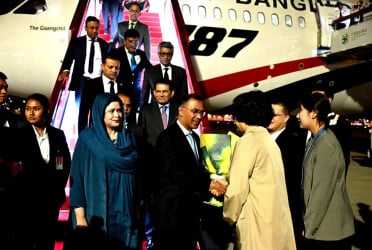
Trump will arrive in China on Wednesday evening for a three-day visit that will mark the first trip by a US leader to the country since 2017, when Trump visited in the early days of his first term.
Unlike Trump, who is renowned for his mercurial policymaking, Xi is widely seen as predictable in his goals for the summit, particularly as they concern Beijing’s longstanding “core interests” related to national security and territorial integrity.
At the top of that list is Taiwan.
While Taiwan’s government considers itself the head of a de facto sovereign state, Beijing views the island as an inalienable part of its territory.
The US formally cut ties with Taiwan – also known as the Republic of China – decades ago, but is committed to aiding the self-governing democracy’s defence under the 1979 Taiwan Relations Act.
Under the law, Washington has provided Taiwan with billions of dollars in arms and pursued cooperation in areas such as military training and intelligence sharing, which Beijing considers interference in its internal affairs.
The US government officially acknowledges that China views Taiwan as part of its territory, but does not express a stance on whether it agrees.
Washington is also intentionally vague about whether it would intervene to defend Taiwan if China sought to annex it by force.
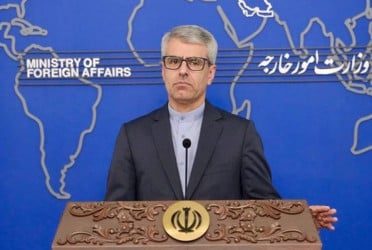
In a call with US Secretary of State Marco Rubio last month, Chinese Foreign Minister Wang Yi made clear that Taiwan would be raised at the summit, describing the issue as “the biggest risk in the China-US relationship”, according to a Chinese readout of the call.
China’s embassy in Washington, DC, reiterated that message after Trump’s departure for the summit on Tuesday, naming Taiwan as the first of “four red lines” that “must not be challenged”.
While analysts say it is unlikely that the US will change its position on Taiwan due to Chinese pressure, Trump said this week that the summit’s agenda would include US arms sales to the island, raising questions about the future of a stalled multibillion-dollar arms deal.
The US Congress approved the arms package reportedly worth $14bn earlier this year, but the sale still requires Trump’s final approval.
Xi will use his meetings with Trump to “influence and potentially convince Trump to agree to scale back, if not completely suspend, sales to Taiwan,” William Yang, a Taipei-based analyst at the Crisis Group, told the media.
If Trump were to make concessions on weapons sales to Taiwan, he would be breaking with a longstanding policy against consulting with Beijing that dates back to former US President Ronald Reagan.
Cancelling or watering down the deal would be a serious blow to Taiwanese President William Lai Ching-te, who is locked in an intense fight with the opposition over defence spending, Yang said.
“They are hoping to first influence Trump’s decision around this issue and potentially create a situation where it will be much harder for [Lai’s] government to request more special defensive spending in the future,” Yang said.
Bd-pratidin English/TR