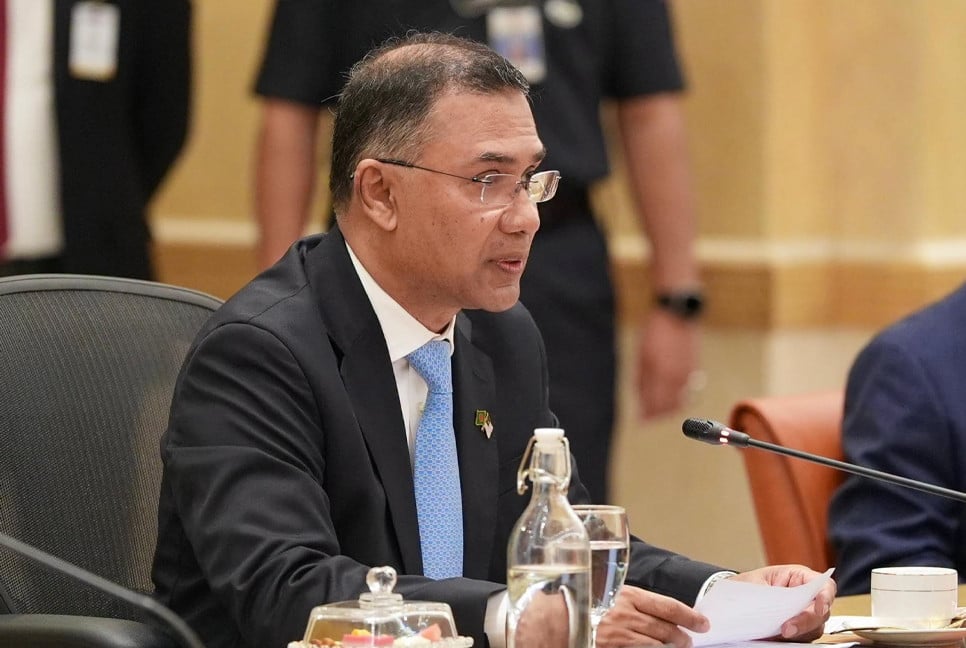
Bangladesh and Malaysia have agreed to advance negotiations on a bilateral free trade agreement, with the aim of concluding the deal by 2027, as the two countries sought to deepen cooperation in trade, investment, labour, energy, digital technology and defence, reports Daily Sun.
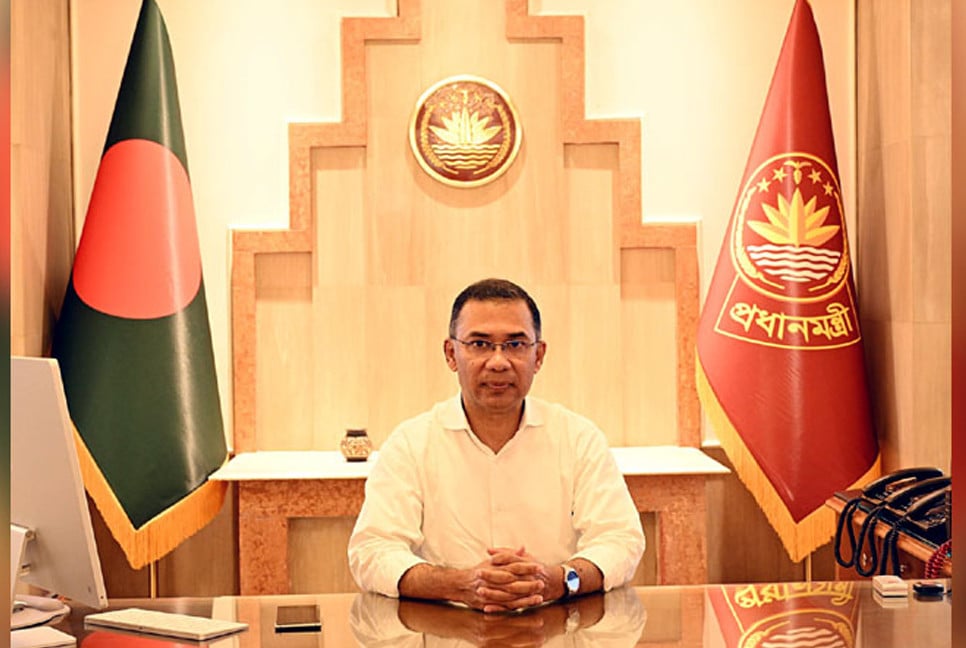
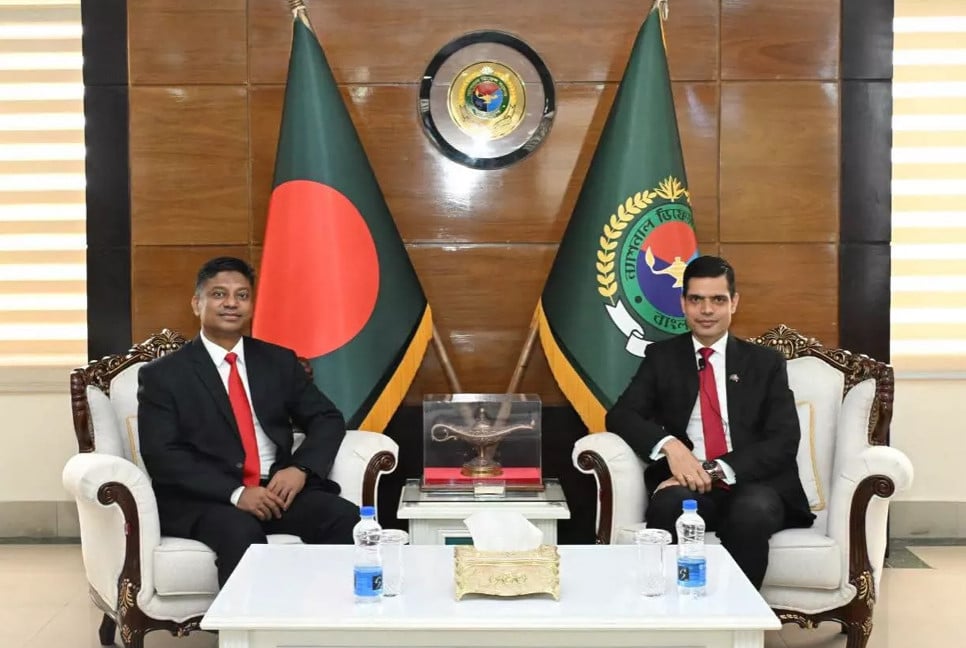
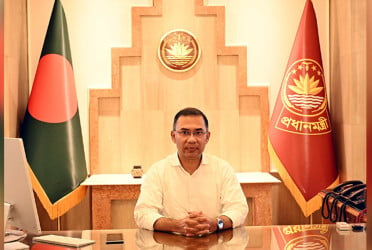
The commitment came in a joint statement issued following Prime Minister Tarique Rahman’s official visit to Malaysia on Sunday at the invitation of Malaysian Prime Minister Anwar Ibrahim, said a press release.
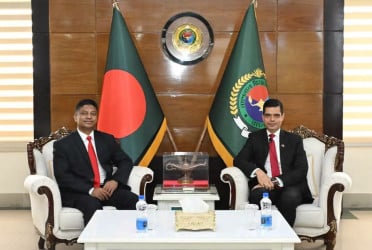
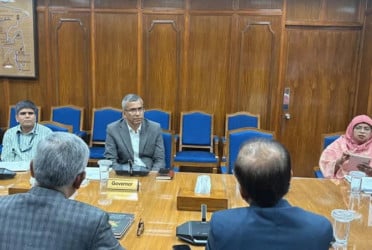
The visit was Tarique’s first official foreign trip since taking office on 17 February. He was given an official welcome at the Perdana Putra Complex in Putrajaya before holding bilateral talks with Anwar Ibrahim.
The two leaders said they were committed to taking Bangladesh-Malaysia relations to new heights and agreed to resume the long-pending Joint Commission Meeting and bilateral consultations at the earliest opportunity.
They noted that Bangladesh is Malaysia’s second-largest trading partner in South Asia and pledged to strengthen two-way trade and investment.
Both sides also welcomed progress toward establishing a Malaysia-Bangladesh Joint Business Council to facilitate structured engagement between the private sectors of the two countries.
The leaders identified telecommunications, energy, infrastructure, ports and logistics, halal industry, agro-processing, education, skills development, digital economy, semiconductor manufacturing and smart industries as priority areas for cooperation.
Malaysia and Bangladesh also agreed to strengthen cooperation in the halal sector, including halal certification, regulatory frameworks, professional training, research and institutional capacity building.
In the digital sector, the two countries agreed to enhance collaboration in artificial intelligence, fintech, digital governance, cybersecurity and other emerging technologies. Malaysia was encouraged to invest further in Bangladesh’s digital public infrastructure, technology parks and special economic zones.
The joint statement said Malaysia’s semiconductor packaging, testing and outsourced semiconductor assembly and test services could be linked with Bangladesh’s growing IT and engineering sector.
Bangladesh proposed a talent cooperation framework to train and upskill Bangladeshi engineering graduates through structured programmes, expert exchanges and knowledge-sharing.
On labour migration, Malaysia acknowledged Bangladesh’s proposal on worker recruitment but said approvals for new foreign worker quotas would continue to be considered case by case, based on verified employer needs and sectoral limits.
The two countries agreed to convene a Joint Working Group to review the existing labour memorandum of understanding and prepare a new agreement to ensure safe and mutually beneficial migration of Bangladeshi workers to Malaysia.
The leaders also noted that around 11,000 Bangladeshi students are currently studying in Malaysia and agreed to expand university partnerships, joint research programmes and technical and vocational education cooperation.
In energy, Bangladesh invited Malaysian companies to invest in oil and gas exploration in the Bay of Bengal, mineral extraction and renewable energy transition.
The two sides also stressed the importance of implementing their existing cooperation framework on liquefied natural gas supply, LNG infrastructure and petroleum products.
The two leaders agreed to operationalise the memorandum of understanding on defence cooperation and expand collaboration in military science, training, technical expertise and defence industry partnerships.
They also pledged cooperation in counterterrorism, intelligence-sharing and efforts to combat violent extremism.
On regional issues, Malaysia reiterated its support for Bangladesh in addressing the Rohingya crisis and backed the safe, dignified and sustainable repatriation of displaced Rohingyas to Myanmar.
Malaysia also expressed readiness to support Bangladesh’s aspiration to obtain ASEAN Sectoral Dialogue Partner status and supported Dhaka’s interest in joining the Regional Comprehensive Economic Partnership.
The leaders further discussed the Middle East situation and reiterated support for a just and lasting peace for the Palestinian people.
Bd-Pratidin English/ AM