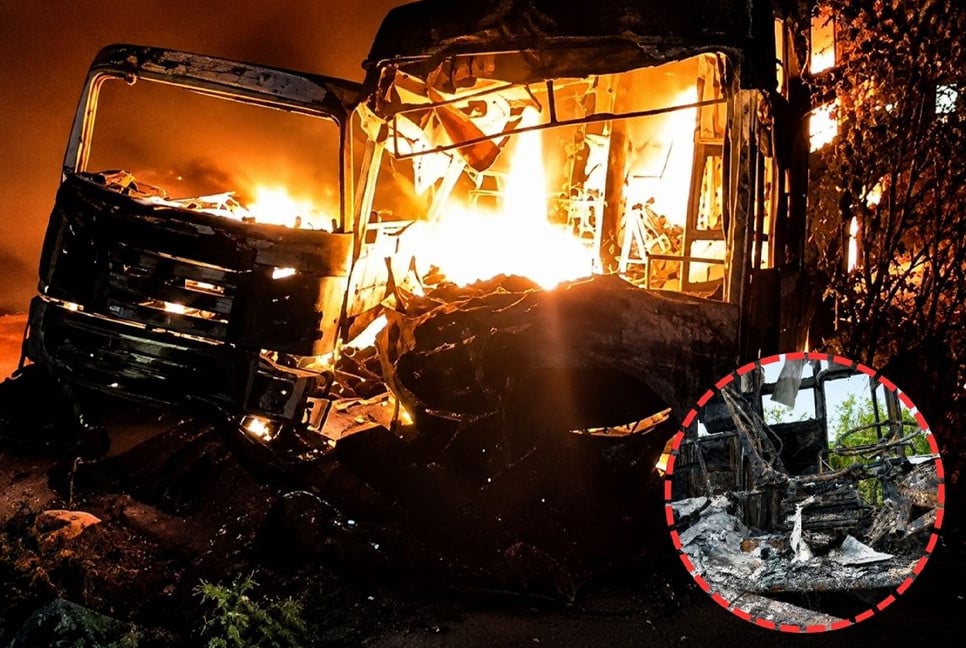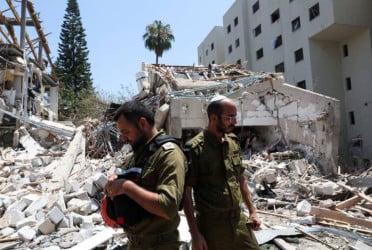
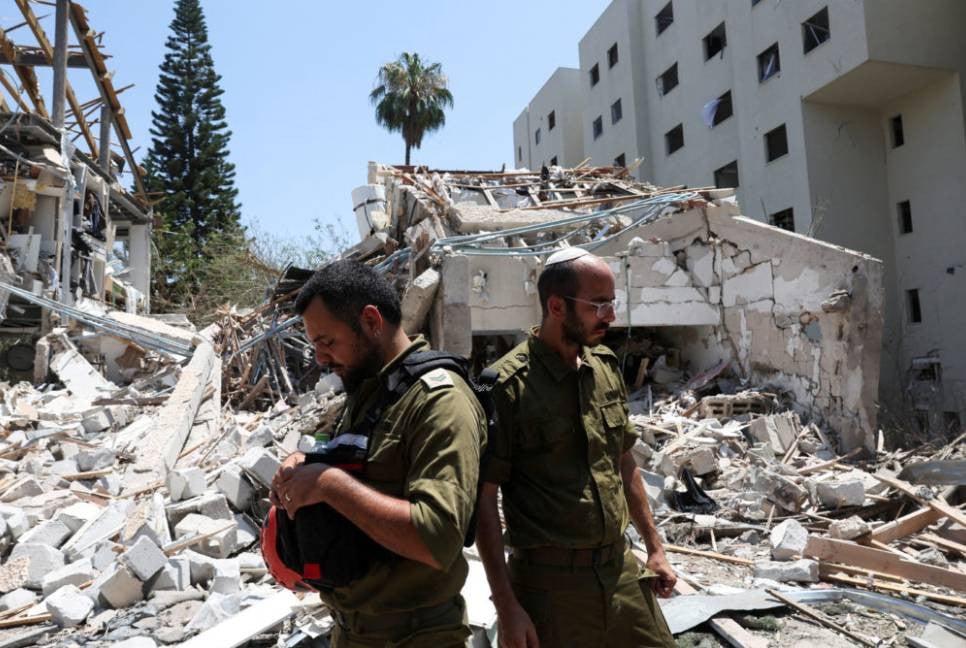
Leaked official Israeli documents reveal that Iranian missile attacks on the Bazan refinery in Haifa destroyed critical infrastructure, including a storage tank, Mehr News Agency reported.
Quds News Network reported on Tuesday that an official draft document published by the Israeli regime’s Interior Ministry reveals significantly broader damage than previously disclosed following the Iranian missile strikes.
The document, which was published as part of procedures to approve reconstruction work at the Bazan refinery complex in Haifa Bay, reportedly details damage to gas turbines, steam boilers, electrical rooms and other auxiliary systems that had not previously been publicly reported.
It also states that an oil derivatives storage tank struck during the March attack is beyond repair and must be replaced with a new tank with a capacity of up to 12,700 cubic meters.
The June strike on the complex severely damaged its power plant, disrupted refinery operations and killed three workers. At the time, Bazan estimated the losses at $150-200 million, while Israeli officials maintained that fuel supplies would not be affected.
According to the Interior Ministry document cited by QNN, the damage extends beyond physical infrastructure and has affected the refinery’s operational capacity.
The document states that the destruction of the storage tank has “directly affected the ability to produce gasoline that meets the specifications required by the market and to supply it to consumers.”
This contradicts previous statements by then-Israeli Energy Minister Eli Cohen, who said the strikes had not damaged production facilities and would not affect fuel supplies.
The document further reveals that the area approved for reconstruction is almost double that authorized after the June attack, indicating that the scale of the destruction was considerably greater than previously acknowledged.
According to the Interior Ministry document cited by QNN, the complete restoration of the Bazan complex is not expected before 2028, only about three years before the Israeli cabinet’s planned evacuation of the Haifa Bay petrochemical industries in 2031.
The document concludes that the damage affects “essential operational and storage components” within one of the Israeli regime’s most important energy facilities, requiring years of reconstruction while maintaining production and fuel supplies.
bd-pratidin/GR