The US official said Israel and Iran-backed Hezbollah have agreed to a ceasefire that took effect at 4:00 pm local time on Friday, reports Reuters.
The announcement comes days after escalating hostilities in Lebanon that threatened a broader regional truce.
A senior Israeli official and two Hezbollah sources also confirmed the ceasefire to with the media.
“If Hezbollah does not attack us, then for us it is not a time of war,” the Israeli official said, adding that Israeli forces would remain deployed in southern Lebanon.
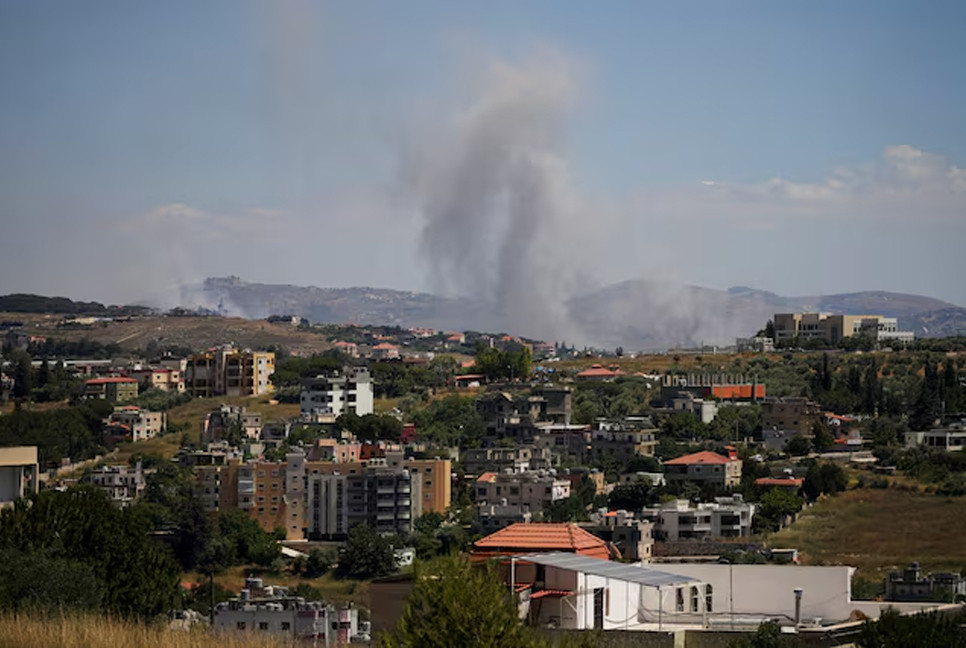
However, reports from the border area suggested fighting had not stopped completely. Nearly an hour after the ceasefire came into effect, a journalist in northern Israel said Israeli strikes could still be seen across the border in Lebanon, with smoke rising from areas near the frontier.
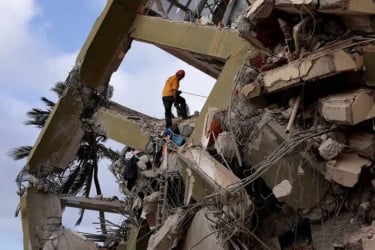
Lebanon's health ministry said at least 47 people were killed in Israeli airstrikes since midnight. Israel, meanwhile, reported that four soldiers were killed in southern Lebanon in one of the deadliest Hezbollah attacks since the conflict began.
The ceasefire forms part of a wider US-Iran agreement aimed at ending military operations across multiple fronts in the Middle East, including Lebanon. Violence had initially eased after the agreement was announced but intensified again during the week.
Hezbollah lawmaker Hassan Fadlallah said Iran informed the group that talks with Washington could not continue without a comprehensive ceasefire.
A senior US official said the truce was brokered by American and Qatari negotiators with assistance from Iran.
“Hezbollah and Israel have agreed to a ceasefire,” the official said. “We understand that after the exchange of fire earlier today, Israel and Hezbollah are now in a ceasefire.”
Israel was not directly involved in negotiations leading to the US-Iran understanding and has expressed concerns about the agreement. Israeli officials argue that the deal does not sufficiently address their concerns regarding Iran’s nuclear program.
The Israeli official said the country would retain the right to act against any emerging threats to its territory or military personnel.
Earlier, Israeli Prime Minister Benjamin Netanyahu vowed to “extract a very heavy price” from Hezbollah following the killing of four Israeli soldiers.
Deadly strikes continue
Israel said its military carried out attacks targeting Hezbollah operatives and infrastructure in response to repeated violations of the ceasefire by the group.
Hezbollah denied the allegations and accused Israel of repeatedly breaching the truce and the broader US-Iran agreement.
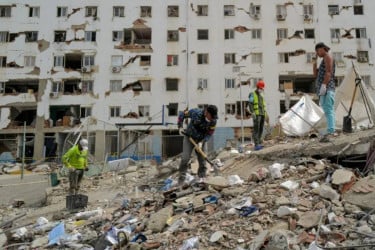
In a statement, the group said Israeli attacks had killed civilians, destroyed homes and infrastructure, and continued ground operations in southern Lebanon.
Fighting centred on strategic hill
Heavy overnight fighting was concentrated around Ali al-Taher hill, a strategic high-ground position north of the Litani River, according to a senior Lebanese security source.
Hezbollah claimed its fighters ambushed an advancing Israeli force in the area, destroying three Merkava tanks with guided missiles and targeting troops with rocket and artillery fire.
The group also said it attacked Israeli forces attempting to evacuate casualties from the battlefield.
Israel has established what it describes as a security zone in southern Lebanon, saying the move is intended to protect northern Israeli communities from Hezbollah attacks.
Hezbollah, meanwhile, has continued to launch attacks on Israeli positions this week, including drone strikes that killed and wounded Israeli troops.
According to Lebanon's health ministry, Israeli attacks since March 2 have killed 3,912 people, including medics, women and children.
Israel said at least 32 soldiers and four civilians have been killed in the latest round of hostilities with Hezbollah.
Bd-Pratidin English/ AM