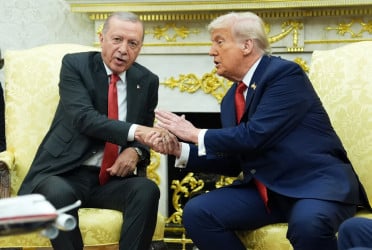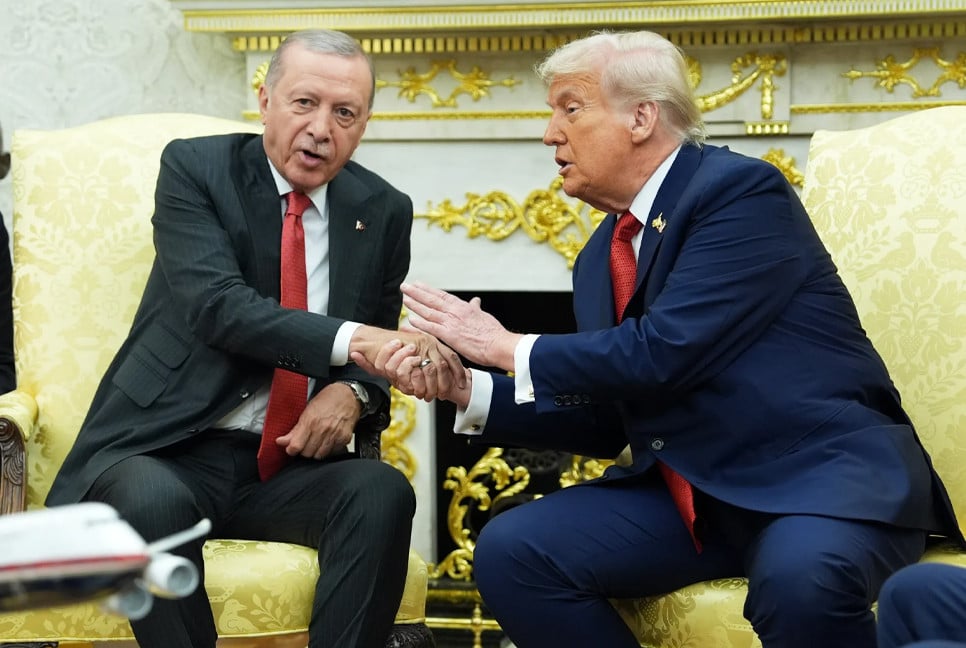
Turkish President Recep Tayyip Erdogan heads into next week's NATO summit with growing diplomatic leverage, as his close relationship with U.S. President Donald Trump strengthens Ankara's position and raises hopes of renewed defence cooperation, reports AP.
Trump confirmed he would attend the summit in Ankara largely because of his personal ties with Erdogan, describing the Turkish leader as "a hell of a leader" and a good friend.
"I would not have gone for most people," Trump said, adding that Erdogan personally urged him to attend and stressed the importance of U.S. participation.
Trump's decision is seen as a major boost for the alliance, particularly after he repeatedly questioned Washington's military commitments in Europe and called on NATO members to increase defence spending. He has also criticised some allies for failing to support recent U.S. military action against Iran.
Beyond the summit, Trump hinted that his visit could include announcements on defence cooperation, including the possible sale of F-35 fighter jets and F-110 jet engines sought by Turkey.
Ankara was removed from the F-35 programme in 2019 after purchasing Russia's S-400 air defence system, with Washington arguing the Russian equipment could compromise the fighter jet's sensitive technology.
During a recent Oval Office meeting with NATO Secretary-General Mark Rutte, Trump suggested he could take steps that would "make (Erdogan) very happy."
Vice President JD Vance later confirmed the administration was exploring ways to resume F-35 sales if Turkey met U.S. legal requirements.
Meanwhile, the U.S. State Department has notified key lawmakers of a proposed sale of more than $700 million worth of F-110 jet engines for Turkey's domestically developed KAAN fighter programme.
The proposal, however, faces resistance in Congress, where lawmakers remain concerned over Turkey's continued possession of the Russian S-400 system.
Analysts say the personal rapport between Trump and Erdogan has become a defining feature of bilateral relations.
"Erdogan is taking full advantage of it," Philip Gordon, a senior fellow at the Brookings Institution and former national security adviser to then Vice President Kamala Harris, said.
Unlike former President Joe Biden, who kept Erdogan at arm's length over democratic concerns and Turkey's ties with Moscow, Trump has maintained regular contact with the Turkish leader.
Observers also point to Erdogan's decision to decline a White House invitation during Biden's presidency after Turkey approved Finland and Sweden's NATO membership, viewing it as a sign of confidence in Trump's political return.
Relations have improved in other areas as well. Earlier this year, the U.S. Justice Department dropped a major sanctions-related case against Turkey's state-owned Halkbank, while longtime Trump ally Tom Barrack was appointed U.S. ambassador to Turkey.
The two leaders have also held frequent discussions on regional issues, including Syria, Gaza and broader Middle East security. Turkey has joined Trump's Board of Peace initiative overseeing the Gaza ceasefire.
Following a meeting with Trump at last year's NATO summit, Erdogan said the two leaders speak regularly, noting that Trump usually returns his calls within 24 hours.
"With my friend Trump, we are opening the door to a new era in Turkish-American relations," Erdogan said.
Bd-Pratidin English/ AM