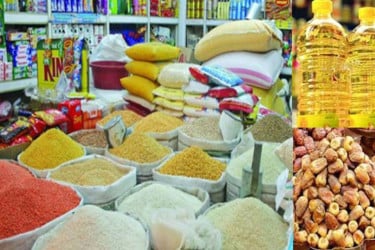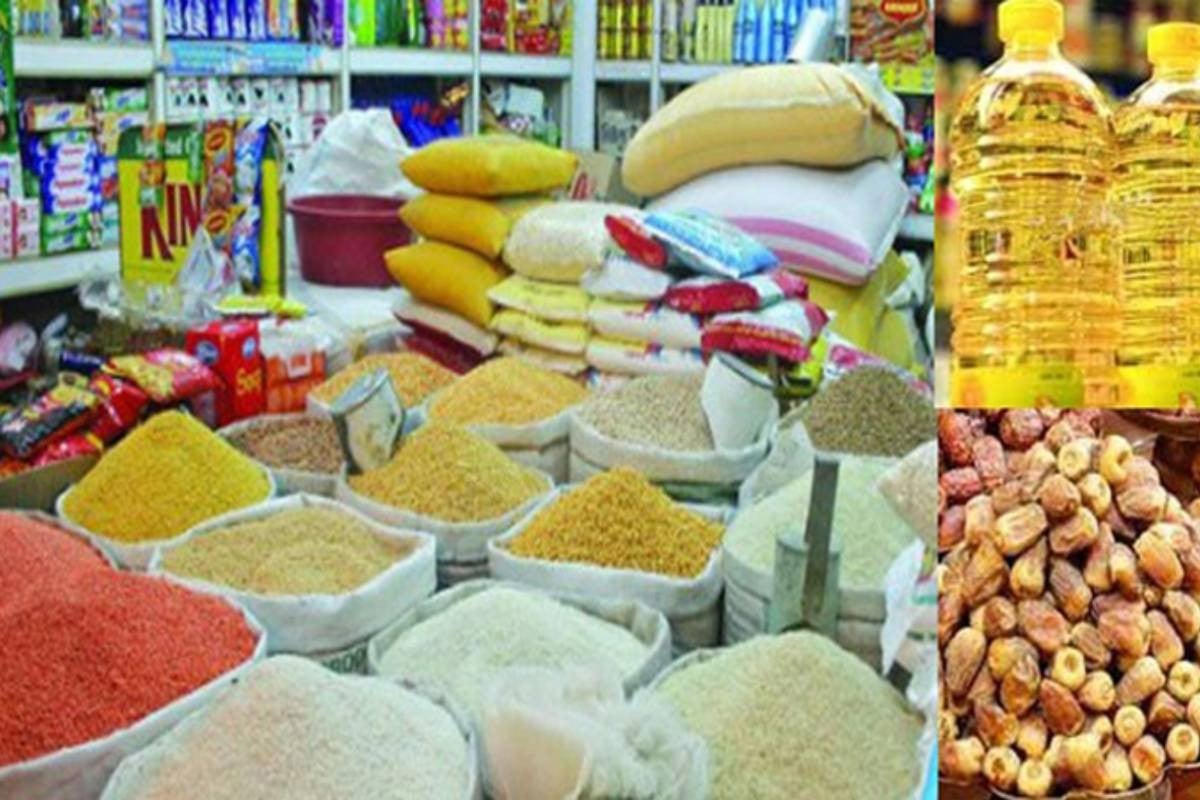
Prices of several essential commodities, including loose soybean oil, local onions and broiler chicken, have declined in Dhaka's retail markets, reflecting the early impact of the government's duty and tax relief measures introduced in the FY2026-27 national budget, reports BSS.
According to the latest daily market price report by the Trading Corporation of Bangladesh (TCB), prices of several kitchen essentials either fell or remained stable over the past week, indicating a positive response to the government's fiscal and supply-side measures.
The report, based on prices collected from markets in Sipahibag, Mirpur-6, Mohammadpur Town Hall, New Market, Rampura and Mohakhali, showed local onions selling at Tk 35-45 per kg and loose soybean oil at Tk 186-192 per litre.
Broiler chicken prices declined to Tk 160-180 per kg, imported garlic to Tk 120-210 per kg, local ginger to Tk 130-160 per kg and cucumber to Tk 50-70 per kg.
A few items, however, became slightly more expensive. Local garlic sold at Tk 90-140 per kg, green chillies at Tk 80-140 per kg and brinjal at Tk 70-100 per kg.
Prices of most other essentials remained unchanged. Fine rice (Nazir/Miniket) sold at Tk 72-85 per kg, medium rice (Paijam/Atash) at Tk 55-68 per kg and coarse rice at Tk 50-60 per kg.
Small lentils were priced at Tk 150-160 per kg, large lentils at Tk 90-105 per kg, beef at Tk 780-850 per kg, mutton at Tk 1,200-1,350 per kg, sugar at Tk 105-110 per kg and iodised salt at Tk 38-42 per kg.
Officials and market analysts attributed the improved price trend to the government's decision to withdraw source tax on the import of around 60 essential commodities and reduce advance tax on several food and agricultural products.
The tax relief covers key consumer goods, including rice, wheat, edible oil, onions, garlic, ginger, sugar, salt, fish, poultry products, potatoes and seeds, with the aim of ensuring adequate supply and easing inflation.
The FY2026-27 budget also introduced duty and VAT concessions on spices, dates, baby food, fertilisers, livestock feed, pesticides and other agricultural inputs to reduce production and distribution costs.
State Minister for Textiles and Jute Md Shariful Alam recently said the budget had not triggered any increase in the prices of essential commodities, attributing the stability to consumer-friendly fiscal measures.
"The budget, amounting to Tk 9.38 lakh crore, was designed with public welfare in mind and includes measures aimed at easing inflationary pressure on ordinary people," he said.
Traders in several kitchen markets in the capital said prices had remained stable because of adequate supplies and expectations of lower import costs as the new fiscal measures take effect.
Rafiqul Islam, an employee of a private organisation, said stable prices had provided some relief to consumers.
"We hope the government will continue market monitoring so that prices remain affordable," he told BSS.
Economists said the tax cuts would be more effective if accompanied by uninterrupted imports, efficient distribution and strict market monitoring to ensure consumers benefit from lower import costs.
They also stressed the need to prevent hoarding and artificial shortages through regular market inspections.
Md Rashedur Rahman, chairman of the Department of Organisation Strategy and Leadership at Dhaka University, said lower duties and taxes could help ease pressure on prices if supply chains function efficiently.
He said reduced import costs would not automatically lower retail prices unless the benefits were passed on through wholesalers and retailers.
"Effective market monitoring is essential to prevent any attempt to create artificial shortages or manipulate prices. At the same time, uninterrupted imports and smooth distribution must be ensured so that adequate supplies remain available in the market," he said.
Officials said the government would continue monitoring markets to ensure duty and tax reductions are reflected in retail prices.
Analysts expressed optimism that if global commodity prices remain stable and domestic supply chains continue to function smoothly, the FY2026-27 budget measures would help contain inflation and support price stability in the coming months.
Bd-pratidin English/ Jisan