Years of irregularities, weak governance, and mounting defaulted loans have pushed Bangladesh’s non-bank financial institution (NBFI) sector into a severe crisis. In a major clean-up move, Bangladesh Bank has begun formal liquidation proceedings for nine troubled NBFIs under the Bank Resolution Ordinance 2025.
The decision has renewed anxiety among stock-market investors and depositors, triggering heavy sell-offs in recent sessions. But most shares remain unsold due to a lack of buyers.
The NBFIs facing liquidation are FAS Finance, Bangladesh Industrial Finance Company (BIFC), Premier Leasing, Fareast Finance, GSP Finance, Prime Finance, Aviva Finance, Peoples Leasing, and International Leasing. Of them, only Aviva Finance is not listed on the capital market.
Market insiders say expectations of a rescue package similar to the one seen in the banking sector would be misplaced. Banks operate primarily with depositors’ funds and enjoy explicit legal protection.
NBFIs and insurers, by contrast, depend largely on bank borrowing, leaving depositor protection far less certain. Without government intervention, they warn, individual depositors may struggle to recover their money.
Share prices keep falling
Share prices of listed NBFIs have plunged in recent sessions. Between 26 November and 2 December, many companies saw losses of 25% to 39%.
DSE data shows People's Leasing suffered the steepest drop, sliding 39% from Tk1.10 to Tk0.67. International Leasing fell 38% to Tk0.81 from Tk1.30.
Premier Leasing & Finance sank 36%, Fareast Finance & Investment fell 34%, Bangladesh Industrial Finance Company dropped 30%, and GSP Finance declined 28%. FAS Finance & Investment shed 27%, while Prime Finance slipped 25%.
Deposits stuck
Bangladesh Bank data shows Tk15,370 crore in deposits are stuck in the nine institutions. Of this, Tk3,525 crore belongs to individual depositors and Tk11,845 crore to banks and corporates.
Among individual deposits, People's Leasing holds the highest amount at Tk1,405 crore, followed by Aviva Finance with Tk809 crore, International Leasing with Tk645 crore, Prime Finance with Tk328 crore, and FAS Finance with Tk105 crore.
Seven of the nine NBFIs have a negative net asset value (NAV) of Tk95 per share, meaning even a full liquidation of assets would leave shareholders with nothing.
According to analysts, many of these institutions have been effectively insolvent for years due to poor oversight, extensive related-party lending, chronic loan recovery failures, and inflated asset valuations.
Expert view
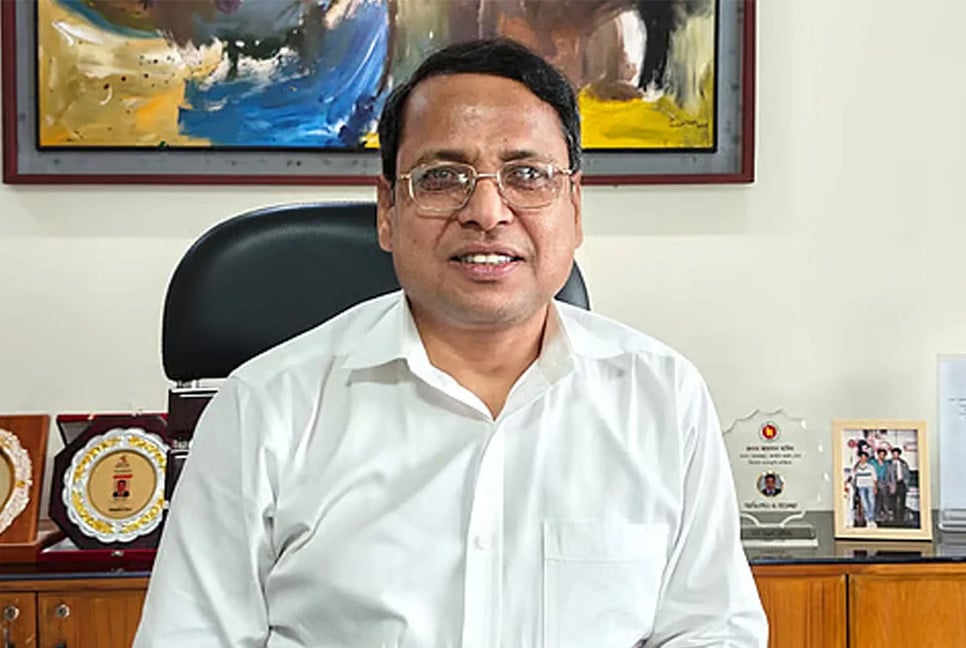
Professor Abu Ahmed, chairman of the Investment Corporation of Bangladesh (ICB), said on Tuesday that these closures were inevitable.
“Once a financial institution loses its reputation, everyone withdraws their money. That is what happened here,” he said.
He added that a government-backed rescue was unlikely. “I don’t think the government will take responsibility here as it does for banks. And it is not possible to take a collective approach for these nine institutions either. Because who willv provide the money?”
While depositors may receive payouts from asset sales, he noted that shareholders would be last in line. “Now everyone is trying to sell shares of these institutions. Even we at ICB hold many of their shares. We cannot sell them now.”
In July, Bangladesh Bank identified 20 institutions in its “Red Category.” These nine were selected for closure, while the remaining 11 -- CVC Finance, Bay Leasing, Islamic Finance, Meridian Finance, Hajj Finance, National Finance, IIDFC, Uttara Finance, Phoenix Finance, First Finance, and Union Capital -- remain under heightened monitoring.
Source: Daily Sun
Bd-pratidin English/ ANI