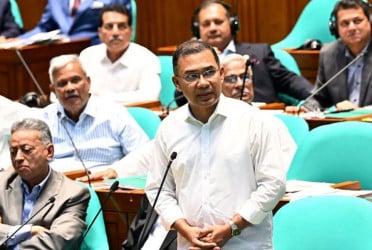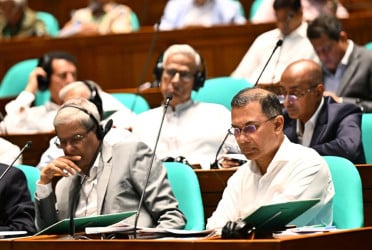
A fundamental debate over whether the Constitution should be amended or fully reformed has divided political and policymaking circles, creating uncertainty over the formation of a special parliamentary committee to review the Constitution.
The process to form the committee, involving the two major political alliances, failed despite an initiative taken during the first session of the 13th Jatiya Sangsad.
Source involved in the process said differences have emerged over the future of the Constitution. One group believes that repealing or revising controversial amendments introduced in recent years would be enough to restore democratic balance. On the other hand, a significant section, particularly in the post-uprising political context, is calling for a comprehensive constitutional reform.
Senior leaders of the two alliances said a clear direction must be set first regarding how to proceed on the Constitution. Without defining the goal, forming a committee would serve little purpose, as the issue involves ideological positions of both alliances.
Experts said the uncertainty will persist until a national consensus is reached on whether to alter the fundamental structure of the Constitution. However, the alliances have yet to agree on priorities—whether to focus on balancing the powers of the president and prime minister or ensuring judicial independence.
Although the government moved to amend the Constitution in line with the “July Charter” signed after the mass uprising, the opposition Jamaat-NCP alliance did not submit names for the proposed Constitution Amendment Committee. The opposition has been demanding the formation of a Constitution Reform Council based on a referendum verdict.
Despite showing some flexibility after the annulment of the referendum-related order in parliament, the alliance has yet to make a final decision on joining the amendment committee, taking more time for consideration. As a result, the committee is unlikely to be formed before the next parliamentary session.
On April 29, Law Minister Md Asaduzzaman proposed forming a special parliamentary committee for constitutional amendment in line with the July Charter. Earlier, Home Minister Salahuddin Ahmed had made a similar proposal.
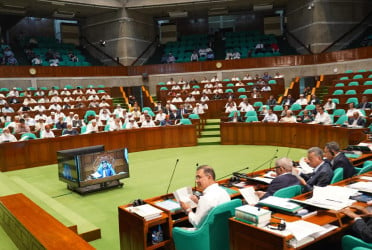
The law minister said a 12-member list had been prepared, including representatives from BNP, Gono Odhikar Parishad, Ganosamhati Andolan, Bangladesh Jatiya Party (BJP), and independent MPs. Referring to the opposition’s 26 percent representation in parliament, he said five members were expected to be nominated from their side. The proposed list includes seven members from BNP and five from other groups.
He said if the opposition submitted five names, the proposal would be placed in parliament the next day (April 30) to proceed with forming the committee.
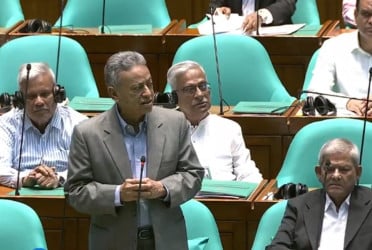
Opposition leader Dr Shafiqur Rahman said they support constitutional reform, but the current initiative appears to focus on amendment. “We have differences on this issue, and those still remain,” he said.
However, the opposition Jamaat-NCP alliance did not submit names for the committee before the session ended last Thursday, leading to the failure to form it.
The next session of parliament is scheduled to begin in June ahead of the national budget. As a result, the process of constitutional amendment under the July Charter has been delayed.
Bd-Pratidin English/ AM