The nation was suddenly thrown into a frenzy by news of money printing. Even economists jumped on the bandwagon of rumors spreading across social media. Without verifying whether the government had actually printed money, discussions erupted. On April 23, Ashikur Rahman, Chief Economist of the Policy Research Institute (PRI), remarked that the government had started printing new currency. He stated that in March alone, the government borrowed Tk20,000 crore from the Bangladesh Bank, labeling it "high-powered money" or printed cash, which could fuel inflation. His source for this information was social media. When an economist publicly speaks about money printing, the general public believes it. Like the proverb of the crow taking one's ear, no one bothered to verify the actual truth.
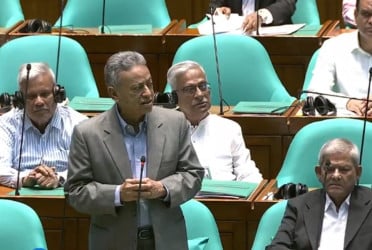
The impact of such a comment by an economist was felt immediately in the market. Consequently, the Governor was forced to speak out. On April 26, the Governor of Bangladesh Bank clarified that the information regarding money printing was incorrect. He made this statement during a pre-budget discussion for the 2026-27 fiscal year with publishers and journalists at the Ministry of Finance. On Sunday, the Finance Minister added that the news of money printing was entirely baseless.
This incident is a classic example of how a rumor and false news gain credibility. Such incidents are happening every day. It appears that social media is now more interested in character assassination, spreading lies, and inciting violence than in revealing the truth. By spreading false and baseless rumors, some are literally challenging the state and the government. They are becoming a parallel government.
These individuals label anyone they wish as a criminal and conduct trials through social media, unleashing "mob forces" against them. They are forcing the government to make arrests even before charges are proven. The dominance of social media has reached a point where the police, out of fear, are arresting innocent people without formal complaints. Judges are unable to ensure justice due to the fear of foul and filthy attacks from "view-traders." These view-traders are attempting to establish dominance across all sectors of the state. Social media has effectively taken the government and the people hostage. Even the government's good deeds are being trolled. This viral rumor brigade seems beyond reach—above the law and the judiciary.
Social media lacks social responsibility; it only cares about "view and viral" business. Without verification, many are using social media to earn money by spreading sensational rumors and lies. Some are igniting the fires of hatred and malice in society. Social media has now become the largest platform for extortion. Character assassination followed by blackmail has become a common occurrence. From businessmen to ordinary citizens, no one is safe from this type of blackmail. Using AI-generated images or false information, large sums of money are demanded from businesspeople. If they refuse, a dirty game of character assassination begins.
Truth has become a prisoner to these view-traders. The common people are confused today. To vent personal grievances, certain viral YouTubers are endangering the lives of innocent people. Social media is the name of a new terror in society, standing as a major threat to the government.
Politics is the conscience of a nation and the driving force of a state. But when logic is replaced by insults, opinions by humiliation, and respect for dissent by hatred, the state structure does not just weaken—society loses its moral foundation. In today's Bangladesh, this reality is most visible on social media, where a form of barbarism, subculture, and "digital missiles" of character assassination are being deployed in the name of political expression.
While social media has given democracy a new form, it has also been transformed into a virtual field for political violence. Here, if someone holds a different opinion, they are labeled a "broker," "traitor," or "spy." Their private lives are hacked to spread insulting information. Attempts are made to socially isolate them through political or religious slander. Indecent comments are directed at female politicians—acts unimaginable in a civilized society. This trend has taken Bangladesh to a dangerous place where logic no longer exists, only a competition to seize power through insults.
On Facebook, YouTube, X (formerly Twitter), and even in the comment sections of news outlets, the language used against political opponents is making our future generation violent. Social media held the potential to bring politics to the masses, but it has now become a platform for a group of "uncivilized brawlers." On these platforms: A logical post is met with: "Which party are you on?" Neutral thinking is labeled as: "You are an opportunist."Dissent means: "You are the enemy." Silence means: "You are a coward."
This imagery is a reflection of a sick, toxic political environment.
After August 5, 2024, these social media terrorists issued direct calls to demolish various buildings and structures. Following these public declarations by view-traders, excited mobs razed various establishments. Many businesses and shrines were destroyed due to social media incitement. The interim government remained silent against these destructive activities; in many cases, there was tacit support for these illegal acts.
Swarms of Artificial Intelligence (AI) are roaming social media disguised as human accounts. Their primary job is to spread fake news and confuse the public. Disinformation is the biggest threat to social media; it spreads like wildfire. Social media has also simplified the dark tactics of "honey trapping" and creating conflict. Honey trapping is a deceptive strategy where fake profiles, romantic messages, or attractive photos are used to lure someone into a personal trap, later using sensitive information for financial blackmail or political character assassination.
In this situation, it is not just the free flow of information that is being obstructed; political culture, social harmony, and state security are being disrupted. As a result, democracy is under threat. In Bangladesh, this has taken the form of an uncontrolled pandemic. Measures must be taken immediately to prevent this information terrorism on social media.
Various initiatives have been taken globally to stop such misinformation. Different countries are now trying to regulate rumors and false information on social media and impose control over their irresponsible and reckless activities. Social networking platforms like Facebook or YouTube have long claimed to have systems in place to remove offensive content themselves. YouTube claims it takes swift action once it learns of offensive content. However, in countries like Bangladesh, the monitoring by Facebook or YouTube is significantly lower. There are thousands of pieces of content that are violent or fake, yet they remain active.
Consequently, many countries have enacted laws to bring these companies under legal frameworks. The British government recently proposed steps to hold company officials accountable if harmful content is published on their platforms. These measures include massive fines or even blocking their services entirely. In Germany, a new law took effect in early 2018. Any social media platform with over two million users falls under this law, requiring them to investigate and review complaints about content within 24 hours. Failure to comply can result in fines up to 5 million Euros for individuals and 50 million Euros for the companies. This has significantly reduced rumors and provocative posts there.
The European Union is considering strict measures against offensive content, especially videos encouraging extremism. The General Data Protection Regulation (GDPR) has been in effect since 2018. Australia has introduced a strict law prohibiting the sharing of violent and heinous material online, with criminal charges and jail time for company officials. Fines can reach up to 10% of a company’s global turnover. In Russia, a 2015 data law requires all social media companies to store data regarding Russian citizens on servers located within Russia. Twitter, Google, and WhatsApp are banned in China, though they have their own platforms like Weibo, Baidu, and WeChat, with the government successfully limiting the use of VPNs.
Social media has turned into a monster in Bangladesh. It is challenging the state and the government. Therefore, by reviewing the laws of various countries, citizen protection must be ensured from social media immediately. On one hand, institutions like Facebook and YouTube must be brought under the laws of Bangladesh; on the other hand, there must be provisions to take action against those who seek to create chaos. Additionally, the government must monitor rumors regarding important issues. If action is not taken against this rumor-mongering and information terrorism right now, the very existence of Bangladesh will be under threat.
Audite Karim: Writer and Playwright
Email: [email protected]