Only a handful of days remain before the election. At this moment, the full attention of the interim government should be focused solely on the election – on how to ensure a free, fair, and neutral vote. However, it is being observed that, ahead of the election, the government is showing unusual enthusiasm in rushing through several major policy decisions. Not only policy decisions – there has also been a sudden spree of government procurement.
This is not routine purchasing. At rocket speed, the government is making large-scale, high-cost purchases just before the election – expenditures that even an elected government would hesitate to undertake. These are the kinds of policy decisions that even a mandate-backed government would think about ten times before making. The government’s sudden activism at the final hour has surprised the general public.
At this time, political parties are extremely busy with election campaigns. It is nearly impossible for them to closely monitor government actions. Has the government chosen this moment for that very reason? Why does it want to complete important tasks away from public scrutiny?
Just three days before the upcoming national parliamentary election, the interim government is set to sign a tariff agreement with the United States.
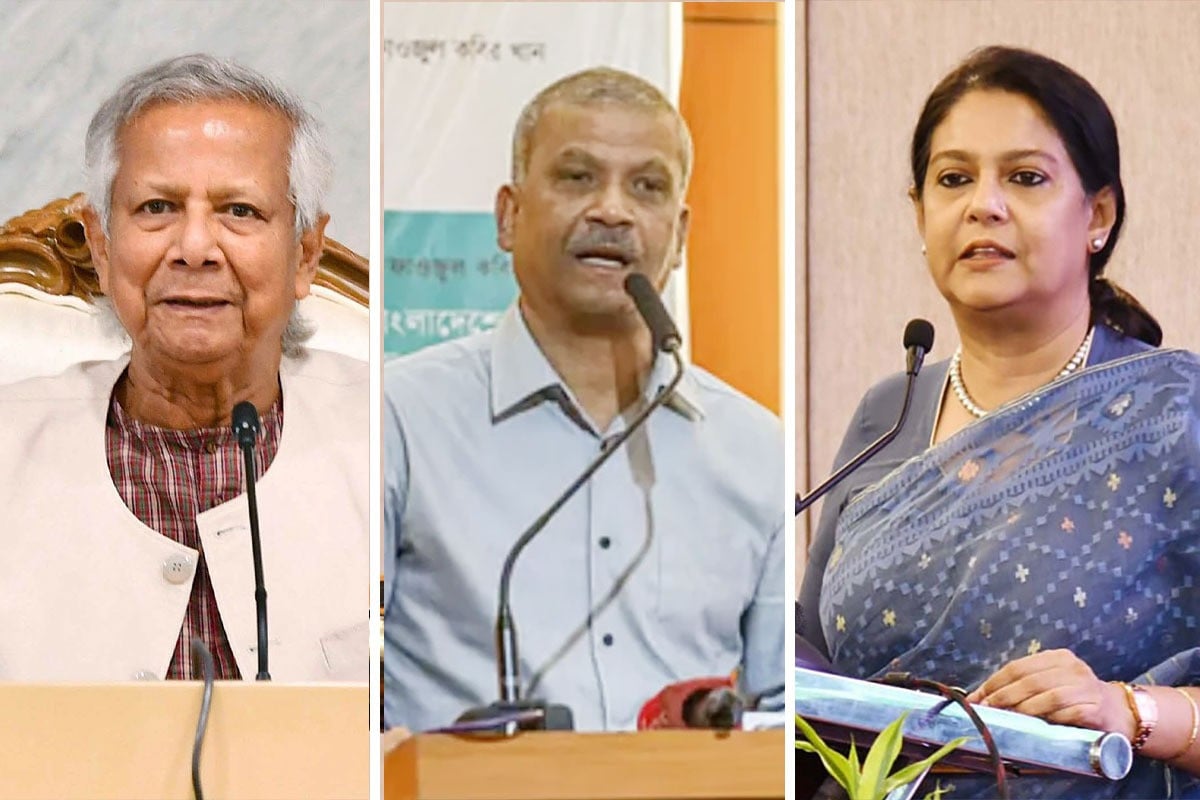
The agreement-signing ceremony will take place on 9 February in Washington, DC. Initially, Commerce Adviser Sheikh Bashiruddin was supposed to lead the Bangladeshi delegation, but ultimately Commerce Secretary Mahbubur Rahman will lead it.
In August last year, Bangladesh and the United States reached an understanding regarding a 20% retaliatory tariff imposed on Bangladeshi products, though no formal agreement was signed. Now that agreement is set to be finalised in Washington, DC. To conclude the deal, Commerce Adviser Sheikh Bashiruddin and Commerce Secretary Mahbubur Rahman will leave Dhaka on 5 February.
They will first travel to Japan. On 6 February, the Bangladesh–Japan Economic Partnership Agreement (BJEPA) will be signed in Tokyo. From there, the Commerce Secretary will proceed to Washington, while the Commerce Adviser will return to Dhaka.
Although the administration of US President Donald Trump initially announced retaliatory tariffs of 37% and later 35% on Bangladeshi goods, it kept the door open for negotiations. After the third round of talks in Washington, the rate was reduced to 20% on 31 July last year. However, no formal agreement was signed at that time. Subsequent discussions continued with the aim of further tariff reductions and duty-free access for garments made with U.S. cotton. Those talks are now moving towards a formal agreement.
According to sources at the Ministry of Commerce, to obtain these benefits Bangladesh had to commit to reducing its trade deficit with the United States. As part of this commitment, plans include purchasing 25 aircraft from Boeing over the coming years, along with increased imports of fuel oil, LNG, wheat, and cotton.
Under this agreement, Bangladesh will purchase 25 Boeing aircraft from the United States. Negotiations regarding the number of aircraft, delivery timelines, pricing, and internal configuration are ongoing, and it is reported that these details will be finalised through this agreement.
This raises a critical question: does a government have the moral authority to sign such an agreement just three days before an election? It must be remembered that the current government is an interim, unelected government. Its primary responsibility is to transfer power to an elected government through a neutral election. Not only because it is unelected, but also because no democratic government would sign such a major agreement immediately before an election. Doing so runs counter to democratic norms.
Such agreements legally commit the state to spending enormous sums of money – financial obligations that the next elected government will have to bear. Even before assuming office, the new government will be forced to shoulder a massive financial burden, creating a significant challenge. Moreover, decisions such as how many Boeing aircraft to buy and over what period are inherently political decisions. A newly elected government should be able to evaluate realities and decide accordingly. If such a massive financial commitment is imposed beforehand, how will the new government function?
It is also noteworthy that just a few days ago, three key government figures were appointed to the board of directors of Biman Bangladesh Airlines. They are National Security Adviser Dr Khalilur Rahman, Special Assistant to the Chief Adviser Fayez Ahmed Taiyeb, and Senior Secretary of the Election Commission Secretariat Akhtar Ahmed. A gazette notification stated that, under Section 30(b) of the Bangladesh Biman Act, 2023, they were appointed as directors of Biman Bangladesh Airlines Limited, effective immediately in the public interest.
The board of directors of Biman Bangladesh Airlines plays a crucial role in policymaking, financial management, and strategic decisions for the national flag carrier. Many are now drawing a connection between the reconstitution of the board and the planned Boeing purchase.
This is not the only instance. In recent days, amid election tensions, the interim government has displayed a tendency to hurriedly take various significant decisions.
On 21 January, the National Pay Commission submitted its recommendations to Chief Adviser Dr Yunus. Implementing the new pay scale could require additional expenditure of BDT 70,000 to 80,000 crore. Needless to say, this government will not be able to implement the new pay scale itself. Why such a burden is being placed on the next elected government is unclear to many.
At the very end of the interim government’s tenure, an initiative has also been taken to form a National Media Commission. To ensure media freedom and journalist protection, the Ministry of Information and Broadcasting has drafted the National Media Commission Ordinance, 2026. On 28 January, the draft was published on the ministry’s website for public feedback – allowing only three days for responses. The day before, a draft Broadcasting Commission Ordinance was also published, indicating that the ministry intends to form two separate commissions. This has triggered strong reactions and criticism in the media.
Why the government has become so desperate at the final hour is now the subject of widespread discussion. This government was formed through a mass student-led movement. Implementing the spirit of July is its core mandate. Over the past 17 months, every political party has extended wholehearted support and cooperation to this government. No government in Bangladesh’s history has received such broad-based backing.
Now it is the government’s responsibility to repay the trust of political parties and the people. As it prepares to depart, it should not take any actions that create discomfort for the next government. The interim government should limit itself to routine responsibilities in these remaining days. We do not want questions to be raised about this government at the very end of its tenure.
Audite Karim is a writer and playwright. Email: [email protected].