1. Elections and distrust: Words everywhere, but lack of understanding
Whenever I give interviews to the media, I try to stress one point again and again—this is not an ordinary election. Amid the flood of words, information, claims and counterclaims surrounding the polls, there is a vast emptiness. In the election, the public’s emotions, hopes and fatigue coexist. Some say, “This time we want change,” while many others feel that “no matter how often we vote, life does not change.” This psychological divide is the biggest reality of the present moment.
In interviews, I have said that the environment surrounding this election is drifting into uncertainty rather than formality. Excluding ordinary people, electoral preparations appear to have been carried out like an unregulated strategy; the election has been reduced to a token event. In many places, I have seen long-standing fatigue among people—they listen, they assess, but they do not express it openly.
This is not just political analysis; it is a real feeling born of people’s daily struggle with life. People are asking: will my vote really bring improvement? Others ask: will my vote ensure my safety? If there is no interest in voting, or if people are misled by misinformation, the election result will exist only on paper, not in reality.
In addition, social pressure in both metropolitan and rural areas, excessive rhetoric, and the negative undertones within political campaigns are being used for electoral purposes. When voter interest declines or misinformation confuses people, election outcomes remain confined to documents, not lived reality.
As we have recently seen, misinformation, rumours and fake news are spreading rapidly during election campaigns, creating uncertainty in ordinary people’s lives. At such times, silence is not merely quietness; it is a form of discontent. Amid the noise of words, people seem to lose their own question: “Will this election answer the questions of my life?”
2. The political use of religion: When faith becomes a tool of division
The use of religion as a political instrument by Islamist parties is increasing division and uncertainty in society. Parties such as Jamaat and Islami Andolon Bangladesh often address voters in a way that suggests that not voting would harm their iman (faith), while voting would bring worldly peace and salvation in the hereafter—thus encouraging people through such inducements.
This is not merely a political tactic; it strikes directly at the core of people’s trust. Such practices confuse the public. Examples from both rural areas and metropolitan centres show that leaders are presenting voting as a spiritual duty. In election rallies in constituencies such as Lakshmipur-2 or Kurigram-2, leaders have framed voting in exactly this way. This demonstrates how religion is being used as a direct tool for political influence.
When political parties exploit religious sentiment to secure votes, it appears that people are being influenced by two powerful forces—fear and hope. Such statements often stray from authentic religious teachings and create confusion. Analysts have warned that weaponising religion in this manner breeds division, fear and electoral uncertainty. Iftekharuzzaman, Executive Director of Transparency International Bangladesh (TIB), has said: “Religious sentiment is being used deceptively, which is not only unethical but also an insult to religion itself.” BNP Secretary General Mirza Fakhrul Islam Alamgir has also stated clearly that Islam never teaches that voting guarantees heaven or avoids hell; such interpretations create false perceptions.
The electoral code of conduct clearly prohibits the use of religion or spiritual sentiment to solicit votes. Yet in practice, we do not see effective enforcement of these rules. Here too, the responsibility of the Election Commission is clear—to prevent the misuse of religion. But visible and firm action is lacking. As a result, the mixing of religion and politics is calling into question democratic principles, social cohesion and national stability. An Election Commission official, speaking on condition of anonymity, said that complaints have been lodged and regional committees formed, but no visible strict measures have been taken.
This is sowing seeds of fear, division and mistrust in society. Political analysts warn that using religion as a political tool weakens democratic values, social equality and national unity alike.
3. The international context: Crisis, instability and global uncertainty
Beyond Bangladesh’s election and religion-based politics, the international environment today is far from calm. Global conflicts, geopolitical tensions and the absence of peace have reached record levels in 2026, directly affecting politics in smaller countries.
At the World Economic Forum in Davos, leaders discussed how to move forward through cooperation in an increasingly competitive world. At the same time, many countries are strengthening their security through arms purchases. The United States has approved nearly USD 16 billion in arms sales to Egypt, Saudi Arabia and Israel, further heightening tensions in the Middle East.
High-level meetings between Russia and China have taken place against the backdrop of international security crises, seen as part of efforts related to resolving the Russia–Ukraine conflict. Meanwhile, record-breaking warm January temperatures across the globe are linking the frightening realities of climate change directly to citizens’ daily lives. Peace, the economy and security together now form a single, tangible global challenge. When major powers take divergent paths in their decisions, citizens of smaller countries feel the consequences translated directly into their own lives. In such times of international instability, maintaining political and social stability at home is not easy.
Thus, elections, religious influence and international instability together create a complex psychological and social context. For citizens, it is not only voting that matters, but also judgement, awareness and ethical responsibility.
4. Social media: Opportunity, risk and responsibility
Today, social media has penetrated deeply into the lives of even the most marginalised people. It is not merely a news platform; it is a powerful arena for opinions, emotions, indifference and political decision-making. However, its influence is not always positive.
Social media enables rapid access to information—news from distant places reaches us instantly. International developments, election results and politics can all be followed in a short time, expanding our knowledge. But the same platforms also allow misinformation, deliberate rumours and confusion to spread just as quickly. Previous surveys show that the spread of misinformation on political and national issues increased significantly last year. While misinformation related to Muslim or religious issues declined slightly, false information on political and national matters rose.
Social media accelerates political emotions, but when that energy is driven by misinformation and creates confusion, trust at the societal level erodes. If posts, videos or comments contain incitement, division or propaganda, their impact fragments society.
At the same time, we see social media helping to increase civic participation, encourage critical debate and raise awareness. It can make political decision-making more inclusive and, through honest and accurate reporting, strengthen democracy.
Just as social media offers opportunities, it also creates risks. If misinformation, propaganda or divisive voices are not addressed, the impact will go beyond false news and harm overall social well-being. Responsibility and vigilance are essential. People must be taught to verify information, avoid confusion and maintain social etiquette.
Conclusion
These four issues—elections and distrust, religious political strategies, international instability and the impact of social media—are each major chapters in their own right. Yet they are not separate; they are intertwined through the relationships between society, the state, citizens and technology.
When public silence becomes visible in elections, when religion is used as a political tool, when international tensions enter people’s daily lives, and when social media blurs the line between truth and falsehood, we are not merely counting votes. We are questioning trust, ethics, equality and the future.
Without human values, responsibility and awareness, no election result will be sufficient for society. That is why I argue that amid the noise of words, the human voice must not be lost; rather, political consciousness grounded in human values must be awakened.
Democracy is not just a number of votes; it is the minds of people, their trust, their freedom of thought and their active participation. If awareness and ethical responsibility are not fostered on all these fronts, the future will become merely a statistic—it will not become the people’s story.
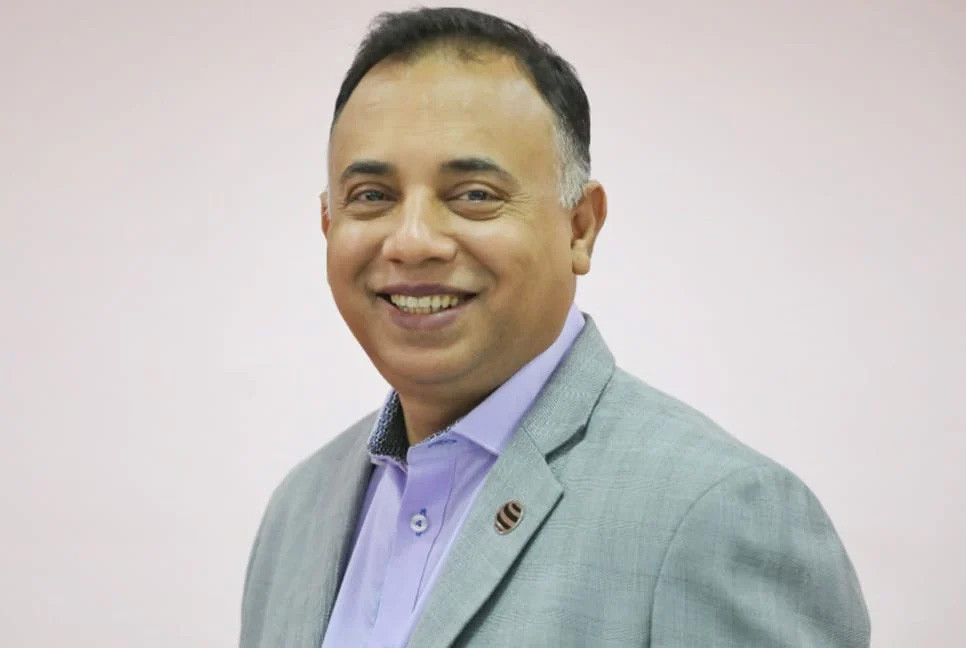
Author: President, Centre for Governance Studies