The national election scheduled for 12 February is set to be one of the most uncertain elections in Bangladesh’s history. Only 10 days remain until polling day, yet voters remain tight-lipped. It is difficult to understand whom they prefer. Many believe that because they have been given the opportunity to exercise their voting rights after a long time, voters are being particularly cautious.
A large number of young voters will cast their ballots in this election. According to the National Youth Policy 2017, citizens aged between 18 and 35 are considered youth. An analysis of voter age data shows that more than 45 million young voters will participate in the upcoming election. Due to the last three controversial elections, most of those who became voters between January 2009 and now will be voting in a national election for the first time. Political analysts say that young voters will be the biggest factor in forming the next government. The ballots of young voters may go to those political parties that promise positive change in the state and politics.
However, Bangladesh’s youth are divided along various opinions and paths. A review of recent student union elections in public universities shows that students are divided along different ideological lines. After the mass uprising of 2024, divisions within the student community have become even more apparent. Therefore, it can be said with certainty that the votes of 45 million young voters will not go into a single ballot box. The young generation of voters will not vote as a unified bloc for any particular party in this election. As a result, they will not be able to act as the decisive factor in determining the election outcome. During the July movement, young people from all political parties participated. Everyone united from their respective positions with the goal of freeing the country from autocracy. After the movement, everyone returned to their own spheres. Therefore, young voters will cast their votes based on their party loyalties.
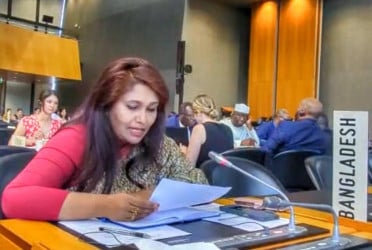
In this election, the number of women voters stands at 62,879,042. Although nearly half of the country’s voters are women, the number of women candidates has declined at an alarming rate in this election. According to the Election Commission, a total of 1,981 candidates are contesting in the 13th National Parliamentary Election, of whom only 80 are women—just 4.04% of all candidates. Transparency International Bangladesh (TIB) has reported that women make up only 3.38% of party-nominated candidates, while among independent candidates, women account for 10%.
According to Clause 22(b)-(d) of the July National Charter 2025, prepared by the National Consensus Commission, every political party is required to ensure that at least 5% of its nominees in this parliamentary election are women. The target is to gradually increase this to 33% in subsequent elections. However, as the July Charter has not yet been implemented, this provision is effectively non-operational at present.
Moreover, among the 51 political parties contesting the upcoming national election, 35 have no women candidates at all.
Despite the low number of women candidates, there is no reason to believe that women’s turnout at polling stations will be low.
Bangladesh’s past three elections are generally considered to have been relatively neutral and acceptable. These were the national parliamentary elections of 1991, 1996, and 2001. An analysis of the results of these three elections shows that whichever party women voted for emerged victorious. In the 1991 election, the BNP won 144 seats with approximately 31% of the vote. In that election, 57% of women voters voted for the BNP. In other words, it was because of women voters that the BNP won and formed the government that year. In the 1996 election, the Awami League won with nearly 38% of the vote. In that election, the BNP’s vote share also increased – from 31% in 1991 to more than 33%. However, the BNP’s share of women voters declined significantly. In the 1996 election, only 35% of women voted for the BNP. Losing 22% of women’s votes forced the BNP into the opposition. An analysis of the 2001 election results again shows that strong support from women voters enabled the BNP to form the government with a two-thirds majority. In that election, the difference in overall vote share between the BNP and the Awami League was very small. The BNP received 41% of the vote, while the Awami League received just over 40%. However, the women’s vote told a different story. Once again, 57% of women voted for the BNP. In other words, although the Awami League was ahead in terms of male votes in the 2001 election, it was women who placed Begum Zia in power. Therefore, regardless of how few women candidates there may be, women remain the biggest factor in elections.
The most important point is that women’s voting preferences tend to be similar. Except for women who are directly involved with political parties, ordinary women held almost identical perspectives in those three elections. Their voting considerations were largely the same. The reason is that women in Bangladesh share a similar psychological outlook. Whether educated or uneducated, urban or rural, women across regions face largely similar life realities. All women must constantly struggle against adverse environments and circumstances. As a result, many similarities can be found in their thinking. And it is not only elections – women have turned the tide of every major movement in Bangladesh. The final victory of the pro-democracy movement of the 1990s came when women stepped out of their homes.
From the quota reform movement of 2024 to the one-point movement that led to the fall of autocracy, Bangladesh witnessed a unique chapter in its history. Women were at the forefront of the movement from start to finish, which began with demands for reform of quotas in government jobs. Their bold presence was visible everywhere – on the streets, in processions, and in organizational roles.
On university campuses, especially, the active participation of female students was evident. They led from the front in street processions. Not only in rallies, but many women also arranged food and water for protesters, while others were involved in caring for the injured. In different ways, women advanced the movement.
In Bangladesh, no mass movement has ever been complete without the participation of women. A look back through history shows that from the struggle for independence to the mass uprising of the 1990s, or the Road Safety Movement of 2018 – women have played courageous and leadership roles in every struggle. Yet, after the movements, their contributions were not recognized.
In the movement of 2024 as well, women’s courage overshadowed everything else. The student movement of 2024 was a mass explosion against long-standing injustice and discrimination. Just as people took to the streets in 1952, 1969, 1971, and 1990 with the desire to break chains and establish rights, a new awakening occurred in 2024 as well. But after this movement, the situation of women did not improve. On the contrary, in many cases new problems emerged for women. Violence against women increased. Incidents of abuse against women also rose.
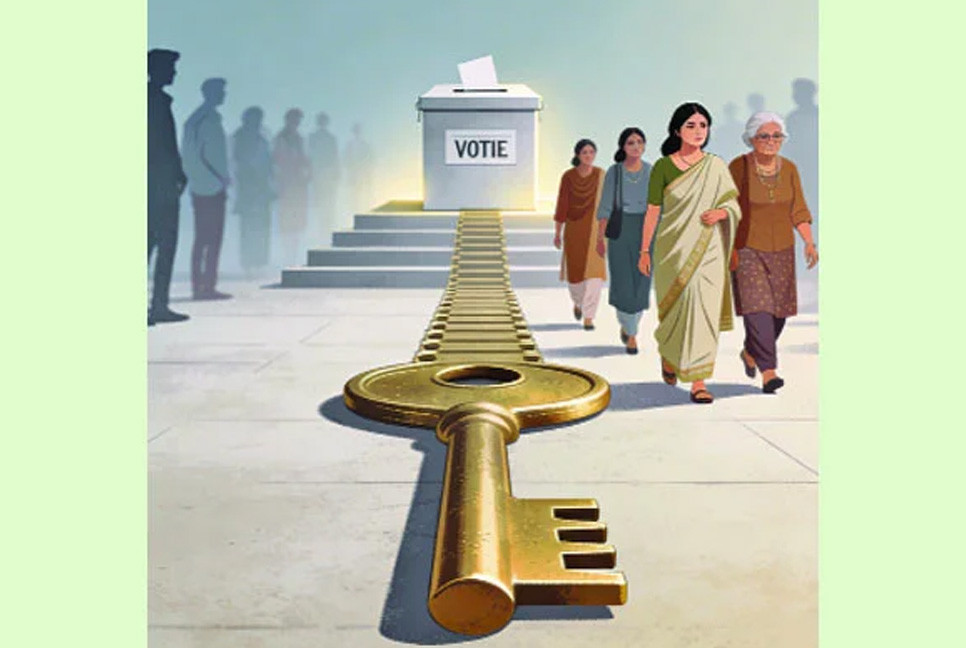
Therefore, what women are thinking in this election will have a major impact on the outcome. How are women faring after the movement of ’24? How much has their position in society changed? How secure are women now? Surely, every woman has answers to these questions. Women remain silent—but they will certainly express their opinions through their votes. And they never make mistakes when it comes to taking the right decision at the right time. In this election, their opinion is the most important. And based on that opinion, the next government will be formed. The key to power lies in the hands of women voters. Whom they will hand over that key to will be known on 12 February.
Audite Karim is a writer and playwright.
Email: [email protected]