No national parliamentary election in Bangladesh’s history has been held without conflict, killings, arson, or post-election persecution of leaders and activists of the defeated main opposition parties, including looting and vandalism of their homes and business establishments. Every election has been bloody and deadly. That the 13th national parliamentary election will also not be free of violence has become evident from the conduct of the two principal rival parties.
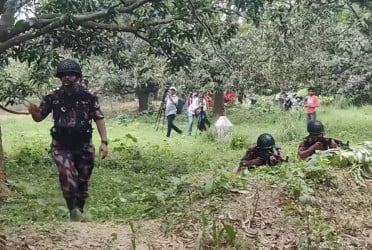
Already, in the otherwise quiet and remote border upazila headquarters of Jhenaigati in Sherpur district, clashes between supporters of the BNP and Jamaat-e-Islami have left a local Jamaat leader dead and at least 50 people from both sides injured. Clashes are also being reported in other parts of the country. There are fears that, due to the visible inaction of law enforcement agencies, such violence will further escalate before and after the election.
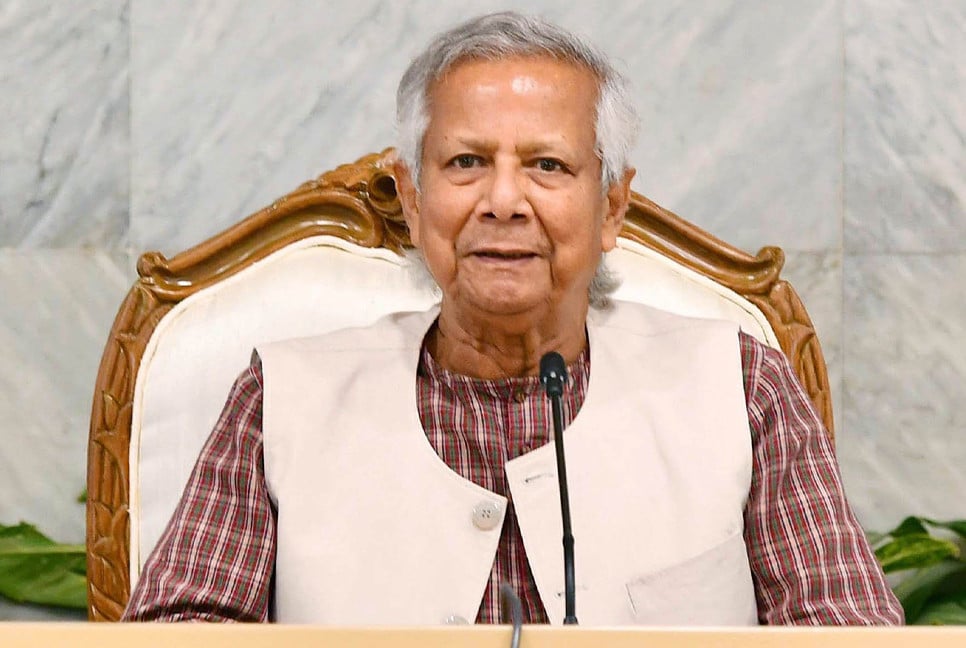
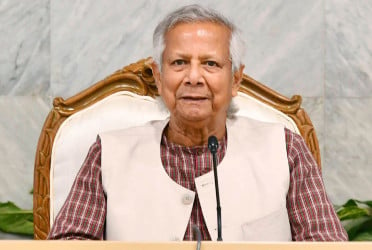
The hope expressed by Chief Adviser of the interim government, Dr Muhammad Yunus, of turning the national parliamentary election into a “national festival like Eid” is likely to prove illusory.
After liberation from Pakistan, the Awami League—claiming exclusive credit for the country’s independence—had pledged to establish voting rights, but failed to honour that commitment due to its desire to entrench its own hold on power.
In the first national parliamentary election held in 1973, the Awami League viewed with suspicion the rapid rise in popularity of the newly formed and weak opposition party, the Jatiya Samajtantrik Dal (JSD). To ensure the defeat of JSD candidates with winning prospects, the Awami League used muscle power at polling centres in their constituencies, intimidated voters, seized ballot papers and stuffed ballot boxes in favour of its own candidates. In some cases, ballot boxes were even snatched and flown to Dhaka by helicopter on the pretext of vote counting at the Election Commission, though those votes were never counted. The declaration of Awami League victories in 293 out of 300 parliamentary seats proved that the election was not merely marred by “subtle” irregularities but by large-scale rigging, or that voters’ free will was not allowed to be reflected.
This pattern never ceased. Even in the three elections held under Awami League governments up to 2024—despite the absence of any major opposition party and low voter participation—none were violence-free. Each election witnessed widespread clashes and numerous casualties across the country. In the 10th parliamentary election in 2014, although 153 ruling Awami League candidates were elected unopposed, 21 people were killed on polling day and more than a thousand were injured. In the 11th parliamentary election in 2018, 19 people were killed, while following the announcement of the election schedule for the 12th parliamentary election in 2024, 16 people were killed and many others injured.
Once political allies who worked together as inseparable partners while in government, these two parties have now discarded the cloak of former friendship in their quest for sole power, hurling abuse at one another and exposing each other’s darker sides.
Will the election truly resemble an “Eid festival”? From 2014 to 2024, Bangladeshis were unable to vote for 11 consecutive years. Many have forgotten the procedures of voting. Those who became first-time voters during this period never learned how to vote. The Awami League that once, under Sheikh Mujibur Rahman, dominated the streets of Pakistan-era Bangladesh demanding “one person, one vote”, was the very party under whose leadership Bangladeshis first lost the value of their vote in the first parliamentary election. What is a free, fair and impartial election supposed to look like? When every method is used to instil fear among voters, how many heads must a voter have to exercise their franchise in favour of their chosen candidate?
According to various research organisations, in the five months before and after the February 1973 election, during the height of Awami League dominance, 2,035 people were victims of targeted killings. A further 4,925 people were killed by so-called criminals. There were 337 abductions, most of whose victims never returned, and 190 women were raped.
Subsequent electoral history is equally blemished. Analyses of newspaper reports by research bodies present a grim picture of election-related violence. The second parliamentary election in 1979 was held under martial law, with press censorship in place, meaning casualty figures were not widely reported. Nonetheless, research points to widespread violence and rigging in that election.
In the 1986 election, 29 people were killed and more than 500 injured; in 1988, 12 were killed and many injured; before and after the 1991 election, 39 were killed and 1,090 injured. Ahead of the February 1996 election, 20 people—including four police officers—were killed, with an unknown number injured, and another 20 were killed on polling day. In the June 1996 election, 14 people were killed and more than 700 injured, including six on election day. In the 2001 eighth parliamentary election, within 35 days of the announcement of the schedule, 124 people were killed and more than 6,000 injured, including five deaths and over 500 injuries on polling day.
The lowest number of deaths in electoral history—just one—occurred in the parliamentary election held on 29 December 2008, under a military-backed caretaker government. Even then, numerous people were injured in clashes between supporters of the BNP and the Awami League in different parts of the country.
With few exceptions, Bangladesh’s elections have seen low voter turnout relative to the total electorate. Questions are often raised as to why voters do not vote, or why they appear indifferent. When genuine voters go to polling stations only to find their votes already cast—even votes cast in the names of the deceased—the counter-question naturally arises: why should voters vote, or how can they?
There has been no election after which the defeated party did not accuse the winner of violence, vote rigging or manipulation. All things considered, the 13th parliamentary election is therefore critically important. Voters have given their lives for the right to freely choose their representatives, yet they have never been able to exercise that right properly, send their preferred candidates to parliament, or remove unwanted governments through the ballot box.
Civilian governments mired in internal conflict, corruption or failures in maintaining law and order were overthrown through the imposition of military rule in 1975 and 1982. Governments fell following the mass uprising of 1990 and the successful revolution of 2024. In 2007, a military-backed caretaker government clung to power for two years. After such bitter experiences, the present changed circumstances have offered people an opportunity to vote according to their will. The two principal rival parties—the BNP and Jamaat-e-Islami—should have been most attentive to ensuring voters could seize this opportunity.
Yet the situation suggests otherwise. Former political allies who once shared power as inseparable partners now appear unwilling to allow voters to vote freely. They have abandoned their past alliance, trading insults, threats and exposing each other’s flaws—sometimes seemingly for the sake of provocative rhetoric that entertains the public. Their campaigns, particularly on social media, are largely inflammatory and filled with hateful content. Despite the election administration being under the Election Commission, the commission’s failure to act against violations of electoral rules by parties and candidates reflects its weakness and ineffectiveness. With only a few days remaining, it is no longer possible to ensure a free and fair election without immediately taking firm control of the situation.
Disenfranchised Awami League supporters are lying in wait to disrupt the election at any pretext. If the rival parties fail to respect the election and the July Charter, achieved at the cost of more than 1,500 martyrs and countless people left blind or permanently disabled, the election result—if held at all—will be controversial and contested. Any government formed through such an election, regardless of the size of its majority, would quickly face agitation.
The people of the country do not wish to endure such trials repeatedly. An election is not a social event, nor is voting a social ritual; it is a civic responsibility towards the nation. It is a mechanism through which voters can empower themselves from a position of powerlessness. Political parties must remember that elections are not meant to satisfy mutual vendettas by securing power at any cost while sacrificing voters’ collective and national values, only to exploit a corrupt system for self-interest instead of reform.
Author: US-based senior journalist