13th national parliamentary election, scheduled for February 12 alongside a national referendum, is shaping up as a crucial test for the interim government, with voter turnout emerging as its biggest challenge.
After a prolonged period of political upheaval and transition, public interest in the election is high. The government has stepped up efforts to encourage participation, aiming to ensure higher turnout than in previous elections and bolster the poll’s credibility and acceptance.
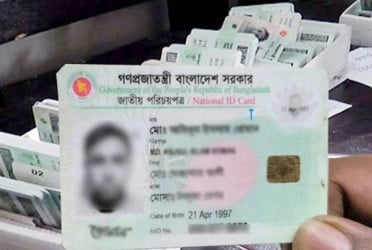
According to the Election Commission (EC), the total number of voters in this election is 127,711,895. Males are 64,825,151, females are 62,885,524, and transgender voters are 1,120.
The maximum number of young voters are getting the opportunity to vote for the first time in their lives; those concerned believe that this can play a positive role in increasing the voter turnout.
The first parliamentary election of Bangladesh after independence was held in 1973, where voter turnout was 53.54 percent.
A review of the history of the last 12 elections shows that the highest voter turnout was 87.13 percent in the 9th National Parliament election in 2008.
On the other hand, the lowest voter turnout was 26.54 percent in the 6th Parliament election on February 15, 1996, which is unprecedented in the country's election history.
Political analysts said that this information is a reflection of the fact that voter turnout depends on political participation, acceptance and trust.
The biggest question surrounding this election is how much voter turnout will be affected by the Awami League's non-participation.
Although most parties except the Awami League are participating in the election, many believe that the party's absence may reduce the voter turnout.
A section of known and staunch Awami League supporters in particular may decide not to go to the polls.
Those concerned said that the fear of attacks or lawsuits may prevent many of them from voting. This is what has been seen by talking to many Awami League supporters locally.
However, changes have been observed among many who are not staunch Awami League supporters. They want to go to vote if they see a safe environment.
According to political analysts, not all Awami League voters are the same. A large portion of those who are not hardliners may go to vote, especially in areas where BNP and Jamaat-e-Islami have assured them of their safety.
Again, there are cases of Awami League leaders and activists joining BNP and Jamaat in some places.
Election expert Dr. Md. Abdul Alim said, “Awami League’s vote bank may be divided into three parts. One part will not participate in the vote, one part may spoil the ballot and another part may vote for an alternative party or candidate considering the situation.”
Analysts said that Awami League has underestimated the leaders and activists who sacrificed themselves in many cases while giving space to opportunists in the last 15 years. As a result, the difference between real supporters and beneficiaries is becoming clear in the current crisis.
The voter turnout and voting behavior will portray a picture of the real social support of Awami League in the coming days. In this reality, the voter turnout is not just a number, but it will become a major indicator of the balance of political power, democratic acceptance and the success of the interim government. Ensuring that voters come to the polls without fear is the government's biggest challenge now.
Bd-pratidin English/TR