Despite a severe financial crisis, the government continues to approve large-scale projects through the Executive Committee of the National Economic Council (ECNEC).
While officially declaring austerity measures, proposals have already been made to purchase new vehicles for recently appointed ministers, alongside plans to procure vehicles for various state forces.
At the same time, the newly formed pay commission has submitted its final report, adding further pressure to public finances.
Taken together, economists describe these moves as “luxury initiatives” undertaken in the midst of an economic crisis.
Since the beginning of its term, the interim government has been grappling with acute financial stress. As a result, the national budget was initially reduced in size and later further downsized in the revised budget for fiscal year 2025–26, which is set to take effect in early February. Meanwhile, during the first six months of the current fiscal year, the National Board of Revenue (NBR) recorded a revenue shortfall of Tk46,000 crore. Budget implementation has also slowed significantly.
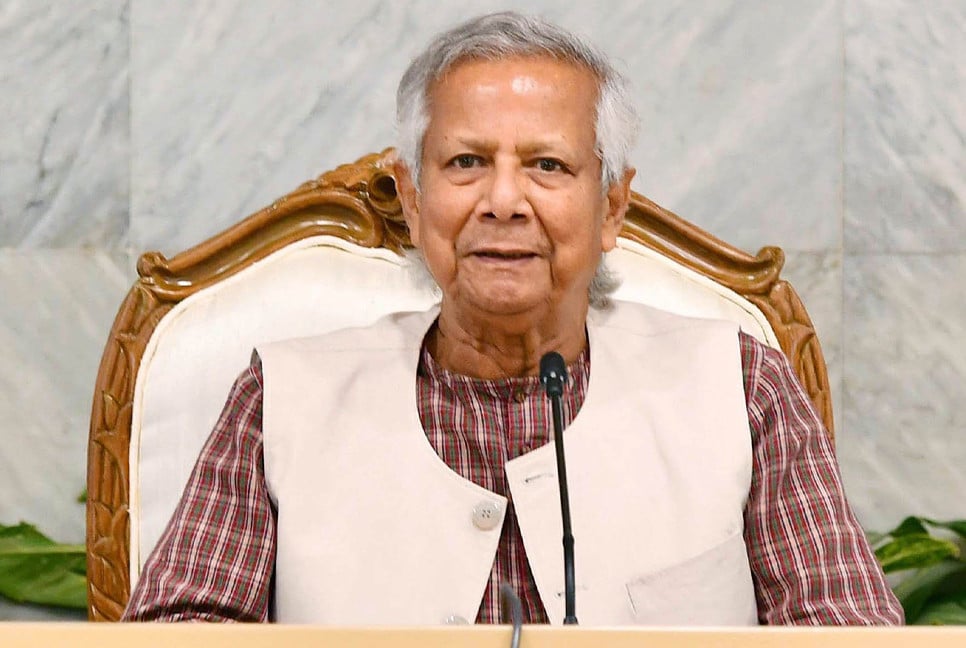
Despite this, the interim government has continued to approve major development projects. Just last week, ECNEC approved 25 projects with a combined cost of Tk45,000 crore. In addition, a new pay scale was announced to appease government employees, and the pay commission has already submitted its final report. Although Dr. Muhammad Yunus later stepped back from immediate implementation of the new pay scale, the financial pressure remains.
Following the fall of the Sheikh Hasina government, the interim administration led by Dr. Yunus was formed on August 8 and has faced a severe economic crisis from the outset. Even after nearly a year and a half of efforts, the crisis has not been fully resolved; in some areas, it has worsened, although instability in the financial sector has eased somewhat.
As the government nears the end of its tenure, preparations for the national parliamentary election have intensified, driving up election-related spending. Security expenditures alone could exceed Tk3,000 crore.
Analysts say the interim government initially showed a reform-oriented mindset and commitment, but failed to fully implement many of its promises. As a result, controversies have mounted in the final phase of its tenure. Efforts such as banking sector reform, reducing unnecessary government spending, restructuring the NBR, and bank mergers were initiated but not fully realized—further intensifying the ongoing financial crisis.
While several mega projects from the previous government were cancelled in the name of austerity, the Yunus administration has continued to approve large development projects throughout its term. Most recently, ECNEC approved a project to construct unusually large 9,000-square-foot apartments for government officials—an unprecedented move. Even during her 16-year tenure, Sheikh Hasina never approved such large flats for civil servants. The decision has drawn widespread criticism and sarcastic commentary.
Inflation has remained above 9 percent for more than four consecutive years, a pressure the government has failed to ease—though the previous administration also struggled in this regard. Against this backdrop, former World Bank chief economist Dr. Zahid Hussain said announcing a new pay scale at such a time showed a lack of foresight. He noted that the decision could have been left to an elected government. As things stand, the government now faces pressure from both implementing the pay scale and managing a deepening financial crisis.
Economists argue that despite extreme revenue shortages, pressure on foreign exchange reserves, and cuts to development spending, the interim government has taken several steps that are inconsistent with economic priorities and amount to “luxury initiatives.” Analysis of recent government announcements and spending patterns shows that while allocations to essential sectors have been reduced, approval of unnecessary projects, creation of new offices, and high-cost initiatives have continued.
According to the latest report from the Implementation Monitoring and Evaluation Division (IMED) of the Planning Ministry, only 17.54 percent of the Annual Development Programme (ADP) was implemented during the first six months (July–December) of fiscal year 2025–26—lower than the same period of the previous year.
The ADP allocation for the current fiscal year stood at Tk238,695 crore, though the government has recently decided to cut Tk30,000 crore from it. Between July and December, ministries and divisions managed to spend only Tk41,876 crore, or 17.54 percent of the total allocation. During the same period of the previous fiscal year (2024–25), spending stood at Tk50,002 crore, or 17.97 percent.
Despite weak implementation, the interim government has recently moved ahead with plans for a new administrative complex in the capital, procurement of high-priced vehicles, renovation of VIP residences, and reopening quotas for foreign travel.
Economists warn that during a period of political transition, expenditure restraint should have been the top priority. Instead, at a time when allocations for health, education, agriculture, and local infrastructure are being cut, rising unnecessary spending risks pushing the economy into an even more fragile position.
Bd-pratidin English/ ANI