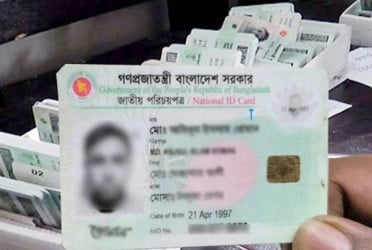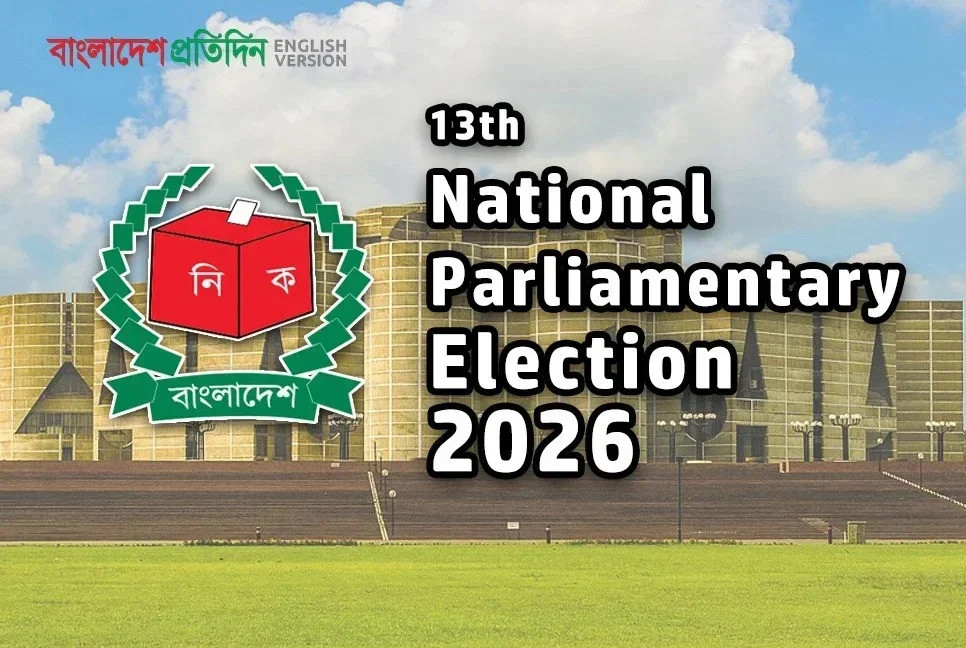
First-time voters are set to play a pivotal role in the 13th National Parliament election, with more than 4.5 million newly registered voters expected to influence the final outcome, according to the Election Commission (EC).
EC data show that 4,571,216 citizens have been added to the voter roll for the first time. Of them, about 1.87 million are men, 2.7 million women and 251 identify as third gender. Overall, the country now has 127.7 million registered voters ahead of the February 12 election and referendum.
Political analysts say the growing weight of young and first-time voters—many aged between 18 and 33—could reshape traditional voting patterns. With margins of victory often narrow in past elections, their participation is widely seen as a potential game-changer.
As campaigning intensifies, political parties are increasingly tailoring their messages to younger voters, focusing on employment, education and modern civic services. Observers note that youth-driven issues are now prominent in party manifestos and rallies.
Election Commissioner Md. Anwarul Islam Sarkar told Bangladesh Pratidin that one-third of the total population is young. These young people will vote this time. Young people are more interested in voting. They could not vote in the past.
He said that the number of these young voters will be the deciding factor this time.
According to observers, young voters are going to emerge as the real kingmakers in this election. Almost one-third of the total voters are young, which is enough to change the fate of any political party. From cities to villages, the youth are now triumphant. Wherever the support of this generation, skilled and aware in digital technology, goes, the results of the vote will also turn in that direction.
The strong desire for change, especially among new voters, can have a big impact on the upcoming elections. The expectations of young voters go beyond the boundaries of traditional politics and are a little different. They are giving more importance to employment, quality education and modern civic amenities.
As a result, political parties are now taking up various programs in their election manifestos, giving priority to the youth; the future election strategy is mainly revolving around this huge population.
According to the Election Commission, the total number of young voters is close to 45 lakh. If these young voters exercise their right to vote in unity, they will play a key role in determining the victory or defeat of any party.
Election expert and former EC Joint Secretary Dr. Md. Shahjahan told Bangladesh Pratidin, “Our country’s votes are basically divided into two or three parts. That continuity has been going on, there is not much variation. However, there is variation in the case of new voters, it depends on how many young voters a party can attract through their election manifesto. Young voters are going to emerge as the real kingmakers in the elections. Almost one-third of the total voters are young, which is enough to change the fate of any political party.”
Age-based young voters: Analyzing the age-based voter data of the EC, the largest number of young voters are between 26 and 29 years old. Next are the number of voters between 22 and 25 years old. Together, these two numbers amount to about 25 million voters.
According to the EC's age-based voter data, there are 85,31,538 voters aged 18-21, 19,62,106 voters aged 22-25, 12,21,66,162 voters aged 26-29, and 16,86,615 voters aged 30-33.
Age-based senior voters: According to the EC's data, the number of voters above 60 years in the country is 19,351,994. There are 5,181,103 voters aged 58-60.
According to the age distribution made by the EC, there are 123,06,755 voters in the age group of 34-37, 130,026,450 voters in the age group of 38-41, 123,023,042 voters in the age group of 42-45, 92,039,723 voters in the age group of 46-49, 63,042,028 voters in the age group of 54-57, and 80,054,560 voters in the age group of 50-53.
Polling stations and booths: The EC Senior Secretary Akhtar Ahmed on Wednesday released the final list of polling stations and rooms at the Election Building in Agargaon in the capital.
He said that votes will be taken at a total of 42,766 polling stations across the country in the 13th National Parliament Election and Referendum. There will be 247,482 booths or polling rooms for voters in these centers. A total of 785,225 presiding and polling officers will be responsible for handling this huge election campaign.
Bd-pratidin English/TR