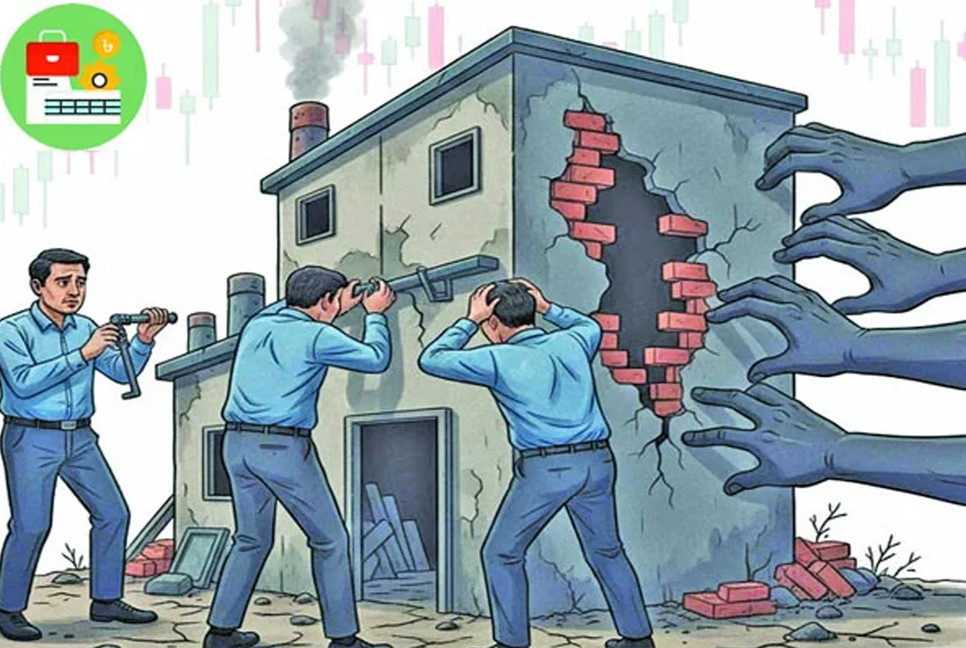
Already suffering from extreme insecurity due to lawsuits, attacks, and a deteriorating law-and-order situation, private-sector businesspeople are now further burdened by energy shortages and high interest rates, making business operations increasingly difficult.
Harassment and media trials have created a deep crisis of confidence in the private sector. The real capital of any business is mutual trust and confidence.
When industrial entrepreneurs and businesspeople face various forms of harassment by the state, their credibility in international markets is undermined.
This not only harms individual businesses but also obstructs the country’s overall economic development. Businesspeople and industrial entrepreneurs are now in severe distress. Many say that doing business in this country feels like a crime.
According to factory owners, the business environment is more hostile than ever before. There is no uninterrupted supply of gas and electricity. Bank loan interest rates have climbed to 16%. Opening letters of credit (LCs) for importing capital machinery has become extremely difficult. Added to this are political uncertainty and concerns among businesspeople regarding labour law reforms.
As a result, no one has the confidence to proceed with new investment. Instead, existing investments are now under threat. Factories are shutting down, and thousands of workers are losing their jobs.
According to Bangladesh Bank data, import payment settlements stood at US$4.88 billion in August, which is 11% lower than in the same month last year.
The main reason is a decline in imports of capital machinery.
In other words, the establishment of new factories or industrial expansion has effectively come to a halt. Although the opening of new LCs has increased slightly, these are mostly for importing consumer goods. Economists note that without investment, demand for raw materials and machinery naturally declines.
Alongside high interest rates, a high level of non-performing loans in the banking sector is negatively affecting investment. This has reduced credit growth in the private sector. Credit flows to the private sector – one of the main drivers of overall economic activity – have become almost stagnant.
Previously, there was at least some, albeit minimal, growth in private-sector credit. Now, credit growth is not increasing; instead, it is declining. After five months, the growth rate of private-sector credit has again turned negative. Compared to June, there was no growth in July, and while growth had been weak in previous months, it has now fallen into negative territory.
Stakeholders believe that the decline in private-sector credit is mainly due to a disrupted investment-friendly environment and limited lending capacity within banks. This has led to a downturn in industry and trade, slower job creation, and GDP growth falling far below targets. Overall, economic activity is being severely affected.
In its “2025 Global Investment Climate Report”, the US Department of State identified five major obstacles to investment in Bangladesh: inadequate infrastructure, limited access to finance, bureaucratic complexity, a discriminatory tax structure, and corruption.
The report noted that although the interim government has initiated administrative reforms, there has been little tangible improvement in the investment environment.
Meanwhile, the Asian Development Bank (ADB), in its “Asian Development Outlook”, slightly lowered Bangladesh’s growth forecast to 5%. The ADB warned that “new US tariffs, geopolitical tensions, and weaknesses in the banking sector could put investment and exports at risk”.
In the first six months of the current fiscal year (July to December), Bangladesh’s garment exports declined in 26 countries. Negative trends in major European and US markets have added a new dimension to the crisis.
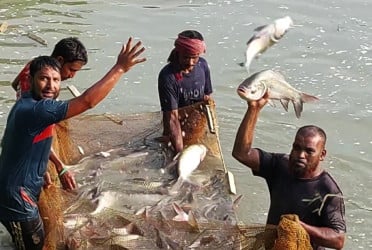
During the first six months of ongoing 2025-26 fiscal year, Bangladesh’s readymade garment exports fell by 2.63%, totalling US$19.3654 billion, compared to $19.8877 billion in the same period of the previous fiscal year. Exports of vegetables, fish, frozen foods, and non-traditional products have also declined. Domestic business activity has slowed as well. Leading businesspeople say that 2025 has been a year of survival. Many are keeping their businesses afloat at a loss, hoping that after the national election in February 2026 and the formation of an elected government, the current economic paralysis will ease.
They say that beyond political uncertainty, law-and-order problems, energy shortages, and high inflation, the private sector is burdened by numerous structural issues. High interest rates and strict credit policies have raised the cost of investment. Over the past year, the cost of doing business has increased by nearly 35%. Since people’s purchasing power has not risen proportionately, sales have declined by 20% to 30%.
The government itself has acknowledged that business and the overall economy are going through a difficult period. A report titled “Bangladesh State of the Economy 2025”, published by the General Economics Division (GED) of the Planning Commission, states that the country’s economy is passing through a crisis. Private-sector credit growth has declined, banks have slowed loan disbursement, and rising interest rates have discouraged entrepreneurs from launching new ventures. Stagnation has emerged in employment and production. The report identifies weak private investment and industrial activity as major barriers to economic growth.
Therefore, the foremost priority for the next government must be to restore confidence in the private sector. It must ensure that businesspeople can operate without fear. The “our people versus their people” mindset must be abandoned first and foremost. It must be remembered that the private sector is the main driving force of the economy. With very few exceptions, businesspeople do not have political identities. Their sole identity is that they are contributors to Bangladesh’s economic progress. The Bangladesh of the future must be built not by excluding or harassing them, but by bringing them into a relationship of trust.
Bd-pratidin English/TR