He was born not to read history, but to make it. His life was not meant merely for survival, but to be devoted to the nation. His love was not confined to himself or even to his family; it spread across the soil and people of 56,000 square miles—its rivers and canals, haors and wetlands, hills and seas, trees and creepers. Such was Martyr President Ziaur Rahman, who declared, “The party is greater than the individual, and the country is greater than the party.” That timeless statement resonates especially today when one observes the election-oriented campaign of the BNP.
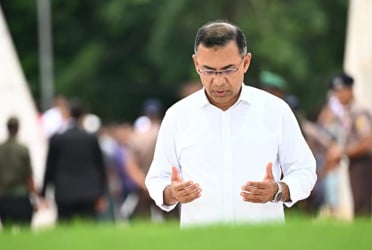
The vision now being championed by BNP Chairman Tarique Rahman—“Bangladesh First”—is, in fact, the very ideology of his late father, Shaheed Zia. Therefore, on the occasion of President Zia’s birth anniversary, it is impossible not to recall this context in this special piece.
Major Zia. From the birth of Bangladesh to its stabilisation and onward journey towards modernity, this name is inseparably woven into every chapter.
Had he not revolted in 1971 and declared independence, the nation might have had to wait much longer for freedom. His historic declaration—“We revolt”—paved the way for the emergence of a new Bangladesh. A 54-year-old Bangladesh that dreams, advances with a distinct national identity, and has established its own place on the world stage.
From the revolt against the Pakistani military junta on the dark night of 25 March to the proclamation of independence the following day, and from there to building a modern, productive state, Zia’s contributions will forever shine in golden letters in the pages of history. His honesty, patriotism, dedication to national welfare, and moral courage were exemplary. These qualities propelled him to the pinnacle of popularity within a very short time. However, such towering popularity proved intolerable to anti-Bangladesh forces. As a result, through conspiracies by hegemonic powers with domestic and foreign collusion, Zia was martyred by a group of misguided soldiers at the Chattogram Circuit House on 30 May 1981.
He was only 46 years old.
This great leader was born on 19 January 1936. Though his life was brief, it was vivid and extraordinary. His sacrifices for the people of this country, and his tireless journeys from one end of the nation to the other in pursuit of public welfare, bear ample testimony to his patriotism. Through historic milestones—being the first to revolt against the Pakistani junta, declaring independence, transforming from the “Zia of the soldiers and the people” through the Sepoy–People’s Revolution, establishing multi-party democracy, introducing the philosophy of Bangladeshi nationalism, formulating the 19-point programme as a manifesto for a modern and productive Bangladesh—Zia will remain eternally luminous among the people.
Steering Bangladesh towards prosperity amid a fragile economy created by misrule during the Mujib era and a subsequent volatile political situation was an immense challenge. Yet the lifelong fighter that Zia was, he embraced that challenge. By initiating productive politics, he sought to restore the spirit of the Liberation War that had been trampled by previous rulers. Overcoming countless adversities and navigating perilous paths, he pledged to build a modern Bangladesh.
With the resolve to build such a Bangladesh, Ziaur Rahman placed special emphasis on a rural-based economy. During his tenure as Deputy Chief Martial Law Administrator, he also held charge of the Ministry of Finance. Calling for a village-centred economy, he said, “Bangladesh means villages. To develop Bangladesh’s economy, we must develop our villages and the rural economy.” Stressing comprehensive rural development, he added, “We must take the message of civilisation to the doorsteps of the illiterate and poor in the villages. Only then can we say that we have worked for the development of Bangladesh.”
The canal-excavation programme was one of Zia’s most epoch-making initiatives. On 1 November 1976, with the aim of increasing agricultural production and achieving food self-sufficiency, he launched the Ulshi–Jadunathpur canal excavation project in Jashore. Subsequently, to accelerate agriculture-based development and address irrigation water shortages, some 14,000 canals were excavated nationwide.
Ziaur Rahman’s patronage of education, literature and culture was remarkable. In 1978, he formed a National Education Advisory Committee under Professor Mustafa bin Qasim to formulate an interim, time-appropriate education policy. To introduce a productive education system, he organised a “National Education Workshop” in Dhaka on 14 September 1978, attended by thousands of educationists and professionals from across the country. Recognising the importance of libraries in expanding education, a development project titled “Thana Public Library-cum-Auditorium Establishment” was undertaken in the 1980–81 fiscal year.
Clause 21 of the founding manifesto of the Bangladesh Nationalist Party (BNP), established by Shaheed Zia, pledged to introduce a people-oriented and life-based education system in Bangladesh. The introduction of mass education programmes and universal primary education were unprecedented contributions by Ziaur Rahman to the country’s education sector. To promote diversified development of madrasa education, the Madrasa Education Board was established under the Madrasa Education Ordinance of 1978. In keeping with the needs of the time and national heritage, Zia announced in 1976 the establishment of an Islamic university to integrate religious and modern education. He laid the foundation stone of the Islamic University at Shantidanga, on the border of Kushtia and Jashore, on 22 November 1979. The Islamic University Act was passed in Parliament in 1980.
Alongside education, Ziaur Rahman had a deep interest in literature and culture. In 1976, to honour the martyrs of the Language Movement, he introduced the Ekushey Padak for special contributions in various fields. In 1977, he instituted Bangladesh’s highest state award, the Independence Award. On 9 January 1979, he presented the National Film Awards for the first time. At his initiative, the Dhaka International Film Festival was held in March–April 1981. To strengthen the institution that symbolises the intellectual spirit of the Bengali nation, the Bangla Academy Ordinance 1978 was promulgated during his tenure. His contribution to nurturing children’s creative potential was outstanding: he laid the foundation stone of the Bangladesh Shishu Academy in 1976 and inaugurated its new building on 15 July 1977 beside the old High Court. For children’s recreation, the National Children’s Park was established at Shahbagh in 1979. To further promote children’s cultural development, he also initiated the television competition Notun Kuri in 1976.
President Zia established the Tribal Cultural Institute (now the Small Ethnic Groups Cultural Institute) in Rangamati and the Tribal Cultural Academy at Birishiri in Durgapur, Netrokona, to preserve and promote indigenous cultures. He also set up Islamic Cultural Centres in four divisional cities.
Seeking to reverse the repression of the media during the Mujib era, Zia restored press freedom. The Bangladesh Press Institute (PIB) was founded on his initiative to provide advanced training for journalists. To uphold press freedom through law, he established the Bangladesh Press Council. The land on which the National Press Club now stands was allocated by President Zia himself.
Shaheed President Ziaur Rahman’s contributions to health and medical services were exceptional. He laid the foundation stones of numerous institutions, including a 50-bed Cancer Institute and Hospital, Shaheed Suhrawardy Hospital, the National Orthopaedic Hospital and Rehabilitation Institute, the C-Block of PG Hospital, the National Institute of Ophthalmology, and the BMA Building. In 1978, he established the Cholera Hospital (ICDDR,B). To produce skilled nurses, he founded the Nursing College at Mohakhali on 5 January 1981, and later that year, on 3 April, established the National Institute of Cardiovascular Diseases and Hospital. Institutions such as NIPSOM, the Institute of Public Health Nutrition, and the EPI were also established under his direct patronage.
In foreign policy, President Zia introduced a revolutionary shift. He restored Bangladesh’s lost prestige at a time when the country was derided by the West as a “bottomless basket.” Through an independent, sovereign and dignified foreign policy vision, Bangladesh was able to stand tall in the world. The core of Zia’s foreign policy was to safeguard national interests and uphold sovereignty through an independent and non-aligned stance.
As a result of this self-respecting leadership, Zia emerged as a trusted leader of the Third World. He played a strong diplomatic role in efforts to end the Iran–Iraq War. He was the visionary behind SAARC, the regional cooperation forum of South Asia. In relations with India, he worked towards agreements on the Farakka water-sharing issue, the framework for the transfer of the Tin Bigha Corridor, joint surveys to determine ownership of South Talpatti Island, and the pursuit of relations based on sovereign equality rather than subservient alliances. Breaking the post-independence pattern of indifference towards Muslim countries, President Zia took initiatives to bridge distances, fostering friendly and trusting relations between Bangladesh and the Muslim world.
Following Zia’s martyrdom, the then US Ambassador to Bangladesh, William B. Milam, remarked: “It is hard to imagine what would have happened to Bangladesh if Zia had been killed in 1975 instead of 1981. Bangladesh could very easily have become a failed state like Afghanistan or Liberia. Zia saved Bangladesh from that fate.”
Today marks the birth anniversary of that extraordinary leader. History shows that most great figures are born for a brief span—and Shaheed President Ziaur Rahman was one of them. After his martyrdom, Bangladesh truly lost its way. Yet there is hope: his successor, BNP Chairman Tarique Rahman, is walking the path shown by his father. His thoughts and plans for the country and its people reflect pure patriotism and foresight. In the absence of Khaleda Zia, it is no longer mere speculation but an inevitable reality that this torchbearer of pro-Bangladesh politics will steer the nation in the days ahead.
Author: Professor, University of Dhaka, and Secretary for Mass Education Affairs, Bangladesh Nationalist Party (BNP)