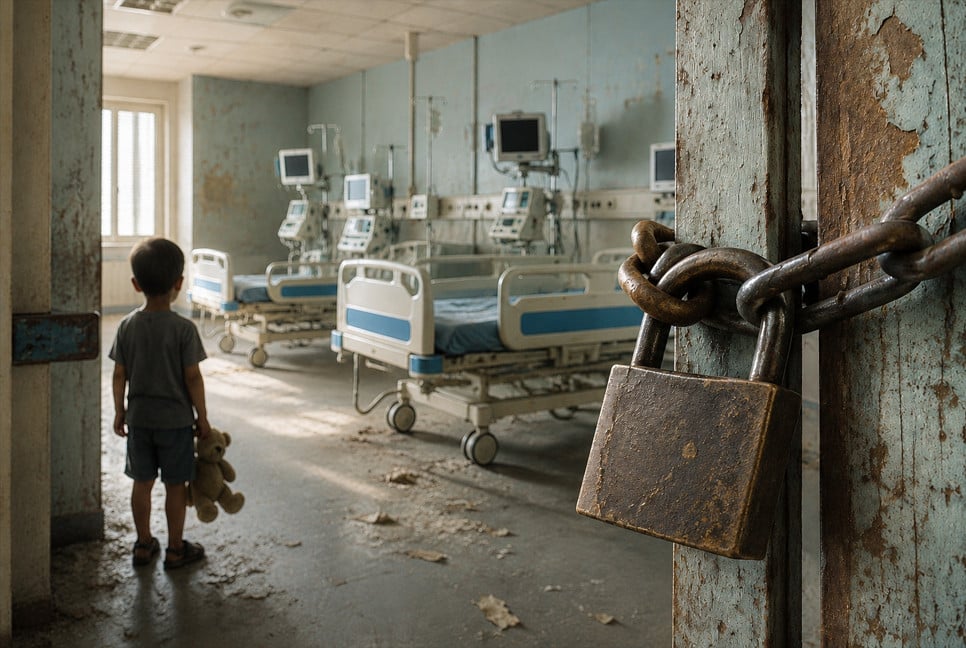
Factories and business establishments in the ready-made garments sector and other industries that were shut down during and after the July movement have still not been able to resume operations, even a year and a half later. No new avenues for business have emerged, and the situation has become even more complicated. Many businesspeople remain on the run, leaving their factories idle. Those who have stayed in the country are facing cases and various forms of harassment. Added to this are shortages of gas and electricity, along with the overvaluation of the US dollar, which has multiplied the cost of doing business. As a result, hard times for trade and commerce are far from over.
Although the national parliamentary election is drawing closer, uncertainty persists. There is widespread concern and anxiety over the law and order situation. The political landscape is changing daily, creating unease within the business community. Even a year and a half after Sheikh Hasina’s departure, businesses continue to struggle. The overall economy is moving at a slow pace, with no new investment. High inflationary pressure, sluggish revenue collection, uncertainty in the banking sector, high interest rates on loans, and the global economic slowdown have further intensified the crisis. Analysts say there is little chance of overcoming this uncertainty until an election is held, nor is there much prospect of accelerating macroeconomic growth before then.
However, the United Nations Conference on Trade and Development (UNCTAD) has said that Bangladesh, which is set to receive final recognition as a developing country in November, is expected to record GDP growth of 4.6 per cent this year—slightly higher than last year. Growth is projected to rise to 5.4 per cent next year.
Meanwhile, Bangladesh’s garment exports declined to 26 countries in the first six months of the current fiscal year (July to December). Negative trends in major markets in Europe and the United States have added a new dimension to the challenge. During the first six months of the 2025–26 fiscal year, exports of ready-made garments fell by 2.63 per cent to US$19.3654 billion, compared with US$19.8877 billion in the same period of the previous fiscal year. Exports of vegetables, fish, frozen foods and non-traditional products have also declined. Domestic business activity has slowed as well. Leading business figures say that 2025 was a year of survival. There is hope that the economic stalemate will ease once an elected government takes office after the national election in February 2026. In anticipation of that, many are keeping their businesses afloat even at a loss.
They say that beyond political uncertainty, law and order concerns, energy shortages and high inflation, the private sector is burdened by various structural problems. High interest rates and tight credit policies have increased investment costs. Over the past year, the cost of running businesses has risen by nearly 35 per cent. As people’s purchasing power has not increased proportionately, sales have fallen by 20 to 30 per cent.
The government has also acknowledged that the country’s trade and economy are going through a difficult period. A report titled Bangladesh State of the Economy 2025, published by the General Economics Division (GED) of the Planning Commission, states that the economy is passing through a critical phase. Credit growth in the private sector has declined, and banks have slowed their lending. Rising interest rates have dampened entrepreneurs’ enthusiasm for new ventures, leading to stagnation in employment and production. The report identifies weak private investment and industrial activity as major obstacles to growth.
Dr Zahid Hussain, former chief economist of the World Bank’s Dhaka office, said: “Uncertainty still persists in our economy. Instability has reduced considerably, but it cannot yet be described as stable.”
According to Bangladesh Bank data, private sector credit growth stood at 6.23 per cent at the end of October—the lowest since 2003. This reflects the lack of opportunities for business expansion in recent times. As a result, the opening of letters of credit (LCs) for the import of capital machinery fell by more than 20 per cent in 2025 compared with the previous year, signalling prolonged stagnation in the industrial sector.
Bd-pratidin English/ ANI