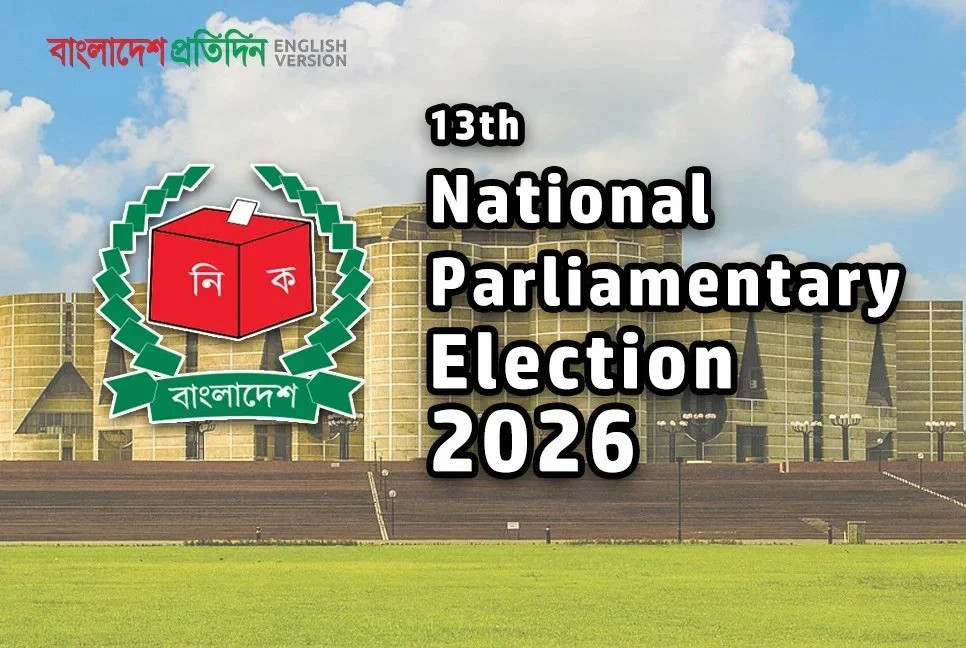
The political equation ahead of Bangladesh’s 13th national parliamentary election is shifting rapidly, with new uncertainties emerging within rival alliances as the deadline for withdrawal of nominations approaches on January 20.
Rebel candidates from the BNP, who initially filed nominations in more than a hundred constituencies, are gradually withdrawing in response to calls from party chairman Tarique Rahman, easing internal pressure within the party.
At the same time, the Jamaat-e-Islami–led 11-party alliance—considered BNP’s main electoral rival in the absence of the Awami League—has been shaken by the exit of Islami Andolon Bangladesh. The move has effectively split Islamist votes into three streams, analysts say, reducing the impact the alliance could have had as a united bloc.
Those concerned said that some more parties may leave the Jamaat alliance. Some parties are also contacting the Islamic Andolan to form an alliance. The drama of the vote equation will continue until January 20, the last day of nomination withdrawal.
BNP has meanwhile allocated four seats to its movement partner Jamiat Ulema-e-Islam Bangladesh, whose leaders also hold influential positions in the non-political platform Hefazat-e-Islam. As a result, analysts say no single Islamist party can claim Hefazat’s support outright.
According to political analysts, the impact that would have been felt on the vote if Jamaat and the Islami Andolan were in an alliance will now be greatly reduced.
Since the Awami League, which was ousted in a mass uprising on August 5, 2024, will not be in the field of elections, Islamist parties including Jamaat were considered BNP's big rivals in the elections.
On Thursday, the Jamaat alliance announced the sharing of 253 seats among themselves. Even after waiting for the Islami Andolan, they did not come.
The alliance said that the agreement on the remaining 47 seats was not finalized. After several months of tension, the Islami Andolan did not even attend the last alliance agreement meeting on Thursday.
Islami Andolan spokesperson Gazi Ataur Rahman said that his party will contest alone in 268 constituencies. Along with this, they will support others in the remaining 32 seats. This has eliminated the possibility of Islamist votes coming in one box. The beginning of which was a year ago in the meeting of the top leaders of Jamaat and Islami Andolan in Charmonai, Barisal.
Those concerned said that the party's non-joining of the Jamaat alliance will have an impact on several seats across the country. If the Islami Andolon and Jamaat had united in the elections, there would have been an opportunity to contest at least a hundred seats. After the change in the political landscape in the mass uprising, the process of unification of Islamist parties as an alternative force to BNP began. This created the possibility of joint elections of Jamaat and Islamist parties for the first time since 1979.
Although they had united with other political parties at various times before, the independent alliance of Islamist parties with Jamaat has not been formed. While the electoral unity process of Islamist parties is underway, several surveys have been conducted on the elections recently, which indicate the rise of religious-based political parties.
According to some political analysts, the votes of Islamist parties are mainly divided into two groups. One is the Qaumi Madrasa-centric students and teachers, a large part of whom do not vote for Jamaat. The votes of this group may go to independent candidates including BNP. The second is a group who may mainly vote for the Islami Andolon.
A BNP leader said that a large part of the votes of the Islamic ideology are leaning towards the BNP. Only according to the words of the Ameer of the Bangladesh Khelafat Majlis, Maulana Mamunul Haque, the votes of the students of Qawmi Madrasa will not go towards the Jamaat.
Apart from this, it cannot be said that the Bangladesh Khelafat Majlis will remain in the Jamaat-e-Islami alliance until the end.
Meanwhile, the Jamaat-e-Islami will continue its efforts until January 20 to bring the '11-party electoral unity' that has been formed under the leadership of the Jamaat-e-Islami ahead of the elections began with the simultaneous movement of eight religious parties. That simultaneous movement began demanding a referendum before the elections using the PR system and the parliamentary elections.
Senior Nayeb-e-Ameer of Islami Andolan, said, “We are not waiting. We are for those who will be on the side of Islam.”
Ameer of Bangladesh Khilafat Majlis, Maulana Mamunul Haque, said, the Jamaat-e-Islami-led alliance had reserved 47 seats for the Islamic Movement Bangladesh; but the party has decided not to remain in the alliance. “Those seats will now be shared among the parties in the alliance. The process by which seats have been distributed from the beginning, since the Islamic Movement did not come, the seats will be distributed on the basis of compromise in the same process. The candidate of the party that is considered the strongest in the seat will be nominated as the sole candidate.”
Bd-pratidin English/TR