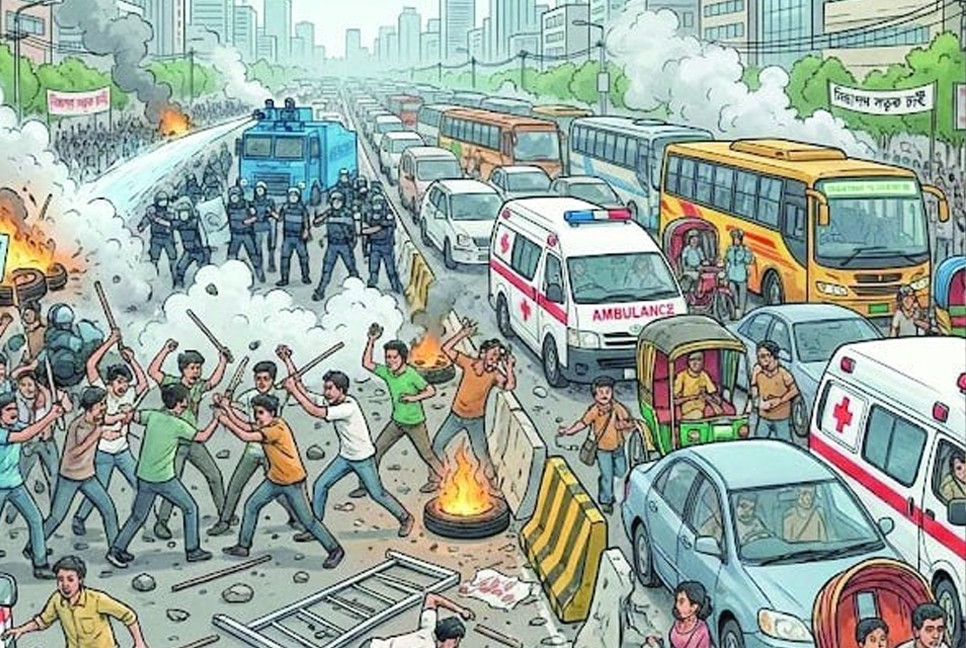
Thursday is the last working day of the week, when people are usually busier than usual, rushing to complete tasks before the two-day weekend. But last Thursday, 15 January, turned into a nightmare for thousands of city residents. Anyone who heard the desperate cries of people stranded on the roads for hours that day could not remain unmoved.
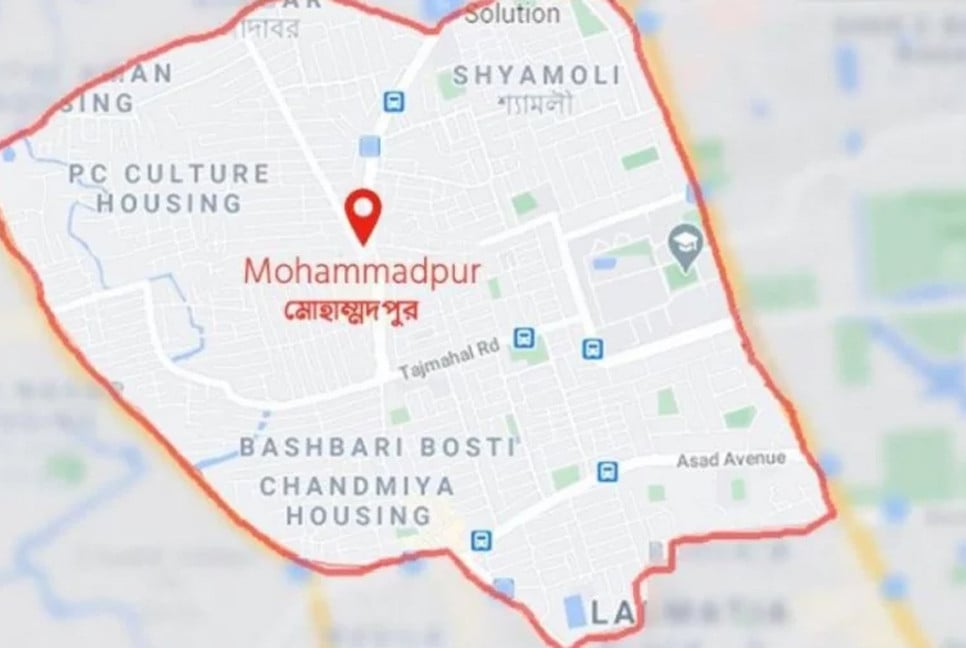
At around 12.30pm, students of Dhaka College brought out a procession, and within ten minutes they blocked the Science Lab intersection. Students from six other colleges soon joined the protest: Eden Mohila College, Begum Badrunnesa Government Women’s College, Shaheed Suhrawardy College, Kabi Nazrul Government College, Government Bangla College, and Titumir College.
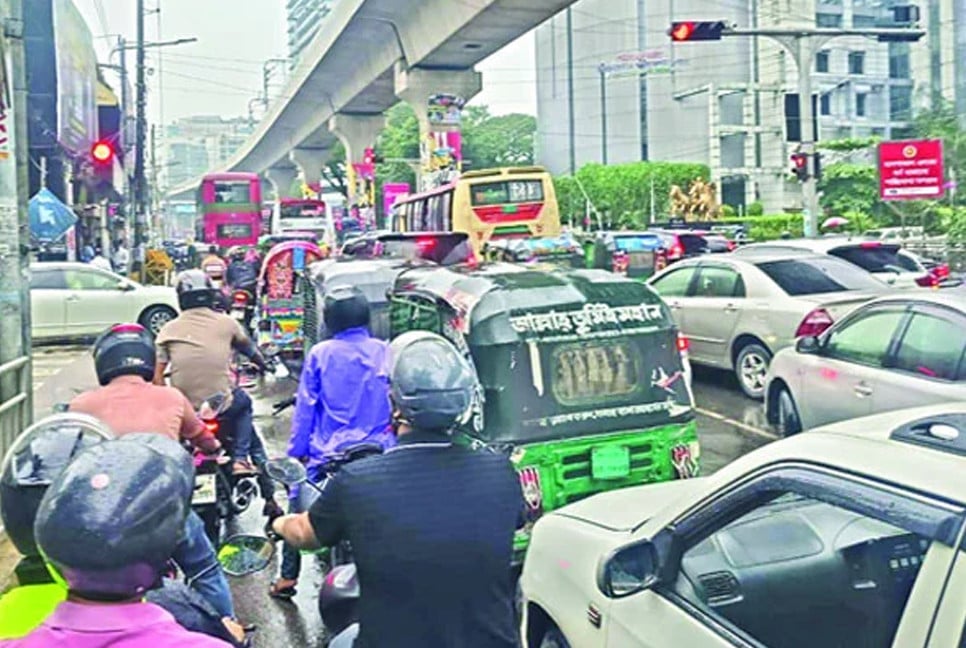
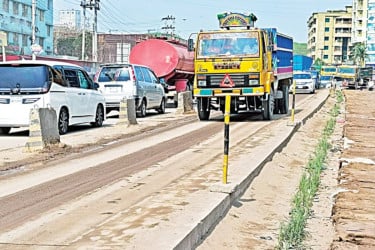
As a result of the blockade, traffic on Mirpur Road and surrounding areas came to a complete standstill, and thousands of people suffered immensely. Many were forced to abandon their vehicles and walk long distances to reach their destinations. At 5pm, protest leader Naim Hawlader announced the withdrawal of the blockade while simultaneously declaring new programmes. He warned that if the government failed to issue the Dhaka Central University Ordinance by Sunday, students would block Science Lab again on Monday; if the ordinance was still not issued, students would establish an “Ordinance Platform” and announce further actions from there.
Blocking roads in the capital to press demands is no longer unusual. Almost every day, one group or another brings normal life to a halt by occupying major intersections. An analysis of newspaper reports reveals that since 8 August 2024, Dhaka alone has witnessed 1,130 blockades, at least 60% of which were organised by students and teachers.
Further data shows that students alone blocked roads 423 times for various demands. On a single day, Dhaka experienced as many as eight separate road blockades, some of which escalated into violent clashes. Due to confrontations between Dhaka College and City College students, Mirpur Road remained blocked for 23 days, while another clash between City College and Ideal College students rendered the same road unusable for eight days.
The highest number of blockades occurred at Shahbagh, one of the city’s most crucial intersections. Over the past 17 months, this road remained closed for at least 350 days, despite the presence of major hospitals and institutions in the area, including BIRDEM and PG Hospital. Patients and their families suffered the most, often unable to reach emergency care on time.
As a result, suffering has become a constant companion for Dhaka’s residents. No one knows when a road will suddenly be blocked, how long it will remain closed, or whether they will reach their destination at all.
This culture of road blockades emerged under student leadership. After the August mass uprising, students began to believe that blocking roads was the most effective way to force the government to concede demands. Sometimes roads are blocked to demand exam cancellations; at other times, to demand automatic pass systems. The interim government, under constant pressure, has repeatedly given in. Surround the Secretariat, and an auto-pass is announced; block the roads, and colleges are declared universities. Road blockades have consequently become the most effective bargaining tool, with the result that students are now more visible on the streets than in classrooms.
During the July 2024 movement, students abandoned educational institutions, and academic activities came to a halt. Even after 17 months, normal academic life has not been restored. This disorder is not limited to Dhaka; across the country, the education sector is in a state of deep crisis. Teachers are being publicly humiliated by students, and many are afraid to conduct classes for fear of mob attacks.
Taking advantage of the change in power, vested interest groups have created widespread instability within educational institutions. From universities to schools and colleges, administrators and teachers are being forced to resign, with vice-chancellors, principals, head teachers, and even ordinary teachers becoming targets.
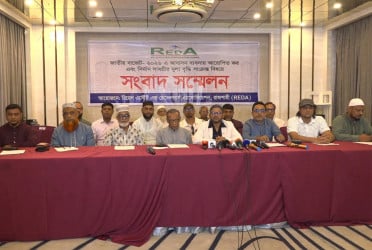
These groups have not stopped at forced resignations. In many cases, teachers have been physically assaulted, with some requiring hospitalisation after violent attacks, and even female teachers have not been spared. Disturbingly, these groups are using innocent students as tools to advance their own interests. Across Dhaka and other parts of the country, teachers—including members of religious and ethnic minorities—have been abused or compelled to resign. Leaders of the Bangladesh Hindu Buddhist Christian Students’ Unity Council stated at a press conference that 49 minority teachers were forced to step down.
It is undeniable that during the previous Awami League government, arbitrary recruitment, postings, and promotions took place in educational institutions based on political loyalty. Many capable teachers were sidelined, while less qualified individuals were promoted, and corruption was widespread. As a result, resentment among teachers was inevitable. However, one injustice cannot be corrected by committing another, and there is no justification for intimidation or violence. Remedies must be sought through lawful means. Instead, fear now dominates campuses, teachers hesitate to enter classrooms, and academic normalcy remains elusive after all this time.
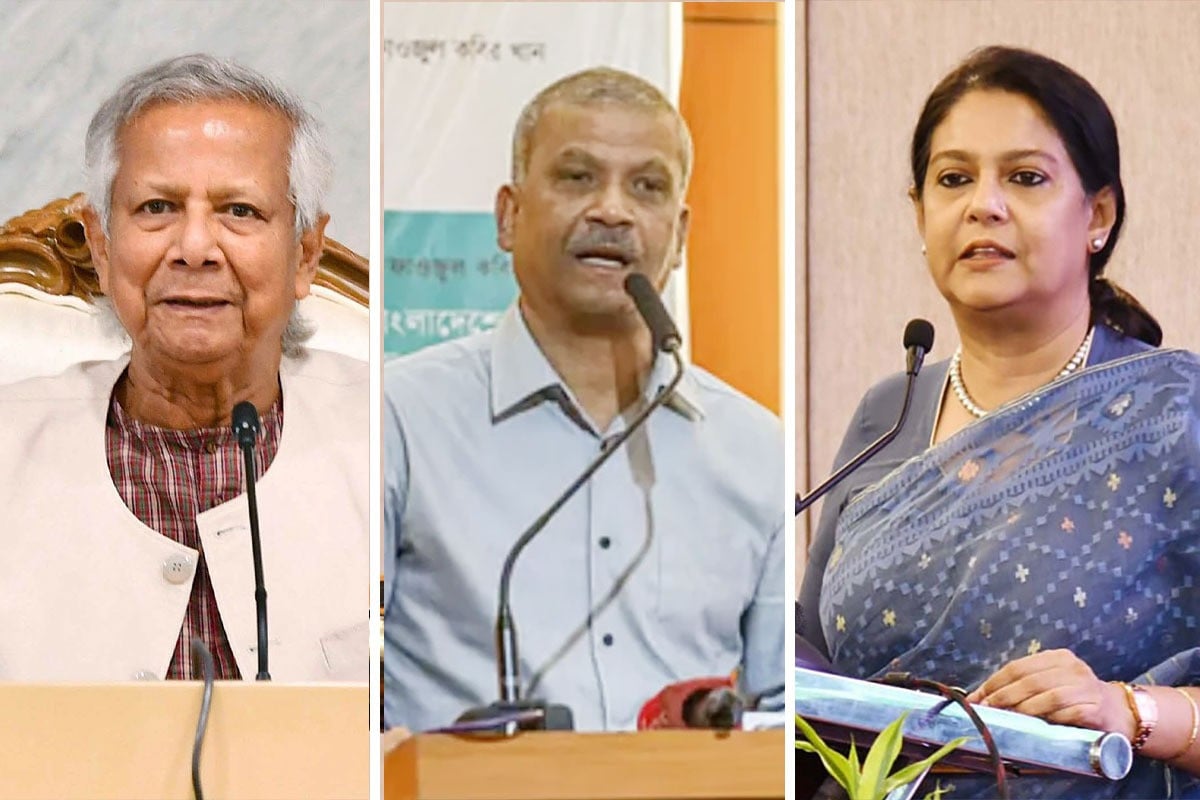
As if the absence of a stable learning environment were not enough, the interim government has failed, for the second consecutive year, to supply textbooks on time. Even halfway through January, nearly 30 million textbooks had not reached students, raising serious questions about how much priority the government truly assigns to education. While multiple commissions for state reform have been formed under Dr Muhammad Yunus, no meaningful initiative has been taken to reform the education sector. Yet there can be no “New Bangladesh” without quality, world-class education.
History offers clear lessons. Nations that prioritised education after revolutions progressed the most. After the American Civil War, Abraham Lincoln placed education at the centre of national reconstruction, introducing long-term policies that continue to shape the United States today. Following the Bolshevik Revolution, Lenin treated education as a top priority and laid the foundation for an educated society. After India’s independence, Jawaharlal Nehru initiated sweeping educational reforms that helped Indian students compete globally and produce leaders such as Google CEO Sundar Pichai. After China’s revolution, Mao Zedong dramatically increased education spending; today, Chinese students excel at institutions like Harvard and MIT. History has never recorded a nation developing without education—and it never will.
Unfortunately, even 54 years after independence, Bangladesh has failed to significantly improve the quality of its education, and the system lags far behind global standards. While talented students once sought better opportunities abroad, over the past 16 months those paths have narrowed. Many countries have restricted access for Bangladeshi students, and universities in the UK and other developed nations have increasingly closed their doors. These developments demand urgent attention.
Since 5 August 2024, the education sector has experienced unprecedented chaos, and its long-term effects will severely impact the country’s socio-economic structure. Without restoring discipline and stability in education, we cannot build a “New Bangladesh”, nor can we develop as a healthy nation. A normal academic environment must be restored immediately.
During the same period as Bangladesh’s July movement, student-led uprisings in Nepal and Sri Lanka also toppled governments. Once victory was achieved, students in those countries returned to their classrooms. That did not happen in Bangladesh, and this failure belongs to all of us.
An election is approaching. Political parties will soon announce their manifestos, and education must feature prominently in them. Whoever forms the next government must prioritise returning students to classrooms and adopt long-term, sustainable plans for quality education.
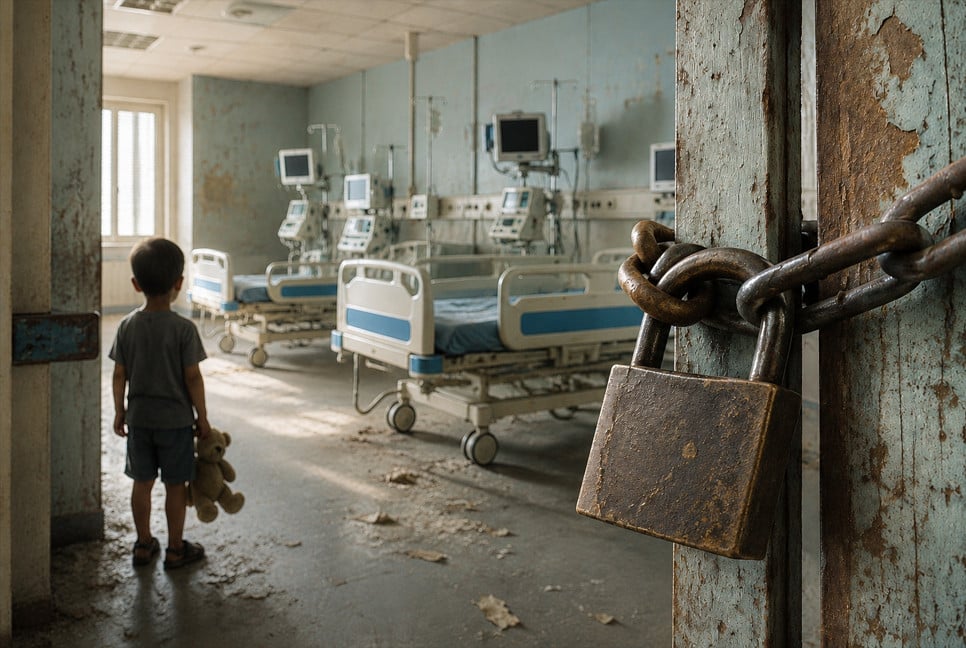
Today, Bangladesh’s education system lies in the ICU, and saving it will require political will, moral courage, and national consensus.
The question remains: can we save education?
Audite Karim is a writer and playwright.