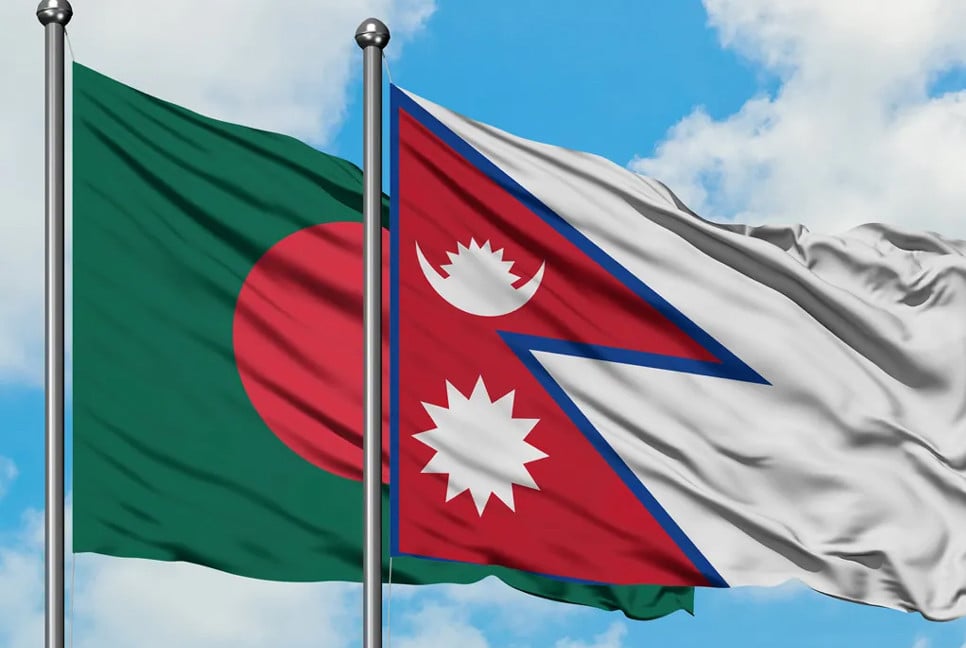
Neighboring Nepal is seeking transit facilities under a 50-year-old agreement to access trade benefits by using Bangladesh’s road, rail, and waterways. Meanwhile, Bangladesh is seeking to import an additional 20 megawatts of electricity from Nepal. To finalize decisions on these mutual interests, a two-day commerce secretary-level meeting is beginning in Dhaka tomorrow.
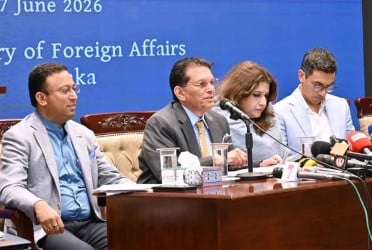
The meeting in Dhaka will be led by Bangladesh’s Commerce Secretary Mahbubur Rahman and Nepal’s Commerce Secretary Dr. Ram Prasad Ghimire from the Ministry of Industry, Commerce and Supplies.
In addition to the two key issues, the secretary-level talks are expected to focus heavily on finalizing a Preferential Trade Agreement (PTA), establishing direct air connectivity between the tourism hubs of Cox’s Bazar and Pokhara, and implementing a bilateral payment system between the two countries.
According to sources at the Ministry of Commerce, Bangladesh, India, Nepal, and Bhutan signed the BBIN (Bangladesh-Bhutan-India-Nepal) agreement on June 15, 2015, aimed at enhancing regional connectivity in South Asia. Although Bhutan’s parliament later did not ratify the agreement, Bangladesh’s cabinet approved granting transit facilities to Nepal under the BBIN framework on May 30, 2022. However, Nepal has stated that it prefers to receive transit facilities under existing bilateral agreements rather than under the BBIN framework.
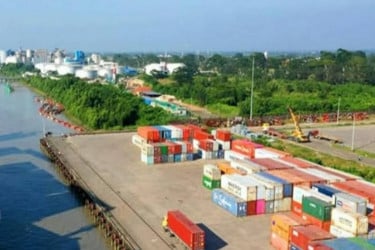
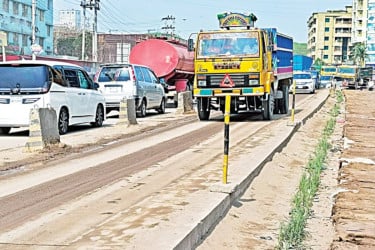
Under a 1976 agreement signed between Bangladesh and Nepal, goods are exported from Bangladesh to Nepal, while Nepal’s imports from third countries are transported through Indian territory as “traffic in transit.” Although six rail routes are included under the transit arrangement, freight is mainly transported through two routes. These are the Rohanpur (Bangladesh)–Singhabad (India) route and the Biral (Bangladesh)–Radhikapur (India) route. In addition to rail transit, Nepal is now seeking transit facilities through inland waterways as well.
Proposal to Import an Additional 20 MW of Power
Nepal has already started exporting 40 megawatts of electricity to Bangladesh under a trilateral agreement signed among Nepal, India, and Bangladesh on October 3 last year. Under the same agreement, Dhaka plans to propose importing an additional 20 megawatts of electricity from Nepal.
Discussions on the PTA
Finalizing a Preferential Trade Agreement (PTA) to boost bilateral trade will be a priority topic at the meeting. Discussions on the PTA have been ongoing since 2015. Bangladesh has already concluded its first PTA with Bhutan and now aims to make Nepal the second country with which such an agreement becomes effective.
Nepal Seeks Cox’s Bazar–Pokhara Direct Flights
To promote tourism in both countries, Nepal has requested direct air connectivity between Cox’s Bazar and Pokhara. However, officials noted that Cox’s Bazar airport would need to be granted international status to facilitate such flights.
Direct Payment System
Currently, there is no direct payment mechanism for trade conducted in Nepalese rupees. Trade between Bangladesh and Nepal is carried out through India’s banking system. Bangladesh wants to establish a bilateral payment system to facilitate direct financial transactions.
Both Bangladesh and Nepal are scheduled to graduate from the list of Least Developed Countries (LDCs) in 2026. In this context, the secretary-level meeting will also discuss mutual cooperation to address potential challenges by strengthening trade and improving connectivity. Other agenda items include simplifying and expediting visa procedures for Bangladeshi businesspeople and a possible proposal from Nepal to reduce additional duties imposed on its products.
Bd-pratidin English/ ANI