Renowned journalist and politician Nirmal Sen, now deceased, wrote a column titled “We Want a Guarantee of a Natural Death” in Dainik Bangla on 16 March 1973. The column became so popular that it effectively turned into a slogan.
At the time, the country was going through a period of severe chaos. After independence in 1971, the law-and-order situation was extremely fragile. Robbery, snatching, murder, abduction and widespread anarchy prevailed everywhere. In such a context, the title of his column echoed the feelings of people across the country.
Today, 53 years later, the same title once again feels painfully relevant for Bangladesh. We are experiencing the reality behind that headline all over again.
In recent times, several brutal killings have stunned the entire nation. Sharif Osman Hadi was shot dead in public. On December 12, the day after the schedule for the 13th National Parliamentary Election and referendum was announced, he was shot in the head on Box Culvert Road in Old Paltan, Dhaka, around noon. Nearly a month later, a charge sheet was submitted in the case. The Dhaka Metropolitan Detective Branch (DB) filed the charge sheet against 17 accused, including Faisal Karim Masud. Five of the accused, including Faisal Karim Masud, are still absconding.
The very next day after the charge sheet was submitted in the Hadi murder case, at around 8:30 pm on 7 January, Musabbir was shot in the Green Road area.
He was taken to BRB Hospital in Panthapath, where doctors declared him dead.
It was learned that shortly after 8 pm, unidentified gunmen shot them in the Tejkunipara (Tejgaon) market area of the capital.
Tejgaon Division ADC of Dhaka Metropolitan Police, Fazlul Karim, said: “Two people were shot in the alley next to Star Kabab.”
According to police headquarters statistics, 3,785 murders occurred across the country last year – an average of around 11 killings per day.
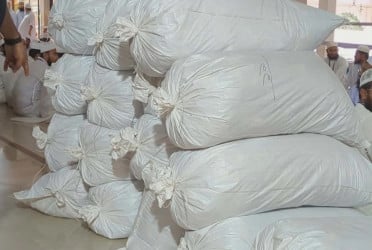
On Monday, January 5, a Jubo Dal leader was shot dead in Rauzan, Chattogram. In Cox’s Bazar, incidents have surfaced in which a candidate was threatened by being sent burial shrouds.
Within a month of the election schedule announcement, incidents of political violence, mob violence and attacks, including assaults on the Prothom Alo and Daily Star buildings, have taken place in Dhaka and other parts of the country.
On December 29, traders at Karwan Bazar in Dhaka organised a human chain protest against extortion. Business owners alleged that the protest was attacked under the leadership of a Jubo Dal leader.
Several videos of the incident spread on social media, showing that although the attacks took place in front of police officers, the police appeared largely inactive at the time. This sparked widespread criticism online.
In such circumstances, the Election Commission held several meetings with senior law enforcement officials after the schedule announcement. However, questions remain about how much the situation has actually improved.
Killings now seem to be happening at the slightest provocation across Dhaka and the rest of the country.
In Dinajpur Sadar, criminals killed Khairat Ali (44) and fled after snatching his battery-powered van. In Rajshahi’s Bagha upazila, miscreants entered a house late at night and shot Sohel Rana (35) dead in Fatepur Karali Nawshara char.
In Jashore town’s Shankarpur area, BNP leader Alamgir Hossain (55) was shot dead in the head. On 18 December, terrorists shot and killed Imdadul Haque Milon (45), president of the Sholua Press Club and a journalist, in Dumuria upazila of Khulna.
On 17 November, Golam Kibria (47), member secretary of the Pallabi police station unit of Jubo Dal, was shot dead inside a shop in Mirpur, Dhaka. Earlier, on 10 November, top criminal Tariq Saif Mamun (55) was shot dead in a cinematic-style execution in front of the National Medical Institute Hospital in Old Dhaka.
The list keeps growing. Ordinary people are now living in extreme insecurity. There is a growing fear among the public that, as the election draws nearer, incidents of murd er and violence will increase further. In such a situation, law enforcement agencies appear helpless.
Serious doubts remain as to whether the Ministry of Home Affairs truly understands the gravity of the situation, as it repeatedly claims that law and order are under control. Ordinary citizens, however, no longer trust such assurances. Fear and anxiety dominate public life.
The deterioration of law and order is not only a threat to ordinary citizens – it is also causing serious damage to the country’s overall development, economy and social peace.
On one hand, criminals are committing new forms of crime every day across the country; on the other, people are constantly living in fear.
Students are anxious when travelling to schools and colleges, business owners are worried about the safety of their businesses and assets, and citizens no longer feel safe even in their own homes.
Criminals have become so brazen that they do not hesitate to commit murders and other crimes openly in broad daylight. If police and law enforcement agencies fail to take effective action in time, it is only natural that public trust in the government and the state security system will erode. If this situation persists, national security, social stability and economic progress will face grave threats.
If the current law-and-order situation continues in this way, its negative impact will deeply affect every level of society. It will not only endanger the lives of ordinary citizens but also hinder the country’s economic advancement. When internal security is disrupted by criminals, it calls into question the stability of the entire state system.
Most importantly, if the situation does not improve during the election campaign period, the election will not take place in a festive atmosphere.
Voters will be afraid to go to polling centres. It must be remembered that low voter turnout will cast serious doubts on the legitimacy of the election.
A government formed through such an election will find it extremely difficult to restore normal law and order.
Given the current situation in the country, the assurance of a natural death has become people’s greatest demand. Nirmal Sen’s once-awakening headline now seems to reflect the collective sentiment of the people of Bangladesh.
Audite Karim is a writer and playwright.
Email: [email protected]