Many dramatic incidents took place surrounding the 2018 election—events that no one could even have imagined, yet they happened. Even so, the people’s voting rights were not established. In order to build strong resistance against the Awami League government, four political parties, including the BNP, formed the National Unity Front.
The alliance, which was formally launched on 13 October, was led by Gano Forum President Dr Kamal Hossain. At a press conference held at the National Press Club, he said: “Before the election, the government must resign, parliament must be dissolved and an all-party, acceptable government must be formed, and all political prisoners, including Khaleda Zia, must be released. We are declaring national unity—not in the interest of any political party, but in the interest of the nation. There is no alternative to a neutral and acceptable election for this.”
Earlier, another alliance, the Jukta Front, had been formed under the leadership of Bikalpa Dhara President Dr A Q M Badruddoza Chowdhury, comprising several parties. Although two fronts were formed under the leadership of two heavyweight political figures, neither succeeded due to various conspiracies by the government. On 30 December 2018, the government held an election in its own style. By midday, 97 candidates had boycotted the polls. By trapping all opposition parties into participating in the election, the Awami League was able to easily present both the election and its own legitimacy to the international community. The opposition parties failed to understand the ruling party’s vote engineering. However, some of the behind-the-scenes conspiracies surrounding that election are still widely discussed in informed circles.
Many conspiracies have taken place, and are still taking place, around the 13th National Parliamentary Election. There are only one month and four days left before the election. In this short time, in order to ensure that the nation does not face any new conspiracy, all democracy-loving and patriotic people—regardless of party affiliation—must remain united.
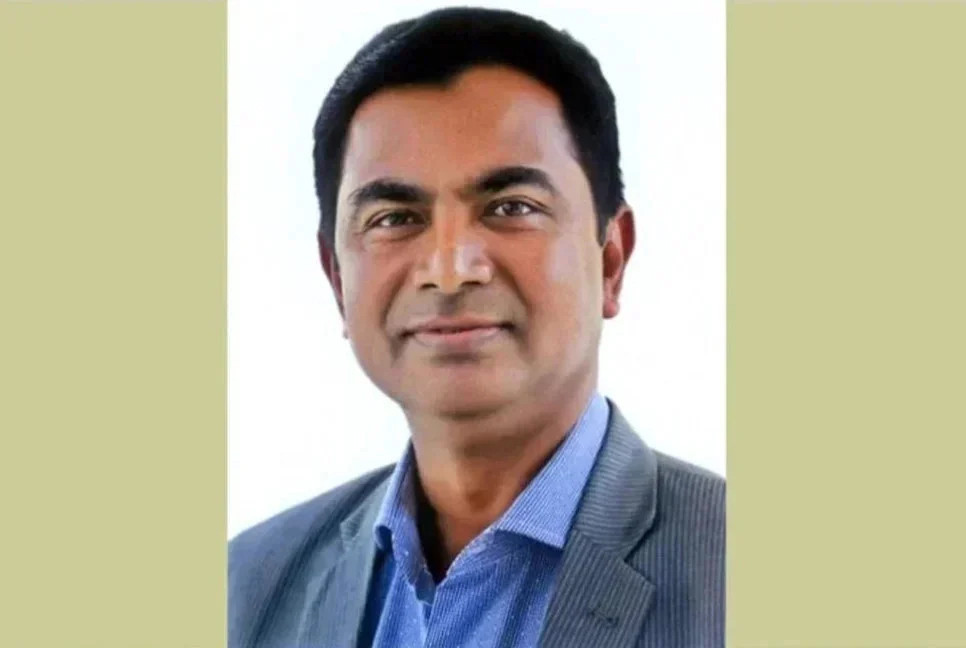
Mohammad Ali Arafat is a former Member of Parliament and State Minister for Information. Over the past nearly 16 years, he has been widely discussed and influential in Awami League politics. Particularly from 2018 until 5 August 2024, he was extremely powerful within both the party and the government. Even members of the party presidium dealt with him cautiously, as he had many identities: at times a friend of Prime Minister’s son Sajeeb Wazed Joy; at times a teacher; at times an Awami League think-tank member; at times the husband of actress Shomi Kaiser; at times a prominent intellectual; at times a columnist—sometimes writing under his own name, sometimes under a pseudonym; at times the chairman of the Suchinta Foundation. Known by many identities, this Awami League leader has also married four times. A highly fortunate and successful man.
On 24 July 2008, by marrying actress Shomi Kaiser, daughter of Shahidullah Kaiser, he became related to the family of former President Dr A Q M Badruddoza Chowdhury. Shomi Kaiser is the maternal cousin of Mahi B Chowdhury. One day before the 2018 election, Arafat suddenly phoned his acquaintances at several media offices and said, “Keep the news ready—shortly Mahi B Chowdhury will kick Dr Kamal Hossain’s door.” Hearing this, the journalists concerned were stunned and bewildered. Anticipating that something would happen, news editors instructed their reporters to rush to Dr Kamal’s residence on Bailey Road and wait to see what unfolded.
Exactly one hour later, Mahi B Chowdhury went to Dr Kamal’s house and, shouting abuses, kicked the door. Dr Kamal was not at home at the time. Immediately after the incident, it was broadcast as breaking news on various television channels. The reason behind this incident was that Dr Kamal Hossain had formed the National Unity Front with several parties, including the BNP, to participate in the election. To intimidate Dr Kamal and break up the front, Arafat had his relative Mahi carry out this unprecedented and disgraceful act. What reward Mahi B Chowdhury—popularly known as “Nagad Narayan”—received for this is unknown. However, it is known that later that night he met Prime Minister Sheikh Hasina at Ganabhaban.
Not only that, many other conspiracies took place ahead of the 2018 election. The characters of political leaders were also assassinated. Just a few days before the election, some reports prepared by the intelligence agency of a neighbouring country were supplied to leading media outlets through an official of the Prime Minister’s Office press wing. These reports contained various items of disinformation about BNP Acting Chairman Tarique Rahman. That official not only delivered the reports to the media but also arranged phone conversations between media editors or owners and Prime Minister Sheikh Hasina. The Prime Minister herself instructed that the reports be published prominently. Media executives understood that the reports contained disinformation and that they were being forced to spread falsehoods against Tarique Rahman. But after receiving direct instructions from the Prime Minister, they had no option at the time but to publish them.
Under the new arrangement and in a new environment, the 13th National Parliamentary Election and referendum will be held on Thursday, 12 February. Voting will take place uninterruptedly from 7:30 am to 4:30 pm using ballot papers in transparent ballot boxes. By the deadline of 29 December, 2,582 candidates submitted nomination papers. Appeals against returning officers’ decisions on scrutiny can be filed until tomorrow, 9 January. So far, 1,842 nomination papers have been declared valid, while 723 have been rejected. Many of those whose nominations were rejected are appealing. Appeals will be resolved between 10 and 18 January. The last date for withdrawal of candidature is 20 January, and symbols will be allocated on 21 January. In line with this schedule, political parties are making full preparations. At present, three major alliances will take part in the upcoming election, although several other alliances have also been formed. Contesting elections in alliances is a hallmark of democracy. Now everyone must remain vigilant so that no new “Arafat” or “Mahi” emerges, no conspiracy takes place, and no group dares to commit wrongdoing. Everyone must collectively ensure the election is held in the national interest. Otherwise, the people will have to pay a heavy price.
Politics is a complex game of calculations. Any political party that can see far ahead while sitting in the present can achieve lasting relevance. Even if a party disappears for some reason, its leaders live on in the hearts of the people. Maulana Abdul Hamid Khan Bhashani made immense contributions to Bangladesh’s politics. He was one of the founders of the Awami League, but he spent most of his political life with the National Awami Party (NAP). As a visionary leader, he famously bid the Pakistanis “walikum assalam” at the Kagmari Conference held from 8 to 10 February 1957, planting the seeds of Bangladesh’s independence in that very speech.
Under the leadership and in the name of Awami League President Sheikh Mujibur Rahman, the great Liberation War was fought in 1971, with the Awami League leading the struggle. However, due to the dominance of opportunistic leaders and a lack of visionary leadership within the party, then Major Ziaur Rahman proclaimed independence and announced the birth of Bangladesh to the world. Over 54 years of independence, the Awami League remained at the centre of discussion and criticism for much of the time. But due to misgovernance, on 5 August 2024 the party faced a cruel fate because of Mujib’s daughter, Hasina.
The proclaimer of independence, Major Ziaur Rahman—later President Ziaur Rahman—was a prudent, visionary and patriotic leader. He not only proclaimed independence but also established multi-party democracy and founded the Bangladesh Nationalist Party (BNP) to restore a positive political environment. In his absence, his wife Begum Khaleda Zia successfully led the party and was elected Prime Minister three times. On 30 December, she too departed for the land of no return. The party is now led by their son, Tarique Rahman. After spending 17 years in exile, returning home to reorganise the party and lead it towards elections is no easy task. Opportunists and profiteers have already begun trying to surround Tarique Rahman.
Once an ally, Jamaat-e-Islami is now one of the BNP’s main rivals. Despite allegations of war crimes, Jamaat has overcome many obstacles and has now become one of the country’s established political parties. Its organisational base is much stronger than in the past. Following victories by Islami Chhatra Shibir in university student union elections, interest in Jamaat has also increased. Electoral alliances have been formed under the leadership of both rival parties. Alliance-based elections are not new in Bangladesh, but this election will be far more complex and challenging than any previous one.
This time, ballot boxes will not be filled through routine thinking and propaganda. New voters are now enjoying much greater freedom of expression. Everyone has a mobile phone. Even many beggars in cities now use smartphones to make video calls to their villages. Button phones are almost obsolete. With millions of digital IDs, election campaigning is being carried out from home and abroad well in advance. The digital world is far more polluted with unhealthy propaganda than it is healthy. Human values are eroding day by day. Even when mobs brutally beat people to death in public, no one comes forward to stop it. Instead, people surround the scene, record videos, and some even livestream to create content.
At such a critical juncture, the 13th National Parliamentary Election and referendum are about to be held. The Election Commission, the government and political parties are all moving towards the February polls, while domestic and foreign groups are also gathering strength to derail the process. Therefore, in the interest of the nation, democracy, the protection of voting rights, and above all to honour the martyrs of the 2024 uprising, everyone must remain united to resist all conspiracies.
Author: Executive Editor, Bangladesh Pratidin