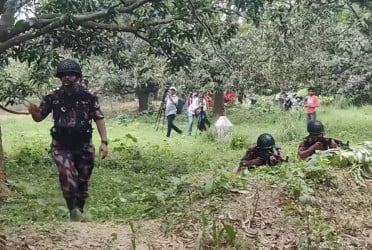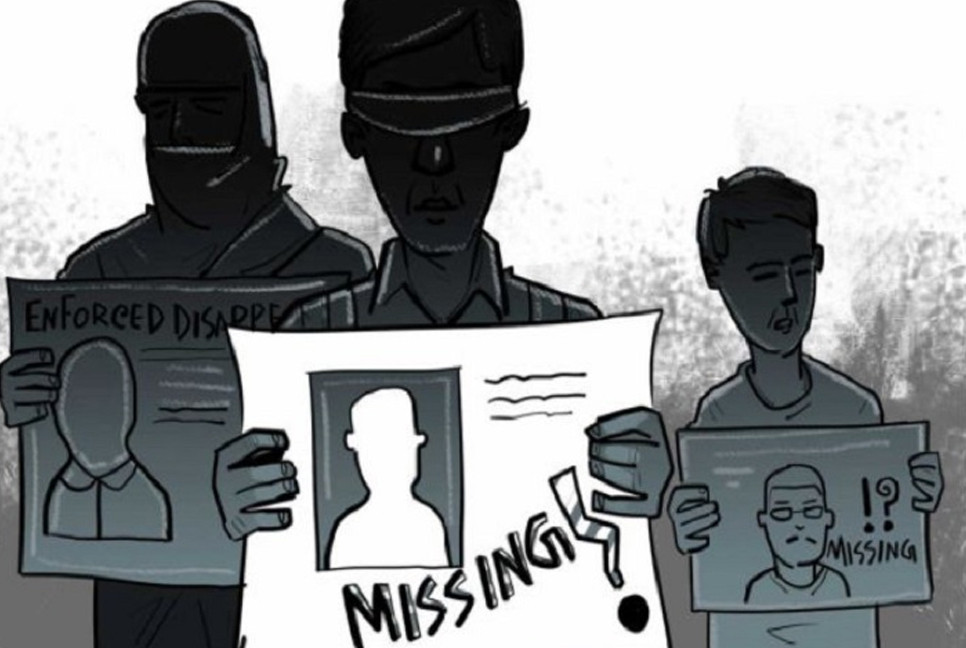
The government-formed Commission of Inquiry on the Enforced Disappearances has said that the pervious fascist Awami League administration systematically killed victims of enforced disappearance and disguised the deaths through fabricated security narratives, including “gunfights” with outlaws, drug traffickers and extremists.
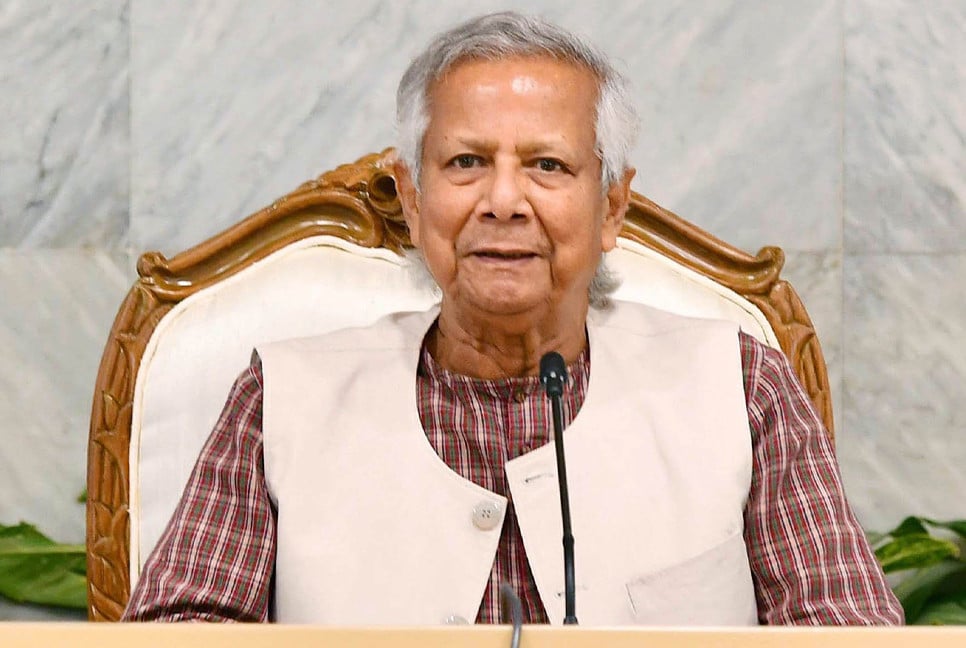
According to the report of the commission, submitted on Sunday to Chief Adviser Prof Muhammad Yunus, many detainees who vanished during security operations were later declared dead under different labels depending on the region in which they were found.
The report says those killed in the Sundarbans were routinely described as forest outlaws, while victims in Cox’s Bazar were labelled narcotics traffickers.
In Narayanganj, the dead were portrayed as gang members, and elsewhere men with long beards were frequently identified as Islamist extremists.
The commission notes that a distinct pattern emerges when analysis is limited to those who never returned.
“Missing cases are concentrated between 2011 and 2016, and then decline sharply,” the report says.
“After 2017, enforced disappearances continue, but far fewer culminate in permanent disappearance. This contrast supports the inference that policy and practice shifted.”
Investigations into incidents in the Sundarbans provided particularly stark evidence, the commission said.
Officers described detainees being transported at night while restrained, blindfolded and gagged, including one operation in which as many as 39 detainees were taken away in three boats.
“For those subsequently recorded as killed rather than disappeared, official reports routinely described them as ‘killed in crossfire’ during anti-piracy operations,” the report states.
One officer told the commission that although he could not see detainees’ faces or speak to them, physical indicators suggested prolonged captivity rather than life in mangrove terrain.
“Several of the men had markedly overgrown toenails,” the report quotes. “Their feet appeared soft and uncalloused.”
By contrast, the commission notes, people who regularly move barefoot in the Sundarbans develop thickened soles and a permanent discolouration caused by prolonged exposure to saline mud.
Civilian witnesses independently corroborated these observations. One resident demonstrated this by showing his own feet, explaining that those who survive long periods in the mangroves acquire distinctive markings over time. The men he saw being transported – later presented as Sundarbans outlaws – showed none of those characteristics.
The commission collected testimony from both civilians and members of the armed forces. While acknowledging that the evidence does not conclusively establish individual responsibility in every case, it said the consistency of accounts points to a wider pattern.
“Testimony relating to the Sundarbans relies on a combination of officer accounts, civilian observations, and circumstantial indicators,” the report says. “The Commission therefore treats these accounts as credible evidence of pattern and practice, rather than conclusive proof in individual cases.”
The identity of one key witness has been withheld for safety reasons, as the individual is involved in an ongoing legal case.
The report concludes that enforced disappearance was not random but cyclical, intensifying during periods of political tension.
“The enforced disappearance is cyclical, intensifying at moments of electoral stress, political confrontation, and perceived security crises,” it says.
It adds that the practice evolved over time, shifting from permanent disappearance to detention, prosecution and controlled resurfacing, accompanied by what it describes as the systematic manipulation of victims’ identities and narratives.
“Thus, the practice of enforced disappearance did not simply rise, peak, and recede,” the report states. 'It adapted. The logic behind it persisted, even as outward forms shifted in response to elections, crises, institutional preferences, and political priorities.'
Courtesy: Daily Sun.
Bd-pratidin English/TR