1. Farewell, Begum Khaleda Zia
The passing of Begum Khaleda Zia is not merely the departure of a former prime minister; it marks the quiet end of a long, complex and deeply emotional chapter in Bangladesh’s political history. For more than four decades, she was in power and out of power, fought battles, remained silent, endured humiliation, long imprisonment and prolonged illness—yet rarely raised her voice. She did not resort to harsh rhetoric in response to insults, nor did she weaponise politics of revenge. Such restraint is not only rare in Bangladeshi politics; it is almost an exception.
Throughout this long journey, she was not simply a politician; she became an inseparable figure in the country’s political landscape—one whose life and experiences were entwined with the rise and fall of the state itself. The final chapter of her life is particularly significant. What we witnessed after her death—the sea of people across the country, tears in the eyes of ordinary citizens, reminiscences from expatriates, and a kind of humane silence that cut across political divisions—was not the result of state arrangements. It was a spontaneous outpouring of public emotion.
Public support in politics can often be organised; grief cannot. Respect cannot be demanded; it must be earned. The fact that she remained connected to the people’s hearts despite being out of state power for so long is the greatest political truth of her life.
Like all politicians, her years in office were not free from controversy. There were mistakes, limitations and criticisms. Yet the final phase of her life was defined by restraint—no venomous words even from prison, no language of vengeance despite frail health, no hatred even in the face of political marginalisation. In the end, she came to rest beside her companion, in a quiet, private place. The clamour of power did not reach there. Politics may begin loudly, but it ultimately ends in silence. People come and go, leaving behind only memories.
It is from this place of memory that we must look at the different ways power is exercised.
2. One Time, Two Women, Two Paths
Standing at the beginning of 2026 and looking back, an exceptional reality in Bangladesh’s history becomes clear. For more than four decades, the country witnessed two powerful female leaders operating along the same timeline, yet following completely different paths. These two paths represent two contrasting philosophies of power.
One path was power-centric. Power itself became the language and the goal of politics. Speech grew harsh, behaviour increasingly vindictive. The tendency to not only defeat political opponents but to humiliate and suppress them personally gradually became normalised. State institutions slipped into the shadow of individuals and families. Though democracy existed on paper, in practice it became suffocated. The state was no longer seen as a shared property of citizens; it appeared trapped within the exclusive domain of the powerful. Eventually, the consequence of this path emerged through a public awakening— not suddenly, but through the explosion of long-accumulated resentment, humiliation and silence.
The other path was one of restraint. Fewer words, fewer demands, a lower pitch. An attempt to uphold a moral position even outside power. Silence in response to insult, restraint in the face of attack. Politically, this path was not always successful, but socially its impact was profound.
This comparison is relevant not only to politics; it extends to our personal and social lives as well. In families, workplaces and society, we often mistake power and authority for respect. We mistake fear for discipline. Yet experience teaches us that fear breeds obedience, not love. Power can control people, but it cannot win hearts.
This truth has been proven time and again—not only in Bangladesh, but across the world.
3. Venezuela, Maduro and the Hard Lessons of Power
To understand our own reality, we sometimes need to look into distant mirrors. Venezuela is one such mirror. Today, Venezuela’s experience is no longer merely the story of one country’s political failure; it is a powerful warning about the relationship between power and legitimacy. Despite possessing vast oil wealth, the country under Nicolás Maduro’s rule has effectively collapsed into a failed state. The currency is worthless, public trust in state institutions has evaporated, and healthcare and food systems have remained in chronic crisis. Millions have fled the country—this is not just economic collapse, but the breakdown of the relationship between state and citizen.
In this context, the position of the United States is not limited to questions of human rights or ideology. When a government survives for an extended period without popular consent, reduces elections and institutions to mere formalities, and at the same time seeks to remain part of the global economy while disregarding international norms, it becomes a source of uncertainty not only for its own people, but for the wider world.
This is why the question repeatedly arises: where does the boundary lie between power and impunity? History tells us that power may endure for a time, but without legitimacy it cannot last. This question is not relevant only to Venezuela; it applies to any country where checks on power are weak.
It is from this standpoint that parallels can be drawn between Venezuela’s experience and Bangladesh’s own realities.
4. Tarique Rahman, the BNP and the Weight of Responsibility
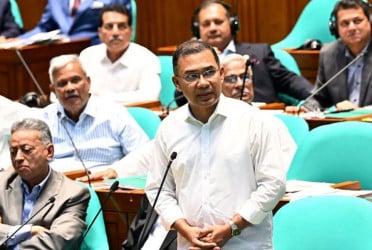
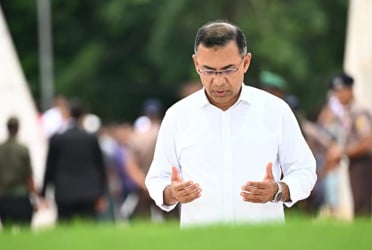
After the death of Begum Khaleda Zia, one reality in Bangladesh’s politics can no longer be avoided: the BNP has not just lost a leader, it has lost a historic shadow. Outside that shadow, the burden of the party and its politics now effectively rests on Tarique Rahman. Although he remained at the centre of politics while staying abroad for a long time, the situation has now changed. Symbolic politics is no longer sufficient. The emotions, memories and moral positioning that sustained the party during his mother’s lifetime belong to a chapter that has now closed. What lies ahead is a time of responsibility.
Today, the central question facing Bangladesh’s politics is no longer “who will come to power,” but rather “what kind of politics will be practised after coming to power.” Will power once again be used as an instrument of vengeance, or will it be treated as an opportunity for institution-building? The answer will determine not only the future of the BNP, but the broader trajectory of the country’s politics.
Tarique Rahman now faces two stark realities. On one side is a major party, carrying expectations, frustrations and the burdens of its past. On the other is a country—tired, sceptical and unwilling to place renewed trust in words alone, but seeking evidence through conduct. Today’s younger generation is not stirred by slogans. They observe whether people change when they move closer to power. They watch whether restraint is possible while in opposition. This generation looks not for promises, but for examples.
The final chapter of Begum Khaleda Zia’s life—defined by restraint, silence and personal dignity—now stands as the foremost moral benchmark before her party. Not power, but conduct. Not control, but responsibility. Not inheritance, but merit.
Final Word
Standing at the beginning of 2026, certain quiet reflections surround us. Power can be acquired; respect cannot. Influence can be created; love cannot. Inheritance can be declared; it cannot be imposed.
Taken together—Begum Khaleda Zia’s life, the two paths of two women, the experience of Venezuela, and the reality confronting Tarique Rahman—one truth becomes clear: the greatest test of power lies not in attaining it, but in how it is used.
In politics, judgments are often shouted aloud, but history speaks in silence. Whether for individuals or states, the path that endures is the one where power is tempered with humility, and strength with restraint. Bangladesh’s story is still being written—every day, through our actions, decisions and silences. Chaturmatra leaves us with precisely that question.
The writer is President, Centre for Governance Studies.