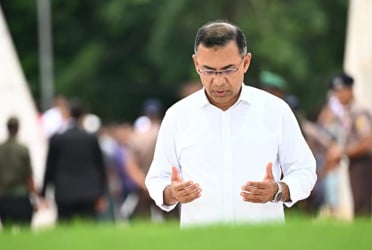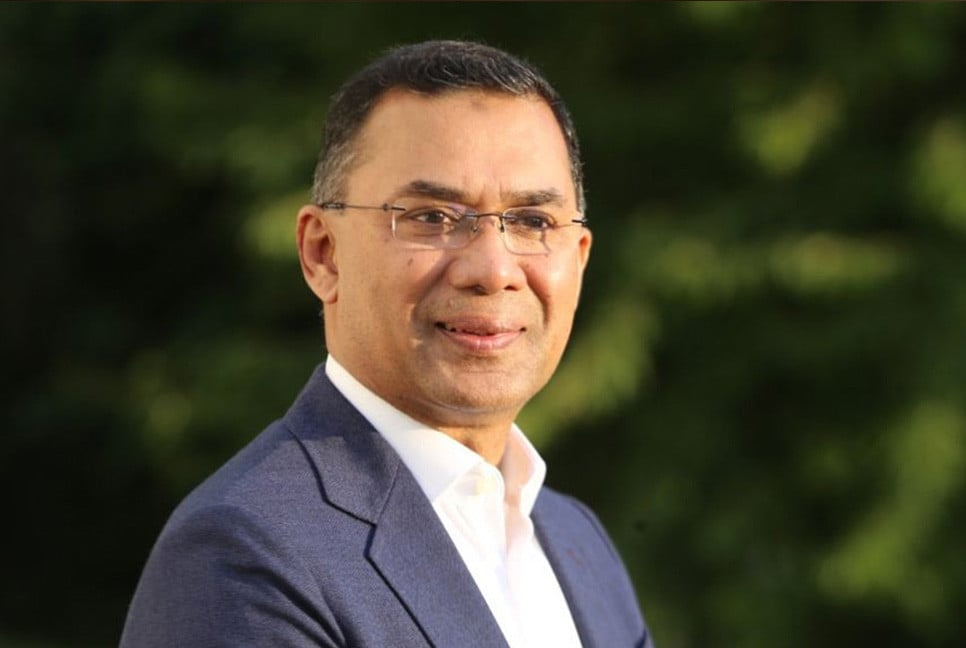
Bangladesh today stands in a long, exhausting and deep democratic vacuum. Vote-less elections, a culture of citizen fear, a partisan administration, political control over the judiciary and law enforcement agencies, and a steady shrinking of expression, the state is today suffering from a profound lack of trust. In this context, leadership is not just about the transfer of power; it is about building an effective, just and humane design of the future state on the ruins of democracy. The name of this difficult and historic responsibility is Tarique Rahman today.
Even after 17 years of exile, Tarique Rahman did not dissociate himself from the politics of Bangladesh. History bears witness to the fact that many political leaders in exile gradually lose relevance, fall out of reality, or simply become a part of memory. But Tarique Rahman did not choose that familiar path. He thought about the future of the state, maintained organizational communication, gave programs and most importantly tried to move politics from individualistic emotions to principled state thinking. As a result, today, 17 years later, his name is no longer just the name of a top leader of a party; in the eyes of many, he is a beacon of hope for the restoration of democracy.
This long preparation found institutional expression in the 31-point State Reform Proposal announced in 2023. This document is not a collection of sentimental slogans, nor is it simply a list of electoral promises; rather, it is a coherent answer to the fundamental structural questions of state management. Reform of the electoral system, ensuring administrative accountability, independence of the judiciary, effective and institutionalized deterrence against corruption, and social justice have all been given equal importance in this proposal. This makes it clear that Tarique Rahman's political struggle is not about capturing power; it is about reforming the state.
The common man is at the center of this state's thinking and women are at the center of that common man's family. This is where the concept of the family card gains special political significance. It is not just a social security program; it is a well-planned strategy to place women's empowerment within the state structure. Determining women as the main recipients of state support for the family, food security, health and education means state recognition of women's role in family decision-making. International experience and research clearly show that the control of state resources in the hands of women is most effectively spent on child nutrition, education and health, which strengthens the foundation of human development in the long run. In this sense, the Family Card transforms women's empowerment from a slogan to a policy.
In the same vein, the Kisan Card brings the food producing class, especially marginal and women farmers, under the ambit of state recognition and social security. This is an attempt to establish agriculture as a strategic sector of the economy, not a sector of mercy. The health card recognizes health care as a civil right, not a luxury, while maternal health, reproductive health and mental health are considered fundamental responsibilities of the state. The proposal to provide allowances for imams and muezzins broadens the concept of social justice besides giving institutional status to religious and social services.
The picture that Tarique Rahman is painting of the future of Bangladesh is not just of a political state, it is a vision of a human resource-based, inclusive and capable state. These plans focus on radical reform of the education system, skill-based curriculum, technology education and learning new languages to prepare young men and women to compete in the global labor market. The idea of recognizing sports as a profession is also part of the same philosophy, which creates opportunities for alternative professions, especially for the younger generation, and increases social mobility.
In the context of curbing corruption, Tarique Rahman put emphasis on structural reforms by shunning the path of vindictive politics. Because history proves that women, the poor and the marginalized are the biggest victims of a corrupt and unaccountable state. Social justice can never be established without the independence of the judiciary, the rule of law and strong institutions.
Along with this philosophical and policy preparation, the recent reality is that the return of Tarique Rahman has changed the momentum of Bangladesh politics. This is no longer a theoretical analysis; it is a direct field reality. The fact that the political wind is turning towards BNP today is evident not only in village or the peripheral areas, but also in the political discourse of Dhaka, the subtext of the media and the behavior of the opponents. "This public opinion was already visible outside Dhaka; but the doubts, motivated doubts and" "reverse talk" "that were once heard in the capital, have largely disappeared today." This change is not limited to the sentiment of the supporters, but it is also clearly reflected in the strategic position of the opposing political camps. Many forces that understand politics are now openly or silently admitting that Tarique Rahman is at the center of the future equation.
Despite the long repression, prosecution, political ban and exile, Tarique Rahman has chosen the politics of reconstruction and not of revenge. He is talking about a politics where the past will be answered by building the future. That is why his presence today is not just the return of an opposition leader in Bangladesh's politics; it is a guiding light for people who believe in democracy.
It is not an easy task to build an effective, just and humane township on the ruins of democracy. But history shows that leaders who build themselves through long waits, political sacrifices, and principled preparation are ultimately the hope of a nation. Tarique Rahman is today a symbol of that hope and possibility, a beacon of hope for a possible democratic Bangladesh.
The author is a Physician and political activist