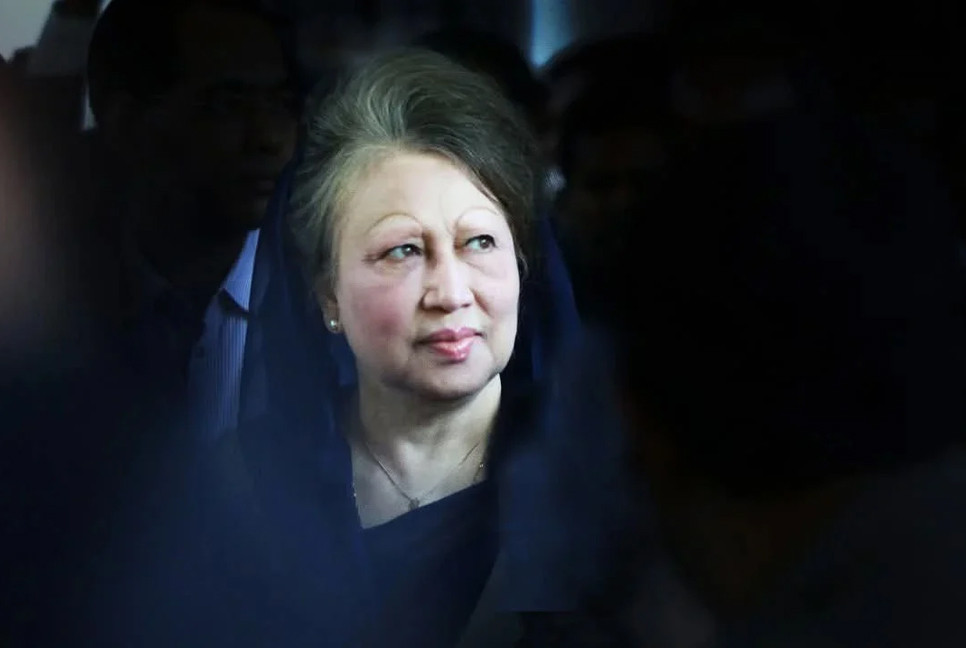
“An uncompromising leader has departed, but she has left behind an immortal legacy of struggle, courage and self-respect. Begum Khaleda Zia is no longer with us, yet her life and her fight will continue to guide Bangladesh from generation to generation, keeping the flame of protest alight in the darkness.”
Another radiant guiding star has faded from Bangladesh’s political firmament. The uncompromising leader, BNP Chairperson and the country’s first woman prime minister, Begum Khaleda Zia, has passed away. After a long illness marked by relentless struggle and persecution, her eventful life came to an end in the early hours of 30 December 2025 at Evercare Hospital in the capital. She was 80. The following day, a grateful nation bade her a final farewell with a guard of honour, funeral prayers and burial with full state honours.
The death of Begum Khaleda Zia is not merely the passing of a former prime minister; it marks the close of an inseparable chapter in four decades of Bangladesh’s political history. Among the women leaders who emerged in post-independence politics as symbols of courage, resolve and public trust, Begum Khaleda Zia stood at the forefront. She was the living embodiment of uncompromising leadership and an unyielding name in the struggle against domination.
Born on 15 August 1945 in Jalpaiguri in what was then British India, she spent her childhood and student years in Dinajpur. Her marriage in 1960 to Pakistan Army officer Ziaur Rahman brought a decisive turn in her life—one that carried her beyond the private sphere to the very centre of history. During the 1971 Liberation War, she endured captivity by Pakistani forces along with her children, living through days of uncertainty and fear of death. Those harrowing experiences left deep scars, yet they also seemed to prepare her mentally for the arduous struggles that lay ahead.
The most difficult chapter of her life began after the assassination of Shaheed President Ziaur Rahman, the proclaimer of independence, on 30 May 1981. The Bangladesh Nationalist Party (BNP), founded by her husband, was then in disarray, while the country was under authoritarian rule. Amid party fragmentation and repression by military rulers, a politically inexperienced housewife took charge of the party. Thus began a trial by fire.
She took to the streets, standing shoulder to shoulder with party activists. Police batons, arrests and imprisonment failed to deter her. Refusing to bow to inducement or fear, she gradually became known as the embodiment of uncompromising resolve—a word that eventually became synonymous with her name. She never relinquished that identity until her final day.
After eight long years of mass democratic movement against autocracy, the BNP’s victory in the 1991 parliamentary election brought Begum Khaleda Zia to office as Bangladesh’s first woman prime minister. Under her leadership, parliamentary democracy was restored—an achievement that remains indelibly etched in history. She served as prime minister three times: from 1991 to 1996, briefly in 1996, and again from 2001 to 2006. Her leadership also received international recognition, exemplified by her inclusion in Forbes magazine’s list of the world’s most powerful women in 2005.
With changes in power, however, came a dark chapter of vendetta. From the army-backed caretaker government of 2007 through successive Awami League administrations, Begum Khaleda Zia was repeatedly imprisoned in what her party described as false and harassing cases. The campaign of retribution extended to her family. Her elder son, Tarique Rahman, was arrested and brutally tortured, pushing him to the brink of death. Her younger son, Arafat Rahman Koko—who was not directly involved in politics—was also arrested. Unable to bear the relentless anxiety for his mother and elder brother, the mental torment and the weight of exile, Arafat Rahman Koko passed away abroad, leaving an irreparable wound in Begum Khaleda Zia’s heart.
Among the long sequence of persecution, 8 February 2018 stands out as particularly cruel. On that day, she was sent, on what her party described as a wholly fabricated case, to the isolated, unhygienic and inhumane prison on Nazimuddin Road in Dhaka—where a three-time former prime minister was subjected to extreme humiliation and harsh treatment.
She entered prison in good health and emerged suffering from multiple ailments, including a serious liver disease. Deprivation of proper medical care, mental abuse and sustained humiliation gradually broke down her health. BNP leaders alleged that she had been subjected to “slow poisoning” while in custody.
Despite prolonged imprisonment and house arrest, she never withdrew from the centre of politics. In her absence, her capable son Tarique Rahman played the role of chief strategist from exile, steering the movement forward.
Following the mass uprising of 2024 and the fall of authoritarian rule, Begum Khaleda Zia was acquitted one by one of the cases brought against her. On 7 January 2025, she travelled abroad for medical treatment for the first time. In London, she was reunited with her son, daughter-in-law and granddaughters after a long separation. Although her condition showed some improvement, it was already clear that much time had been lost.
After further improvement during treatment in London, she celebrated Eid with her elder son, Tarique Rahman. On 6 May, the day she returned home, a sea of people lined the route from the airport to Gulshan to welcome her back.
Defying doctors’ advice, she made an appearance on 21 November, Armed Forces Day, at a familiar venue. Overwhelmed by the affection of well-wishers, she was repeatedly lost in the crowd. This proved to be her final public appearance.
On 23 November, she was again admitted to Evercare Hospital in a critical condition. After a 37-day battle between life and death, she surrendered to the ultimate truth at 6am on 30 December. News of her passing plunged the entire nation into stunned silence.
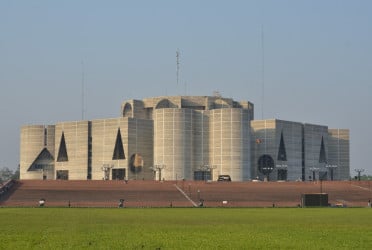
On the morning of 31 December, as her coffin, draped in red and green, emerged from Evercare Hospital, the surroundings grew heavy with tears and lamentation. From her Gulshan residence to the South Plaza of the National Parliament, every moment of her final journey was heart-rending.
A vast sea of mourners gathered for her funeral prayers on Dhaka’s historic Manik Mia Avenue. People from all walks of life, regardless of party, religion or background, turned out in their hundreds of thousands. Many have described it as the largest funeral in Bangladesh’s history—not merely in numbers, but in the depth of emotion and love.
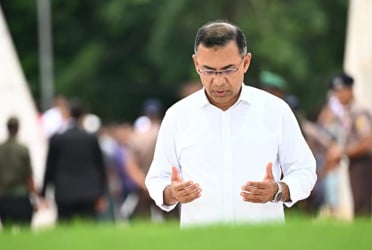
Shortly before 9am on 31 December, the ambulance carrying Begum Khaleda Zia’s body left the gates of Evercare Hospital. As the vehicle draped in red and green moved forward, a heavy silence descended—eyes filled with tears, the air stilled by sighs. Under tight security, the convoy proceeded towards her residence at 196 Gulshan Avenue. There, seated beside his mother’s coffin, her elder son Tarique Rahman was immersed in recitation of the Holy Quran. The family’s silent final tribute made those moments even more poignant.
Author: Senior journalist