The recently departed month of December in the English calendar year will remain memorable in Bangladesh’s history for many reasons. Alongside Victory Day on 16 December, three unprecedented events were added in 2025.
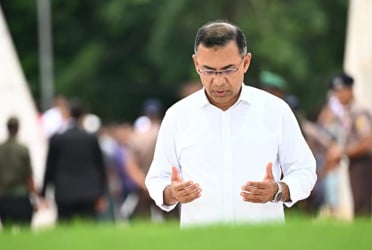
After young political leader and fiery speaker Sharif Osman Hadi, spokesperson of the Inqilab Moncho, succumbed to gunshot injuries inflicted by assailants and died at a hospital in Singapore on 18 December, his funeral prayers were held on 20 December on Manik Mia Avenue with a massive public turnout.
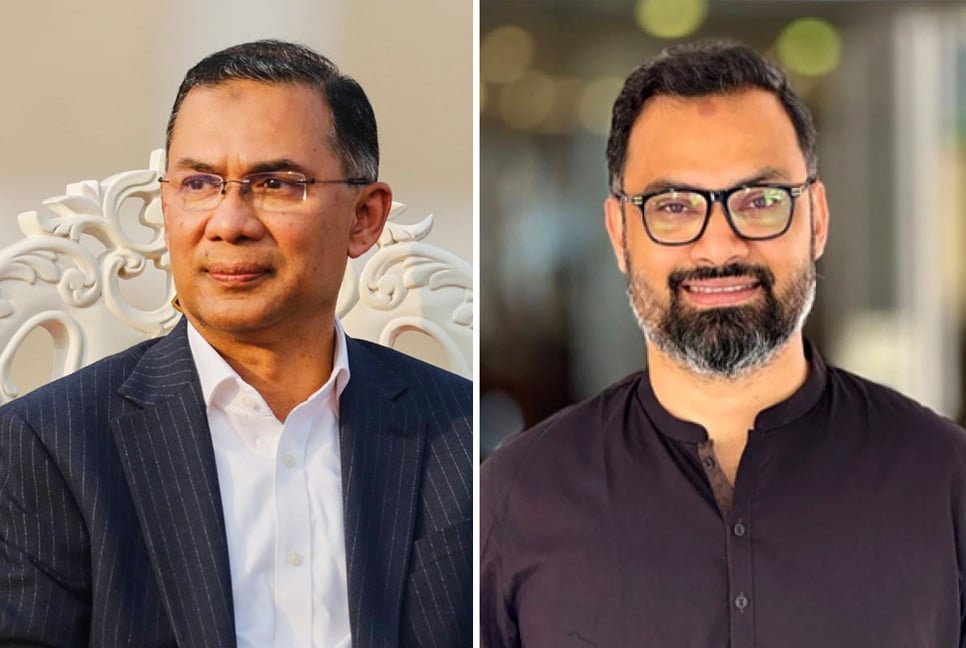
On 25 December, following the homecoming of BNP Acting Chairman Tarique Rahman after 17 years in exile, he was provided with the highest level of state security and addressed what was remembered as the largest public rally ever held on the 300-feet road in Purbachal. Then, on the final day of the year, 31 December, BNP Chairperson and former Prime Minister Begum Khaleda Zia’s funeral prayer surpassed all previous records in terms of public attendance on Manik Mia Avenue, followed by her burial with full state honours beside the grave of her husband, martyred President Ziaur Rahman, at Zia Udyan in Sher-e-Bangla Nagar.
Never before in Bangladesh’s history have so many major events taken place within a single month. This sequence of events has not only further elevated the historical significance of December—already marked by victory in the 1971 Liberation War—but has also quietly brought about major shifts in national political calculations. With just one month and seven days remaining before the much-anticipated 13th parliamentary election, the political landscape that prevailed until December has changed dramatically.
In the absence of the Awami League, Bangladesh’s parliamentary election now effectively features two principal contenders: the BNP and Jamaat-e-Islami. Among other parties, only the National Citizen Party (NCP), formed by young leaders of the July uprising, currently enjoys any notable national representation. Although various Islamist parties claim to have “massive” public support nationwide, they have never been able to prove their political acceptability to the electorate. The same logic applies to other small parties, most of which—apart from the BNP and Jamaat—are heavily dependent on individual leaders or religious figures. Except for Bangladesh’s first parliamentary election in 1973, Islamist parties have featured prominently in almost every election. In the case of the 13th parliamentary election, their participation appears to have broken all previous records, both in terms of the number of parties and the number of candidates fielded.
This time, 51 parties have been registered with the Election Commission as eligible to contest. Together with independent candidates, the BNP, Jamaat-e-Islami, the NCP and others submitted a total of 2,569 nomination papers. The Election Commission has already begun scrutiny of these nominations, a process that will continue until 4 January. Due to various irregularities and incomplete information, 75 nomination papers were rejected in the first two days alone. Among those rejected were two heavyweight candidates: former DUCSU vice-president and Nagorik Oikya leader Mahmudur Rahman (Bogura-2), and former MP and Jamaat-e-Islami Assistant Secretary Hamidur Rahman Azad (Cox’s Bazar-2). More rejections are expected by 4 January, although some may be reinstated through the appeals process. However, the number is unlikely to be significant. Election campaigning is expected to gain momentum only after the withdrawal deadline on 20 January and the publication of the final list of candidates by the Election Commission.
According to reports published in newspapers citing the Election Commission, nomination papers were submitted by 331 BNP candidates, 276 from Jamaat-e-Islami, 224 from the Jatiya Party, 268 from Islami Andolan Bangladesh, 44 from the National Citizen Party, 65 from the Communist Party of Bangladesh (CPB), 41 from the Socialist Party of Bangladesh (BASAD), nine from JASAD, 31 from JSD, 94 from Bangladesh Khelafat Majlis, 68 from Khelafat Majlis, 104 from Gano Odhikar Parishad, 53 from the Amar Bangladesh (AB) Party, 23 from Gano Forum, 18 from Ganosanghati Andolan, 11 from Nagorik Oikya, 11 from Bangladesh Khelafat Andolan and five from Jamiat Ulema-e-Islam Bangladesh.
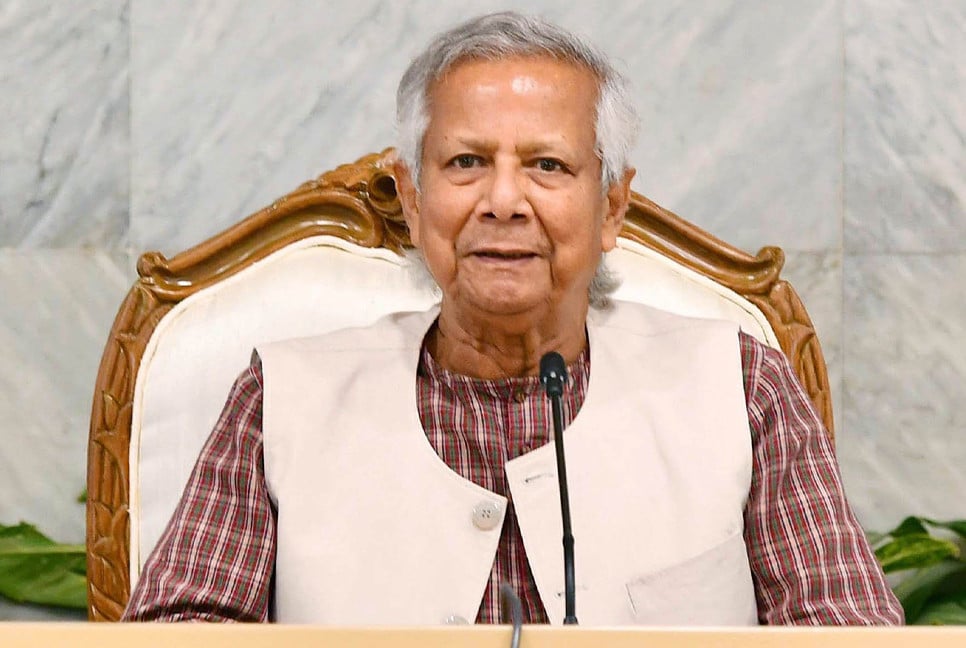
Due to delays in holding the election, Chief Adviser of the interim government Dr Muhammad Yunus has come under intense criticism. At the time he assumed office, his government enjoyed strong public confidence, with some even calling for him to govern the country for up to five years without elections. However, due to severe failures in controlling law and order and curbing price hikes, both he and his government have lost much of their initial popularity and positive image. Public frustration has reached such a level that people are now demanding an early handover of power to an elected representative government. The delay in elections has also complicated political equations.
The two major parties, the BNP and Jamaat-e-Islami, have drifted so far apart that, despite their past cooperation in forming governments, including Jamaat’s participation in cabinets and joint street movements, some BNP leaders began attacking Jamaat in Awami League-style rhetoric from mid-2025. This may reflect an ambition to assume power alone. Some BNP leaders even began behaving as if they had received a divine mandate to rule. Although beneficiaries of the July uprising, they rejected the NCP’s proposal to form a national government comprising elected MPs from all parties. Despite expressing interest in an alliance with the BNP, the NCP received no positive response. After July, BNP Secretary General Mirza Fakhrul Islam Alamgir had spoken of forming a national government, while Jamaat-e-Islami continues to support the idea. However, although the BNP previously acknowledged the possibility of forming a national government without Jamaat, following Tarique Rahman’s return the party has made a complete U-turn on the proposal.
The surge of public support for the BNP following Tarique Rahman’s return and the death of Begum Khaleda Zia strongly suggests that the party is poised to win a parliamentary majority in the 12 February election. The people of Bangladesh, long accustomed to political turmoil, know from experience that parties likely to win outright do not favour national governments. It can therefore be said with some certainty that no national government will be formed after the election. Moreover, the country is not at war, nor is it facing a crisis that cannot be addressed by a single government.
The pressing demand of the time was the removal of what is described as the fascist Sheikh Hasina, a task accomplished by students and youth without direct support from political parties. Their backing of an interim government led by Nobel laureate Dr Muhammad Yunus—widely acceptable across society—paved the way for him to assume office. Despite widespread dissatisfaction with how his government has run the state over the past year and a half, no group has yet demanded the formation of a national government comprising party representatives. For all these reasons, expecting a national government from the election’s majority-winning party is politically unrealistic.
Calls for a national government typically come from smaller parties that have no realistic chance of forming a government on their own. Following the July uprising and the BNP’s leadership vacuum, Jamaat-e-Islami developed confidence that it could emerge as the majority party. This was partly due to opportunistic groups exploiting the situation in the BNP’s name, causing public trust in the BNP to erode. Many citizens openly and privately expressed that after 54 years of experience with both the Awami League and the BNP, they wanted to see something new.
That alternative became Jamaat-e-Islami. After witnessing years of repression against Jamaat leaders and activists under three Awami League terms, including what many regard as sham trials and executions of top leaders, public sympathy for Jamaat increased. Its popular support has undoubtedly grown, and it is likely to secure more seats in February than ever before. However, under no circumstances will it win enough seats to form a government.
Even a potential Jamaat-led alliance would fall short of the numbers needed to form a coalition government. And even if such an outcome were to occur by chance, the habitual internal conflicts among Islamist parties would likely render such a coalition short-lived, plunging the country into yet another crisis—something no one desires.
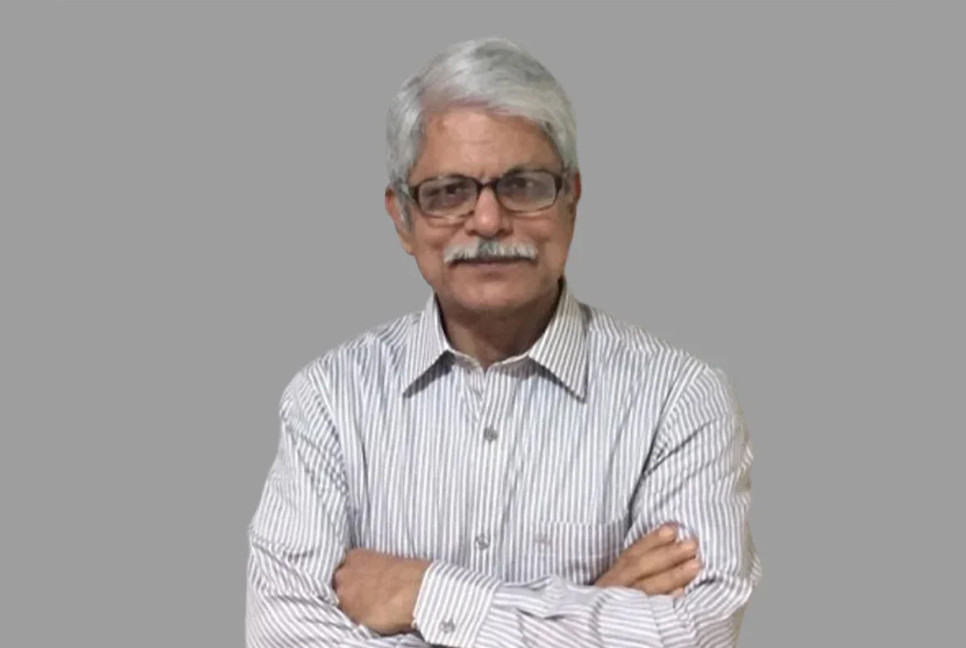
Author: US-based senior journalist.