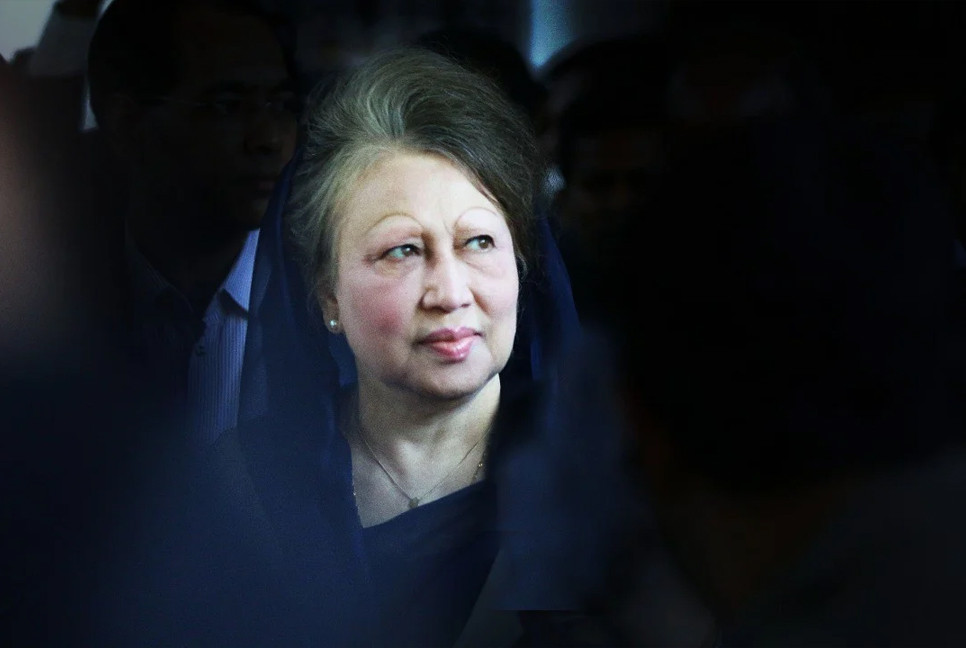
In Bangladesh’s political history, Begum Khaleda Zia took the most glorious farewell. On the last day of the year, bringing the entire nation to tears, she was laid to rest beside her husband. This was the grace of the Almighty. A person who stood for unity throughout her life departed this world by uniting the entire nation. Begum Zia’s death brought together people across party lines. Forgetting all differences, Bangladesh mourned as one. The massive turnout of millions at her funeral proved how deeply loved and respected Begum Zia was by the people of this country.
Through her farewell, the people of Bangladesh once again demonstrated that they never hesitate to show respect and honor to a principled individual. Those whom the people love, they honor wholeheartedly. The respect and love with which Begum Khaleda Zia departed were truly her due – earned step by step through her lifelong work.
Begum Zia has passed away, but her thoughts, ideals, and values remain. If we truly wish to honor her, we must realize her dreams and nurture her aspirations. This is the time to practice her philosophy and ideals. In today’s unstable and intolerant environment, following Begum Zia’s way of life is more necessary than ever. At a time when Bangladeshi politics is gripped by vengeful frenzy and dissenting voices are suppressed through force, Begum Zia’s principles and ideals are especially relevant. With an election ahead, tolerance, mutual respect, and restraint are essential. Against the spread of mob violence and muscle power across the country, Begum Zia can be our guiding light.
Embracing her ideals does not mean everyone must join BNP politics. Every citizen can uphold Begum Zia’s ideals while remaining true to their own beliefs. That is the greatness of Begum Zia. Her ideals mean listening to others, respecting differing opinions, and showing dignity and courtesy. They mean replacing politics of vengeance with politics of patience and sacrifice; practicing restraint, responsibility, and decency in political conduct; and fostering refined, respectful politics instead of vulgar and abusive language.
Begum Zia believed in a distinct political ideology and held firm personal convictions. Yet as a leader, she rose above party lines. Even toward those who disagreed with her ideology, she showed respect, compassion, and goodwill. She promoted her political beliefs and fought for her ideals but never imposed them by force. She exemplified how one can remain steadfast in one’s principles while respecting dissent. In her 44-year political career, she was never aggressive toward opposing views, nor did she suppress opponents through force. Above all, she stood for unity, not division, throughout her life.
Consider the anti-autocracy movement of the 1980s. At a critical juncture, a meeting between two leaders was essential. While various conditions and objections came from the other side, Begum Zia immediately agreed to meet anywhere, anytime, without conditions, for the sake of the country. She went to Mohakhali for the meeting in the national interest. After the fall of autocratic rule, Begum Zia was elected by popular vote in the 1991 election. Although BNP favored a presidential system, despite having a parliamentary majority, she agreed to change the system in line with the people’s will. Under her leadership, the constitutional amendment establishing a parliamentary system was passed. She demonstrated in practice that the nation’s interest outweighed party interests. In 1996, when several political parties resigned from parliament and launched a movement demanding a non-party caretaker government—placing democracy at risk—Begum Zia accepted the caretaker system in the national interest and for the sake.
When the 1/11 regime seized power in 2007, Begum Zia was the first to raise her voice for democracy. With immense courage, determination, and an uncompromising stance, she spoke out against the illegal government. The Fakhruddin–Moeen U Ahmed regime sought to remove her from politics. She and her two sons were detained, subjected to brutal repression and persecution, and even pressured to leave the country—an offer she rejected with disdain.
For 17 long years, she endured relentless harassment, eviction from her home, false imprisonment, denial of medical treatment, and attempts to destroy her physically and mentally. Yet she was never broken. She remained patient and resilient. After 17 years, it was Begum Zia who ultimately emerged victorious. Bathed in the love of the people, she became a symbol of national unity.
After the fall of authoritarian rule, she urged the people of Bangladesh to remain united and peaceful. She opposed vengeance throughout her life. Despite enduring years of severe oppression, she never once resorted to aggression or indecent remarks. This was Begum Zia’s politics—struggle for the people and for national unity. She established a tradition of patience, tolerance, and decency in politics, and fought for pluralistic democratic rights. The immense love shown by millions at her final farewell testifies to nationwide support for her ideals.
Regardless of our political beliefs, we must follow Begum Zia’s political practices. Only then will peace come to the country; violence and hatred will cease; and our motherland will not burn in the fire of revenge and counter-revenge.
With elections ahead, let this election become a platform to realize Begum Zia’s ideals. Political parties should refrain from using vulgar and abusive language, avoid muscle power in elections, and conduct campaigns with mutual respect and harmony. Together, let us move the country forward—only then will we truly honor Begum Khaleda Zia. Only then will her soul find peace.
Audite Karim, Playwright and Columnist.