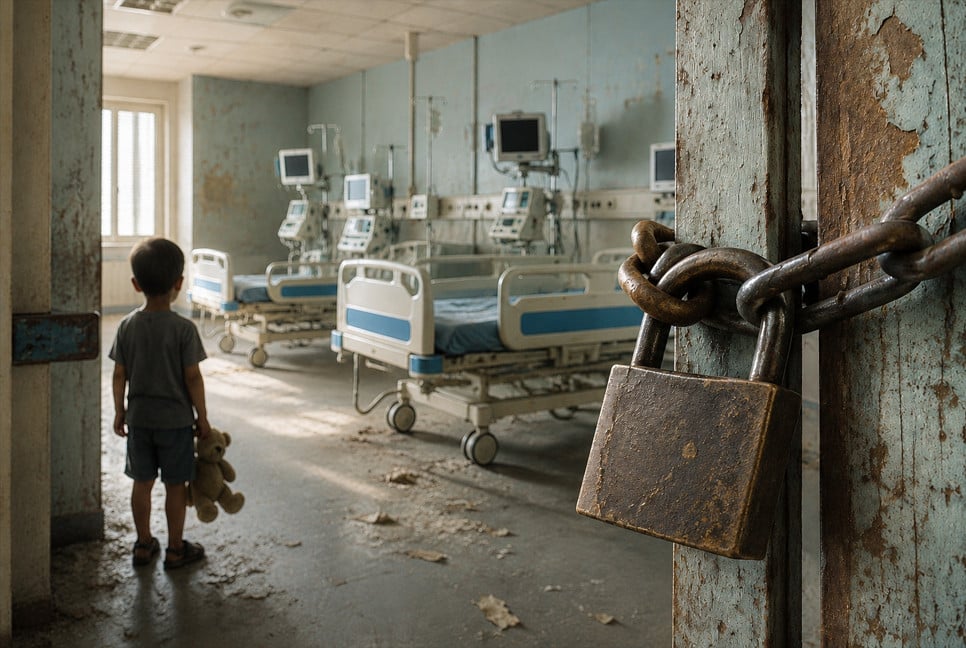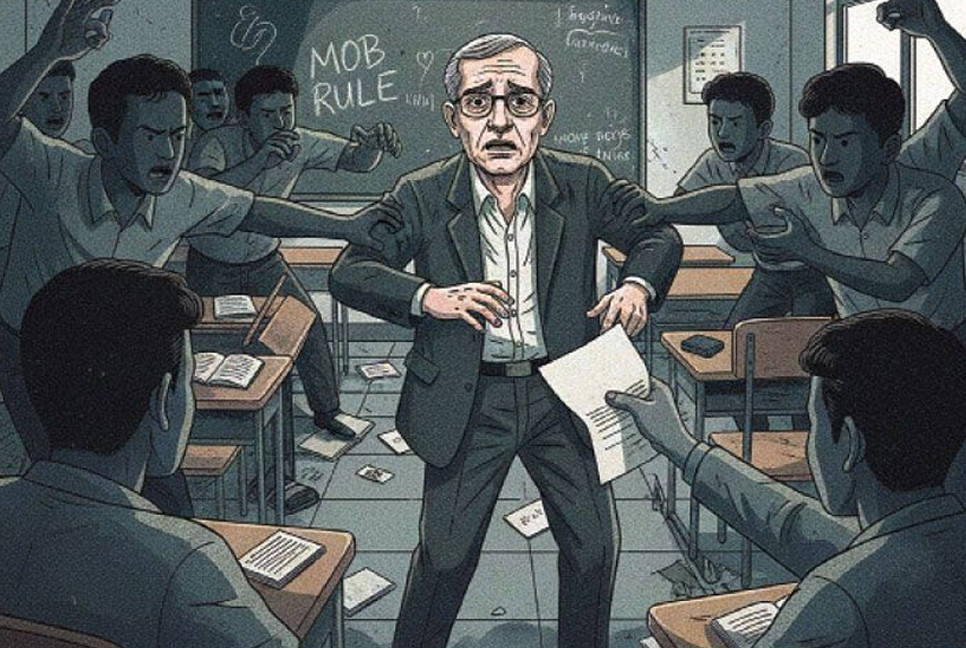
The education system of Bangladesh has suffered the most from mob culture. During the July Uprising, our students played a historic role. With their blood, they freed Bangladesh from authoritarian rule. The nation will remember their contribution forever. Everyone had hoped that after the fall of authoritarianism, students would return to their classrooms and focus on their studies. But in reality, that has not happened.
Over the past 16 months, a proper academic environment has not returned to educational institutions. Mob violence, fights, and clashes have left education in a dire state. Students are taking it to the streets almost every day over various demands. Students from one institution are clashing with those of another. They are surrounding the Secretariat demanding “auto-pass” without sitting for examinations. Teachers are being removed through mob pressure. To put it simply, there is now no conducive learning environment in educational institutions.
Since 5 August last year, teachers have been the primary victims of mob violence. The trend of humiliating, harassing, and forcing teachers to resign is still continuing in Bangladesh. Although the ministry has stated that they would take action against such activities, no concrete steps have yet been implemented. Analysts fear that the continuous erosion of teachers’ dignity will have a serious impact on the country’s education system.
The latest mob incident took place at Rajshahi University. The way six deans were forced to step down by creating an atmosphere of fear and mob violence can only be described as a case of “mob rule.” The terms of the deans, who had been elected during the Awami League government in 2023, were due to end on 17 December. As it was not possible to hold dean elections under the current circumstances, the university administration decided on 11 December to extend the terms of the deans of 12 faculties. Six deans were labelled as “pro-Awami League teachers” and were given an ultimatum by the RUCSU General Secretary to resign. He did not stop at issuing a deadline; on Sunday (21 December) he personally brought a typed resignation letter and called the deans in front of the RUCSU building. On learning that a former vice-chancellor was taking classes, he also went to that department. Subsequently, a group of students locked the offices of the vice-chancellor, pro-vice-chancellor, proctor, registrar, and all departments of the administrative building, along with those of three deans.
Under such circumstances, Vice-Chancellor Professor Saleh Hasan Naqib held an emergency meeting with the deans on Sunday evening. There, the deans submitted written applications stating that they were unable to carry out their routine duties. The incident at Rajshahi University cannot be viewed separately from the mob violence happening in the past 16 months. Since the mass uprising, countless incidents of teachers being humiliated and forced to resign have occurred across educational institutions nationwide. Because the interim government has failed to take strong and effective measures to protect teachers; as a result, certain individuals and groups now consider themselves above the law, leading to the repeated occurrence of such incidents.
In April, Kanti Lal Acharya, acting head teacher of Bhatiari Haji Tobarak Ali High School in Sitakunda upazila of Chattogram,
was forced to resign by a mob. Allegations suggest that a local BNP leader, who failed to become chairman of the school’s managing committee, mobilised his followers to force the head teacher’s resignation.
After August, the practice of forming mobs to force teachers to resign began spreading across educational institutions. From university vice-chancellors to colleges, schools, and primary schools, such incidents have occurred everywhere. Teachers have not been spared from physical assault and legal harassment either. Initially, only students carried out these acts, but later various political and vested quarters became directly involved.
Discussions with several public universities reveal that many teachers are still employed but are not being allowed to take classes.
According to sources in the Ministry of Education, at least 2,000 teachers and head teachers nationwide have been forced to resign in this manner so far. Among them, 800 teachers have gone to court seeking reinstatement. In Dhaka city alone, more than 200 teachers have been forced to resign. These teachers are also not receiving their salaries.
However, a senior official of the Ministry of Education claims that the cases of those forced to resign are being reviewed, and those against whom no evidence of corruption is found may be reinstated with pay.
Apart from these, infighting between students and clashes at educational institutions are also on the rise.
On 26 October, in the Khagan area of Ashulia, Savar, near Dhaka, a clash broke out between students of Daffodil International University and City University over a trivial issue. Students from both universities chased each other and engaged in violent clashes. University buses were set on fire and vandalised. At least 150 students were injured in the incident.
According to police records, 1,783 incidents of violence have occurred in educational institutions over the past 16 months. As a result, educational institutions are now experiencing extreme disorder and instability.
Bd-pratidin English/ ANI