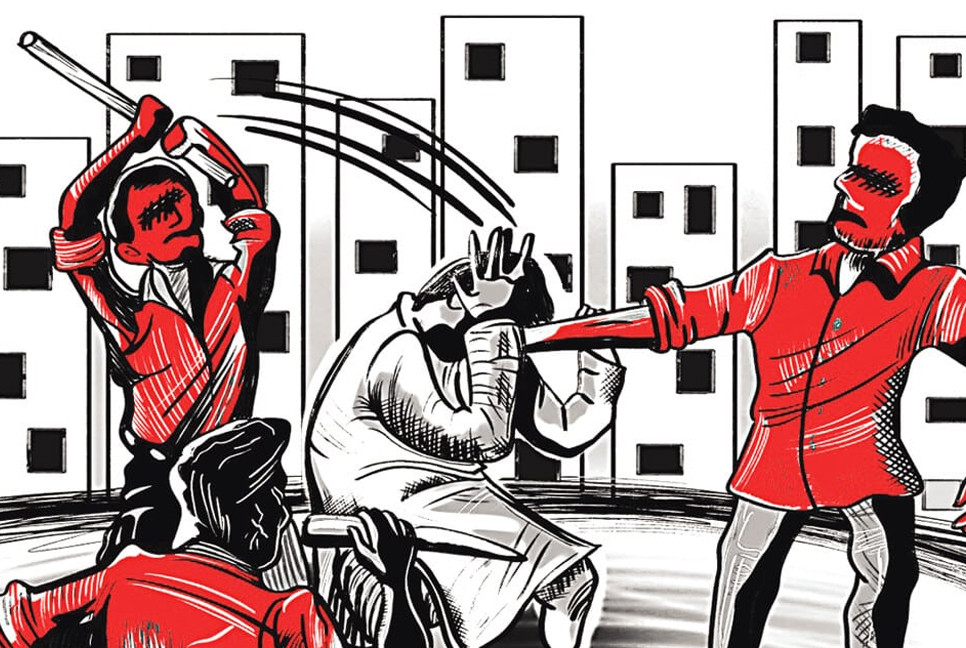
Over the past 16 months, widespread mob violence has paralysed the country’s economy. Incidents of arson and looting have taken place in various industrial factories.
Businesses have been subjected to mob attacks and plunder, and traders are being harassed by extortion.
According to newspaper accounts, 1,243 industrial factories have been affected over the last 16 months. Among them, major attacks and arson incidents occurred at 48 industrial establishments. The most horrific incident was the fire at Gazi Tyres.
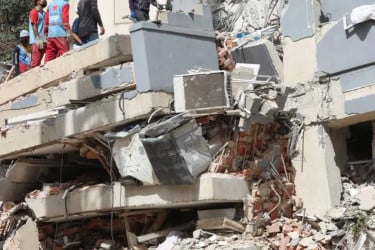
After the fall of the Awami League government on 5 August 2024, an attack, looting, and arson took place at the Gazi Tyres factory, owned by former textiles and jute minister and former MP from Narayanganj-1 Golam Dastagir Gazi, in Rupganj of Narayanganj. It is estimated that at least 182 people died in that incident.
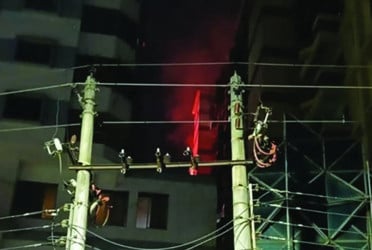
Golam Dastagir Gazi was arrested in the capital in the early hours of 25 August last year. That same night, the country’s largest tyre manufacturing factory in the Rupshee area of Rupganj was set on fire. Fire Service personnel were able to douse the fire only after five consecutive days.
During those five days of continuous burning, it was assumed that no one trapped inside the building could have survived in flesh and blood.
Families of the missing pleaded at least to recover the bodies, but even that proved impossible, as the fire-ravaged structure was declared abandoned.
To determine the origin of the fire and identify those responsible, then Deputy Commissioner of Narayanganj Mohammad Mahmudul Haque formed an eight-member investigation committee, headed by then Additional District Magistrate Hamidur Rahman, on 27 August. On 12 September, the committee submitted a 32-page report to the DC.
Although the report described the incident not as a mere accident but as “arson,” it did not specifically identify who carried out the act.
The report stated that after news of Gazi’s arrest spread locally, people brought out celebratory processions that day.
Around 11:30am, an announcement was made over loudspeakers from Khan Para Jame Mosque in the Khadun area, calling those whose land had allegedly been forcibly occupied inside the factory to gather at the Rupshi bus stand at 3pm.
Around noon, “miscreants” entered the factory with the intention of looting. They forced the workers, officers, and employees inside to leave, and began looting.
At around 4:30pm, another group of “miscreants,” armed with local weapons, entered the factory. Around 5:30pm, arguments and clashes broke out inside and outside the factory among multiple groups of looters.
Later, another announcement was made from the mosque claiming that “robbers have entered Gazi’s factory,” urging local residents to resist them.
This further escalated the looting. The looters spread across different floors of the six-storey factory building and continued plundering.
After the arson incident, a factory official said looting continued nonstop from noon until the fire was set at night. During this entire period, no member of law enforcement agencies went to the site.
According to the report, around 10:30pm, one group of looters set fire to the ground floor of the building, locked the shutter of the gate, and left.
At that time, many others were still busy looting the upper floors. As the building contained flammable materials, the fire quickly spread to every floor.
After 22 hours of continuous efforts by 12 units of the Fire Service, the fire was brought under control. It was fully extinguished after five days. As the building was deemed “dangerous” due to the prolonged fire, no rescue operation could be conducted.
No case was filed against anyone in this incident, no one was arrested, and those involved were not even identified. Similarly, no justice has been delivered for other attacks and arson incidents at factories.
No cases were filed either. Due to this culture of impunity, many people shut down their factories out of fear. Many of these closed industrial establishments have never reopened.
According to data from the Dhaka Metropolitan Police, nearly three-quarters of the “riot” incidents that occurred in Dhaka over the past 16 months took place in the Motijheel, Gulshan, and Tejgaon areas.
One of the notable mob incidents occurred on 29 July at Motijheel, known as the banking district, when police tried to stop a mob of 30-35 people attempting to seize a commercial building. The mob became enraged and even tried to attack the police station. Police arrested three people in connection with the incident.
Another mob attack in Gulshan involved the residence of the former wife of Tanvir Imam, son of late HT Imam – former political adviser to Sheikh Hasina – and former MP from Sirajganj-4. On 5 March, a mob surrounded the house located on Road No. 81 in Gulshan-2 with the intention of looting money.
Mob incidents have also occurred in posh residential areas of the capital. A planned attack, vandalism, and looting were carried out to seize two apartments in a six-storey building on UN Road No. 2 in the Baridhara Diplomatic Zone.
The apartments are occupied by Mokarram Hossain Khan, managing director of Capitaland Development Limited, and his daughter Mahira Hossain Khan, executive director of the company.
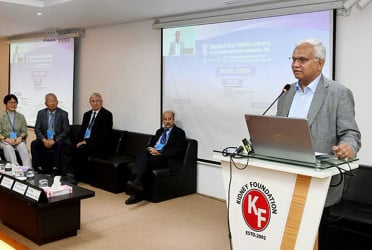
Fazle Shamim Ehsan, president of the Bangladesh Employers’ Federation (BEF), said the country’s overall law-and-order situation is not conducive to the economy.
“Employment is not being generated because there is no investment environment. One of the main reasons for the lack of investment is weakness in controlling the overall law-and-order situation.
Since a favourable environment is not being created, investors lack confidence and are afraid. They want an elected, stable government,” he said.
Referring to the crisis of confidence among businesspeople caused by recurring mob incidents in commercial and elite residential areas of the capital, Taskin Ahmed, president of the Dhaka Chamber of Commerce and Industry (DCCI), said, “Mob incidents in commercial areas such as Motijheel, Gulshan, and Tejgaon are eroding business confidence.
All types of businesses, from small to large, are being affected, and consumers are also at risk. Such a situation is shrinking economic activities and creating major obstacles to generating new employment.
The Dhaka Chamber believes that stabilising law and order and holding election at the appropriate time will normalise the situation.”
Bd-pratidin English/ ANI