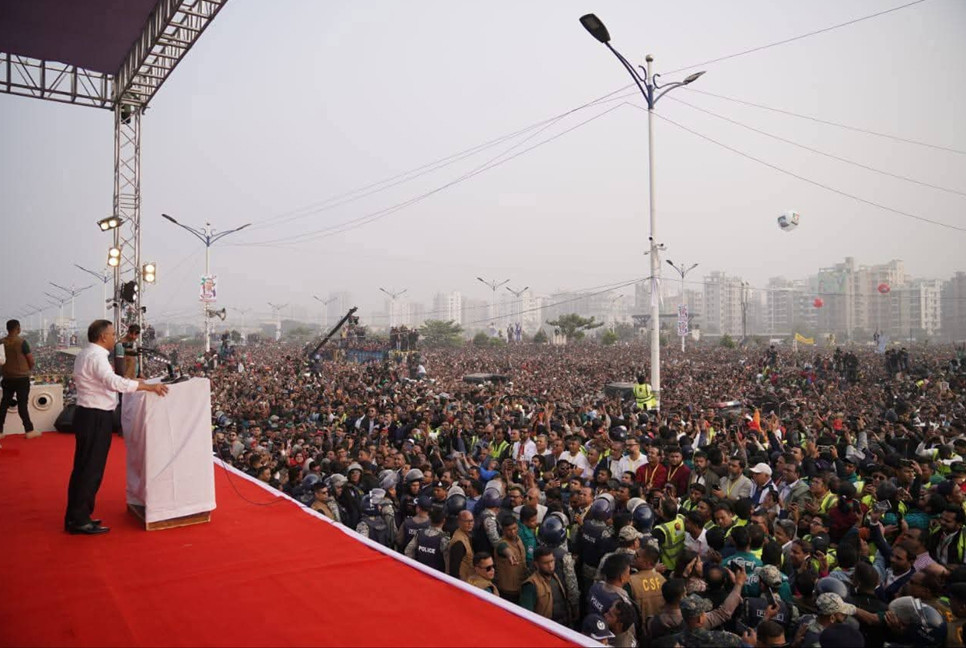
I listened to Tarique Rahman’s speech repeatedly. As a journalist, I wanted to understand what message he intended to convey to the people, what guidance he offered to political parties, and what responsibilities he outlined for BNP leaders and activists. At the same time, I sought to grasp the kind of Bangladesh he envisions if the responsibility of running the state were to fall on his shoulders in the future. In this speech, he offered a clear indication of that vision.
He stated unequivocally that he has a plan.
One of the most striking aspects of the speech was the complete absence of vindictiveness or the language of retaliation. Not once did he resort to the politics of accusation. He did not mention why he had to live in exile for 17 years, why 75 cases were filed against him, why he was tortured to the point of breaking his back, why his brother had to die, why his mother was evicted from her home, or why he was imprisoned. He said nothing about these personal and familial sufferings.
Yet he could have spoken of all this, for these are all realities of his life. But he chose not to.
Nor did he engage in propaganda or counter-statements against anyone.
In truth, a statesman of the people does not dwell on such matters. There was no emotionally charged rhetoric in his speech, no sorrowful accounts of personal loss, no ideology-driven slogans. Throughout the speech, there was no trace of negativity. It was entirely positive, constructive and forward-looking. Embedded within it was the long-standing aspiration of the people.
The people found in his words the reassurance they had been seeking; they found confidence and trust. Those who listened attentively felt an alignment between his words and their own unspoken thoughts. They recognised themselves in his message.
The speech spoke of the people of the country. It spoke of the Liberation War, of the Sipahi–Janata uprising, of the mass movement of the 1990s, and of the student–public uprising of 2024—of sacrifice, of lives laid down. He spoke of Shaheed Hadi and of the debt owed to the blood of martyrs. He spoke of the people of the hills and of the plains alike. He addressed healthcare and treatment, education, the frustration of unemployed youth, and the safety of women and children.
He spoke of harmony among people of all faiths—Hindus, Buddhists, Christians and Muslims. He spoke of restoring the people’s right to speak, of establishing democratic rights, of fair entitlements based on merit. He spoke of building the country together and of dreaming of a safe Bangladesh.
His speech reflected the concerns of the younger generation, of persons with disabilities, of the destitute and impoverished, of farmers and workers. He spoke of a “people’s state”, where the responsibilities and duties of the state are devoted to the people. The central theme of his speech was the establishment of democratic rights.
He said that the blood shed in various movements must be repaid—but not through revenge. Rather, it must be repaid by building the Bangladesh that people aspire to. He called for patience.
Peace and order were recurring and crucial themes of his address. Repeatedly, he urged calm and restraint. He made it clear that he has a plan for the interests of the people, for national development, and for transforming the fate of the country’s citizens. He spoke of hard work and of Allah’s mercy.
Ultimately, his speech centred on the land and people of the country. He said:
“Whatever our religion may be, whatever class we belong to, whether we are political activists or non-partisan citizens—at all costs, we must preserve peace and order in this country. We must abandon all forms of disorder. At any cost, we must ensure that people remain safe.”
He further stated:
“Together, we will build a Bangladesh such as a mother envisions—where a woman, a child or a man, whoever it may be, can step out of their home safely and return home safely.”
This statement serves as a reminder of the state’s fundamental responsibility to its citizens.
Overall, within these 17 minutes, the elements of history, democracy, peace, solidarity, security, justice and inclusive statehood were woven together. He articulated an expectation of a political culture that is peaceful, non-violent and tolerant—where differences of opinion and debate exist, but bloodshed does not. In the context of Bangladesh’s divisive and violent political history, this stance carries profound significance.
Tarique Rahman’s thinking is focused on ensuring equal opportunities, rights and justice for all. His political philosophy remains steadfastly committed to a democratic environment and the protection of internationally recognised human rights. He has consistently emphasised the importance of human rights and public welfare. As he once said:
“It is our obligation to work in the interests of the people of the country, so that equal opportunities and rights are ensured for all.”
Tarique Rahman’s vision of “Bangladesh for All” embodies the democratic spirit of our time—one without group-based domination or reckless monopolisation of state power; a country where everyone enjoys equal dignity, where good governance and justice are established, and where the benefits of development reach the most marginalised segments of society. He remains determined and committed to realising this vision.
The return of the Acting Chairman of the Bangladesh Nationalist Party after nearly 17 years of exile was a significant moment in Bangladesh’s political history. Following the student–public uprising, the country has emerged from long periods of democratic deprivation, authoritarian rule, and a broken relationship between the state and its people. Against this backdrop, Tarique Rahman’s 17-minute speech marked a visible beginning of the journey to restore democratic relations between the state and the people. The key instrument of this journey is now the election—because elections institutionalise the relationship between the state and its citizens and transform democracy into a functional framework.
Before the speech, one symbolic scene on stage stood out: the removal of a special, elite chair reserved for him, as Tarique Rahman instead chose to sit on an ordinary plastic chair. This carried a powerful political message for party leaders and activists. To understand this message, his words are crucial:
“My dear brothers and sisters, as a son, my heart lies beside my mother’s hospital bed. But the people for whom she devoted her life—you—are the people I cannot abandon. That is why, before going to the hospital, I stand here today to express my gratitude to you all, and to everyone watching me across Bangladesh through television.”
Through this, he sought no special privilege as a leader or powerful figure. Instead, he acknowledged and embraced the people—the ordinary citizens. On multiple occasions before, he has said that power, status or titles are not the real strength; the people are.
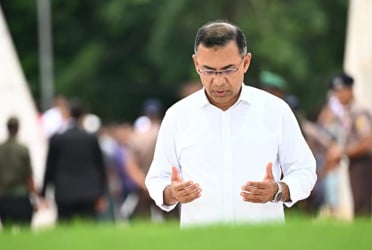
On 27 December, when Tarique Rahman visited the National Martyrs’ Memorial to pay tribute to the martyrs of the Liberation War, he signed the visitors’ book, identifying himself simply as a “political worker”. In this single word, his political philosophy and self-identity became clear. He is walking the same path outlined in his 17-minute speech. By calling himself a political worker, he demonstrated that politics, to him, is not about titles or power, but a continuing practice of accountability to the people. What he preached from the stage—standing beside ordinary citizens—he has followed through his conduct and decisions.
Later that same morning, when Tarique Rahman visited the grave of Shaheed Osman Hadi, a man named AKM Shahidul Islam shouted abuse at him from a distance. In response, law enforcement detained and jailed the individual. As soon as the matter came to Tarique Rahman’s attention, he intervened immediately and clearly instructed that no one should be detained for expressing an opinion. It was later reported that AKM Shahidul Islam was released.
This incident further clarified Tarique Rahman’s political stance: he stands not for revenge or repression, but for freedom of expression and democratic values. Here, personal insult was secondary; what mattered was the democratic ethos and moral responsibility of the state and politics.
Writer: Joint Editor, Kaler Kantho