Bangladesh’s electoral politics has undergone a dramatic reshuffle ahead of the upcoming national election, with long-time allies breaking party and realigning into new blocs—many of them now set to contest directly against the Bangladesh Nationalist Party (BNP).
In a move that has surprised many political observers, the Liberal Democratic Party (LDP), led by freedom fighter and long-time BNP ally Col (retd) Oli Ahmed, has joined a Jamaat-e-Islami led electoral alliance ahead of Bangladesh’s parliamentary election scheduled for 12 February next year.
Alongside him, the National Citizen Party (NCP), led by Nahid Islam who played a prominent role in the July movement will also contest the election as part of the Jamaat alliance.
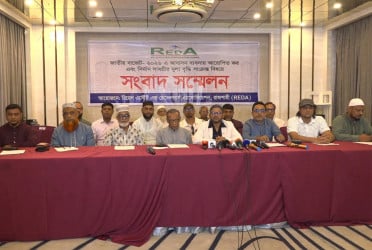
The announcement of the new electoral alliance was made yesterday at a press conference at the National Press Club by Jamaat Ameer Dr. Shafiqur Rahman. No NCP representative was present at the event.
However, at 8:00 pm, Nahid Islam confirmed at a separate press conference at his party office that the NCP would contest the election in alliance with Jamaat-e-Islami. This decision has triggered internal turmoil within the NCP, with a section of central leaders strongly opposing the move.
Meanwhile, BNP is experiencing a festive mood. Party leaders and activists have been energized by the return of Acting Chairman Tarique Rahman to the country. With renewed enthusiasm, they are finalizing election preparations. Due to electoral rules requiring registered parties to contest under their own symbols, several unregistered parties have dissolved their organizations and merged into BNP to contest under the party’s symbol, the “Sheaf of Paddy.” At the same time, top leaders of some registered parties have resigned from their positions to join BNP, leading to growing disagreements between BNP and some of its registered allies.
Overall, politics has become sharply election-centric, with past electoral equations undergoing a complete transformation.
Sources say that in the post–mass uprising period, Jamaat-e-Islami and six like-minded parties—Islami Andolan Bangladesh, Bangladesh Khelafat Majlis, Khelafat Majlis, Nezame Islam Party, Bangladesh Khelafat Andolon, Bangladesh Development Party, and Jatiya Ganatantrik Party (JAGPA)—began discussions to field single candidates in all constituencies based on seat-sharing agreements. Bangladesh Development Party later joined the bloc, making it eight parties. With the recent inclusion of NCP and LDP, the alliance now consists of ten parties. Most of these parties had once joined BNP on the streets in movements against the Awami League government. Now, those former allies are set to become BNP’s electoral rivals.
Sources say the NCP has fallen into crisis due to its seat-sharing arrangement with Jamaat. Several senior policy-level leaders—including Tasnim Zara, Tajnuva Jabin, and Monira Sharmeen—have already submitted resignation letters. Additionally, 30 party leaders have submitted a memorandum opposing the decision to Convener Nahid Islam. Many among them are planning to contest as independent candidates.
On the other hand, BNP has so far secured 15 constituencies for its partners from the former simultaneous (jugpat) movement alliance. Except for six parties, leaders of the remaining allied parties will contest under the BNP symbol, the Sheaf of Paddy. To facilitate this, the main leaders of four parties have already dissolved their own parties and joined BNP with their leaders and workers. The secretaries general of two more parties have left the party and joined BNP.
Among them, Bangladesh Jatiya Party (BJP) chairman Andaleeve Rahman Parthoha submitted his nomination papers from Bhola-1 (Sadar), choosing to contest under his party’s “Bullock Cart” symbol. He had initially been considered for Dhaka-17 (Gulshan-Banani-Cantonment), but senior BNP leaders requested that seat for Tarique Rahman. Nomination papers for Tarique Rahman in Dhaka-17 were collected yesterday, prompting Andaleeve Rahman Parthoha to shift to Bhola-1.
Despite seat-sharing with BNP, six parties have decided to contest under their own symbols: Nagorik Oikya, Ganosamhati Andolon, Bangladesh National Party (BJP), Jamiat Ulama-e-Islam Bangladesh, Gono Odhikar Parishad and the Bangladesh Biplobi Workers Party.
The BNP has already announced three top leaders of the five-party alliance “Ganatantra Mancha” as candidates: Mahmudur Rahman Manna, Saiful Haque, and Zonayed Saki.
Nagorik Oikya president Mahmudur Rahman Manna will contest from Bogura–2, Bangladesh Biplobi Workers Party general secretary Saiful Haque from Dhaka–12 and Ganosamhati Andolon chief coordinator Zonayed Saki from Brahmanbaria–6.
According to party sources, Mahmudur Rahman Manna will contest under the Kettle symbol, Saiful Haque under the Kodal (Spade) symbol, and Zonayed Saki under the Matthal (Straw Hat) symbol.
In addition, the BNP has declared Gono Odhikar Parishad president Nurul Haque as its candidate for Patuakhali–3. He is also expected to contest under his party’s Truck symbol.
The BNP has reached an understanding with Jamiat Ulama-e-Islam Bangladesh over four constituencies: Sylhet–5, Brahmanbaria–2, Nilphamari–1 and Narayanganj–4.
Jamiat Ulama-e-Islam Bangladesh president Maulana Mohammad Ubaydullah Faruk will contest from Sylhet–5; vice-president Maulana Zunaid Al Habib from Brahmanbaria–2; secretary general Maulana Monzurul Islam Afendi from Nilphamari–1 and joint secretary general Mufti Monir Hossain Kasemi from Narayanganj–4.
Two leaders have dissolved their own parties and joined the BNP to secure candidacy in the election. One is Shahadat Hossain Selim, chairman of Bangladesh LDP, and the other is Syed Ehsanul Huda, Chairman of the Bangladesh National Party.
Both were top leaders of the 12-party alliance that partnered in the simultaneous movement. Shahadat Hossain Salim has been declared the Sheaf of Paddy candidate for Lakshmipur–1 (Ramganj), while Syed Ehsanul Huda has been declared the Sheaf of Paddy candidate for Kishoreganj–5 (Bajitpur and Nikli).
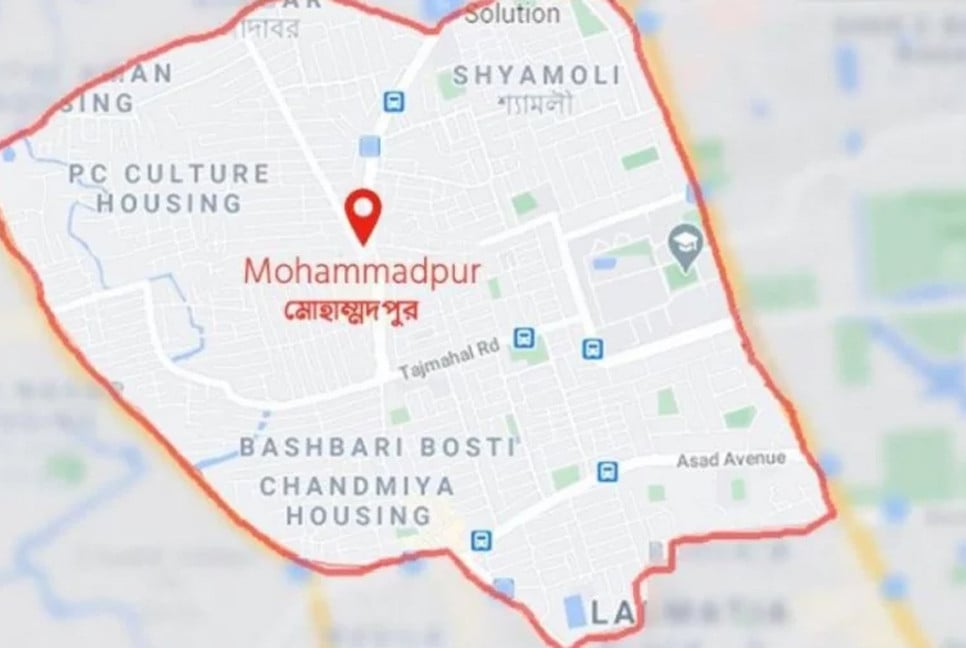
In addition, Bobby Hajjaj, chairman of the National Democratic Movement (NDM), has also joined the BNP. He will contest from Dhaka–13 (Mohammadpur, Adabar) under the Sheaf of Paddy symbol. Bangladesh LDP, Bangladesh National Party and NDM are not registered parties.
Party sources say these decisions stem from the inability of smaller parties to build strong, independent electoral bases. Local vote calculations, weak organizational structures, and fears that contesting under their own symbols might benefit rivals have pushed many leaders to see the Sheaf of Paddy as the safer option. BNP’s central leadership has also been encouraging this approach, believing it will boost candidates’ confidence at the grassroots level.
BNP Standing Committee member Salahuddin Ahmed said many allied leaders opted to contest under the BNP symbol due to uncertainty about winning under their own party symbols.
BNP’s focus now firmly on the election
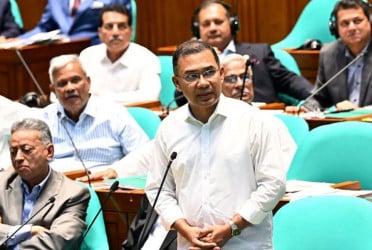
BNP leaders say the return of Acting Chairman Tarique Rahman and the massive public turnout at his reception in Dhaka have had a strong impact at the grassroots level. They believe the long-felt leadership vacuum caused by his absence from the country has now been filled, reinvigorating party workers across the nation.
Party officials say that after completing nomination and other formalities, Tarique Rahman will fully engage in election preparations and campaign activities for party and allied candidates.
According to sources, he is expected to visit Bogura—his electoral constituency—and Sylhet, his in-laws’ hometown, soon. In Sylhet, he will visit the shrines of Hazrat Shahjalal (RA) and Shah Paran (RA). He may spend up to three days campaigning in Bogura.
Bd-pratidin English/ ANI