The spirit of the Liberation War is, in essence, a dream—a collective dream, a dream of collective liberation. When we speak of this as the spirit of the Liberation War, we are distinguishing it from the spirit of independence. Independence signifies a change in the state system. We have attained independence twice—once in 1947 and again in 1971.
Liberation, however, is a much broader concept. It implies a transformation in the character of the state and a fundamental change within the society that exists inside the state. Despite gaining independence twice, no fundamental change has actually taken place in our social structure. The society that existed during British rule—the social, political and state arrangements they created—has largely remained intact.
The dream of liberation embodied in the Liberation War was that this society would change, this state would change, and that political independence alone would not suffice—true liberation would arrive. By true liberation we mean a humane society and a democratic system of governance. The core of democracy lies in equality of rights and opportunities. The second element is the decentralisation of power. The third is the establishment of governance by elected representatives at all levels.
At first, there was a degree of ambiguity about the dream of liberation, which is why our struggle initially appeared to be merely a war for independence. But as public participation increased and the dream evolved, it became increasingly clear that it was a struggle for liberation. This struggle is a long one, though we had never perceived it in this way before.
Take, for example, the independence of 1947. At that time, we spoke only of independence; the idea of liberation did not arise. In truth, there was no struggle for independence in 1947. What occurred was communal violence, through which the country was partitioned. What actually happened, in essence, was a transfer of power. The British rulers handed state power over to local rulers. Power changed hands. Yet it did not take long for the people of East Bengal to realise that they had not gained true independence—liberation was far more distant. This realisation gave rise to the Language Movement, and through it began the struggle for autonomy.
During the Language Movement, however, we did not speak only of language, even though Bengalis made up 56 per cent of Pakistan’s population at the time. The demand was for Bangla to be one of the state languages—that is, we were demanding autonomy. The movement for autonomy continued in succession. Through the 1954 election, we again delivered a verdict in favour of autonomy. The Six-Point Programme, when it emerged, was also a demand for autonomy. Gradually, however, the desire for full independence awakened among the people. After victory in the 1970 election, the Six Points were reduced to a single point: the independence of Bangladesh. Only after that did the idea of liberation come to the fore—that collective dream began to take shape. We wanted our society to change, for the old society to disappear, and for the state to be transformed.
The state we had in Pakistan had evolved as a continuation of British rule. Structurally, it was bureaucratic, and economically it was capitalist. In short, its structure was bureaucratic and its economy capitalist. We wanted to break this and truly establish a democratic state, but we did not achieve it. And it is precisely because we failed to establish such a state that we have suffered so much hardship and misery.
We can now examine why this happened. There was a collective dream—a dream of liberation, of a democratic state and a democratic society. Yet after victory, we failed to achieve liberation. From 16 December onwards, that collective dream—which we had upheld even in the face of torture and oppression during the horrific days of 1971—began to fade. Although that period was nightmarish, created by the occupying forces, we had nonetheless held on to the collective dream. That dream was the driving force of our struggle. We understood that individual freedom was inseparable from collective freedom—it could not come in isolation. But after 16 December, a change occurred: personal dreams grew larger than the collective dream.
Setting aside the collective dream, each of us began to pursue our own personal aspirations—how much wealth one would accumulate, how much power one would gain, how established one would become, how much prestige one would enjoy. This became the goal. Even in memoirs written about the Liberation War, we see an emphasis on “my 1971”, “my role in ’71”, “’71 and I”. Personal achievement and individual contribution took precedence. As a result, the fact that the Liberation War was fought with the participation of the masses receded into the background. New heroes kept emerging, recounting new tales of heroism, and it began to seem as though liberation lay in individual achievement alone.
Consequently, people abandoned the search for collective liberation and turned their attention to personal property. In 1971, we sought liberation collectively; after 1971, each of us began to believe that property would bring freedom—the more property I have, the freer I become. Because of this belief, our golden dream was shattered. What the Pakistani occupying forces could not destroy, we destroyed ourselves after victory. It can be said that this was a historic defeat: after victory, we abandoned collective thinking and embraced individualism.
The pertinent question, then, is who bears responsibility for this historic defeat. That responsibility lies with the leadership. It is the leadership that governs the country, sets ideals and establishes examples, which others then follow. The leadership that stood at the forefront of our struggle for independence was nationalist in character, and the nationalists came to believe that their responsibility ended on 16 December 1971. After that, they did not carry the dream forward.
The dream of the Liberation War was a democratic and humane society. But after the war, none of those who came to power were capable of fulfilling that dream, because they were not socialists. They did not wish to advance the struggle for liberation; they sought only a transfer of power. During the Pakistan period, we saw the British leave and Pakistani rulers take over. We then thought: why should Pakistani rulers occupy that position—we should occupy it instead. Thus, power changed hands, but no fundamental change occurred. The same laws, the same system, the same bureaucracy, the same forces remained intact. What truly took place was a transfer of power.
Those who believe in a mere transfer of power cannot be socialists, because the essence of socialism lies in fundamental change to the social structure—eliminating inequality and creating equality among people. Those who came to power did not have that goal. They wanted to take over power from the Pakistanis, from the Punjabis, and through the people’s struggle they succeeded in doing so.
In the Liberation War, the people themselves were the driving force. They struggled, they were deprived, yet no one keeps account of them. There is no record of their sacrifices. We do not know how they participated in the struggle for liberation. We do not know the history of violence against women. Instead, the media and political parties attempt to magnify the roles of a handful of individuals. As a result, the victory of 16 December did not make the collective people victorious. That is why the struggle for liberation continues—both loudly and silently.
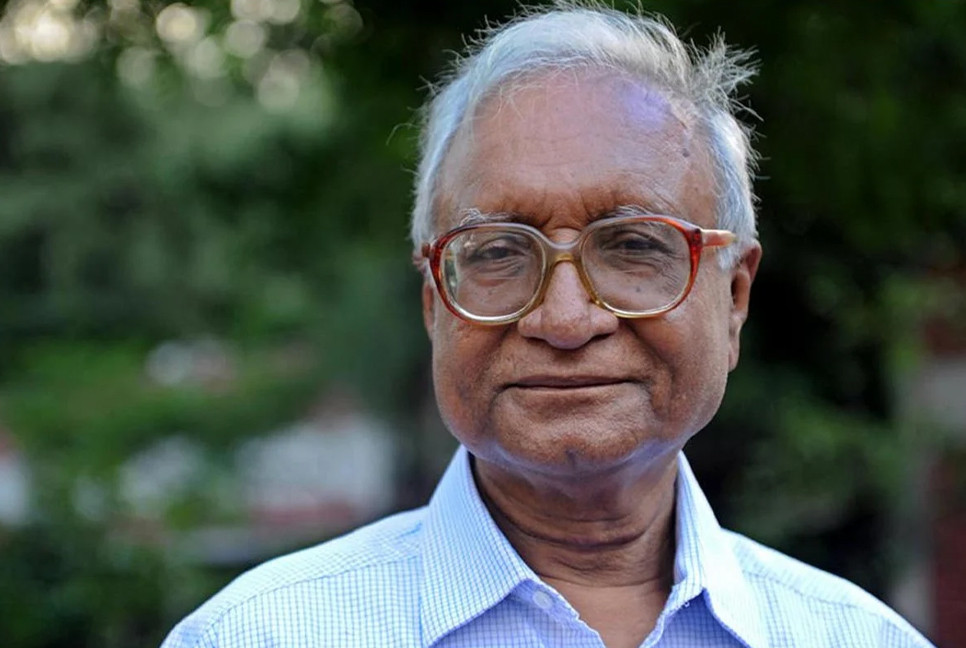
Author: Emeritus Professor, University of Dhaka.