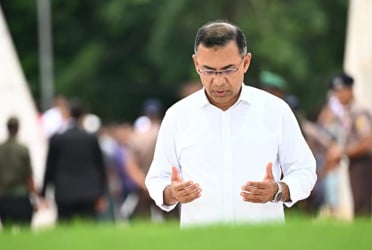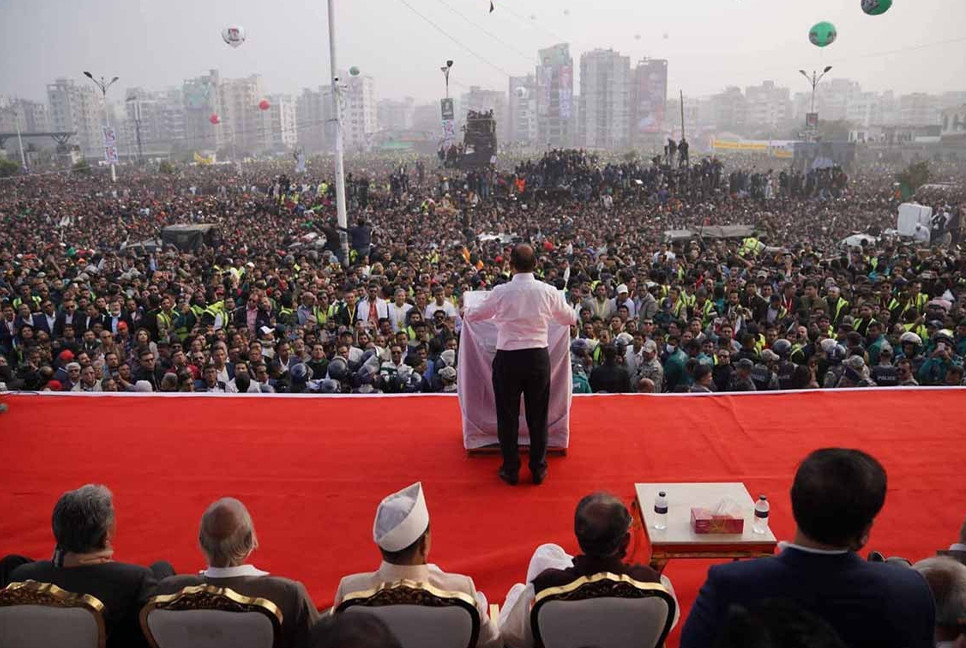
Tarique Rahman has returned home. After 18 long years, his homecoming has generated enormous enthusiasm among party leaders and activists.
Many people across the country have also welcomed his return with excitement, believing that his arrival could usher in a new era in national politics. Many observers now express hope that order and discipline may return to Bangladesh’s chaotic political landscape following his return.
Supporters believe the BNP will become more organised and disciplined under his presence and move forward to fulfil public expectations. There is little doubt that all concerned quarters have taken his return with due seriousness.
Several factors explain why Tarique Rahman’s return carries such significance. First and foremost, it matters greatly for his party, the BNP. Party Chairperson Begum Khaleda Zia remains seriously ill and cannot actively lead the organisation. As a result, Tarique Rahman has led the party as acting chairman from abroad.
Now, for the first time in many years, he will lead the party from within the country and directly oversee its activities — something that was not possible earlier.
In his absence, internal problems and disorder surfaced within the party. Incidents of infighting and internal conflict among leaders and activists occurred with notable frequency.
Tarique Rahman’s return can curb these tendencies. He is unlikely to tolerate such behaviour under his direct watch, and those inclined to create disorder will act with greater caution. Moreover, if allegations of anti-organisational conduct arise against any leader or activist, he can take immediate action to protect the party’s image.
Tarique Rahman returned barely a month and a half before the 13th parliamentary election. With limited time before the polls, he must address many organisational and political challenges. Crossing the electoral hurdle will not be easy.
In addition to strengthening his own party, he will need dialogue and engagement with other political parties. In particular, BNP must reduce distance with its allies and strengthen relations with the younger Generation Z supporters. As a progressive political force, BNP’s relationship with the new generation carries special importance.
Based on long observation of his conduct and statements, many regard Tarique Rahman as a prudent and farsighted leader. Years ago, I predicted that he would one day become the prime minister of Bangladesh. I once shared this view with Bangabir Kader Siddiky, who responded, “It may happen.”
Even so, BNP must demonstrate greater political skill to overcome the coming electoral challenge. Party leaders and activists must act with greater awareness and sincerity to regain public trust. Although BNP remains a large party with a vast support base, this election appears different.
Victory may not come as easily as many assume. BNP must deepen its engagement with the people, understand public sentiment and act accordingly — and it must do so within a short time.
Under Tarique Rahman’s leadership, party activists must spread across the country and inspire people with a message of renewed awakening. The era of conventional politics has ended. People now understand far more than before, and political actors must proceed with caution.
Special attention also deserves the younger Generation Z activists. They are young and relatively inexperienced, yet their energy remains undeniable.
Through the power of youth, they have captured public attention and sacrificed many young lives as July fighters, earning the status of martyrs. We respect and honour them deeply.
At the same time, their lack of experience, particularly in political strategy and wisdom, calls for restraint. Emotional or reckless statements can ultimately harm their own cause, as emotional rhetoric often backfires in politics.
These concerns matter because Generation Z activists have already emerged as a new political force and entered the electoral arena after registering their party with the Election Commission.
They must speak responsibly and remain mindful when commenting on senior politicians, intellectuals and civil society figures.
They should avoid rhetoric driven by revenge and instead spread messages of unity, equality and goodwill to win voters’ trust. Revolution demands one language, while democracy demands another. We raise these points out of genuine care and hope for their success.
In conclusion, Tarique Rahman’s return holds deep political significance. Despite spending nearly 17 years abroad, he has established himself as a successful politician at home.
He kept the BNP energised throughout his absence and won public confidence through his vision, intellect and leadership. As the son of a former president and a former prime minister, he has led a major political party with competence and resolve.
From abroad, he accomplished what many considered impossible — contributing meaningfully to national politics while remaining outside the country.
Through tireless effort and personal discipline, he kept both himself and his party on the right path. His dedication to the country, the party and the people has shaped him as a steadfast, intelligent and determined leader.
Many believe that under his leadership, BNP will further expand its public support. If the party committed mistakes in the past, or if some leaders engaged in wrongdoing during his absence, many expect Tarique Rahman to correct those failings through his leadership qualities. He has already demonstrated his capacity as a successful politician.
For these reasons, the nation now looks to him. Like his father, martyred president Ziaur Rahman, whose charisma earned the respect of the people, and like his mother, three-time prime minister Begum Khaleda Zia, whose firmness defined uncompromising leadership, Tarique Rahman is expected to devote his full strength to building a prosperous, dignified and democratic Bangladesh.
The writer is a columnist and a valiant freedom fighter.