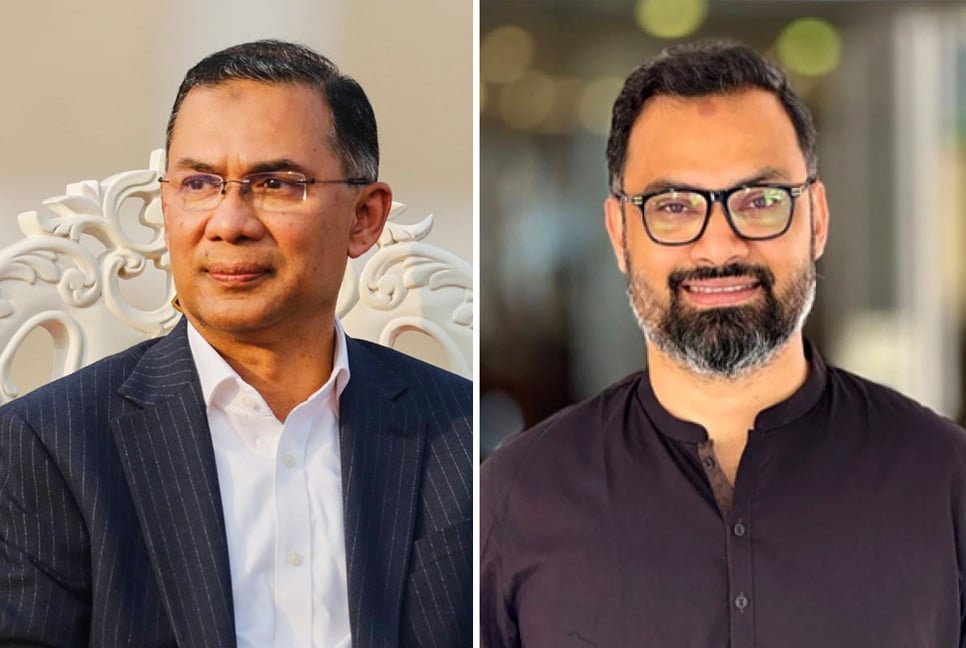
The next few days are extremely crucial for Bangladesh. On 25 December, BNP’s Acting Chairman Tarique Rahman will return to the country after nearly one and a half decades. That day also coincides with Christmas, the biggest religious festival of the Christian community. Meanwhile, 29 December is the last day for submitting nomination papers for the national parliamentary elections. Just two days later, the year 2025 will come to an end. Large gatherings of people are expected at all these events. Conspirators will be lying in wait, plotting acts of sabotage. Any incident could be used to destabilise the country. Therefore, the government must ensure foolproof security at every event.
Any untoward incident at this time would be a major disaster for the government. Its impact would directly affect the 12 February election. Some even go so far as to say that if these programmes are not held peacefully, the government itself could face an existential crisis.
For several days now, the country’s situation has been worrying. The helplessness of the people is evident. Ordinary citizens are suffering from extreme insecurity. If you listen closely, you hear constant criticism of the government. People believe that the government has completely failed to control law and order. If this situation does not improve, how can a peaceful election be held? This question is now on everyone’s mind. Many fear horrific violence during the election campaign.
After the killing of Sharif Osman Hadi, the widespread violence that erupted across the country exposed the government’s complete failure to handle the situation. We all raised our voices in protest against the attacks on Prothom Alo and The Daily Star. Such brutal incidents must certainly be condemned. But at the same time, other acts of mob violence should also be condemned with equal force. The question is: where were many of the so-called representatives of civil society over the past year and a half, who now speaks against mob violence?
If the conscience-keepers of the nation had spoken out against mobs from the very beginning, the criminals who create mobs would not have become so reckless today. Back then, we all watched silently, remaining indifferent. That silence has turned mob forces into monsters. On 18 December, not only Prothom Alo and The Daily Star were attacked, Chhayanaut and Udichi offices were also targeted. Yet far more discussion has taken place about the two newspapers, while the attacks on Chhayanaut and Udichi have drawn comparatively little protest.
In recent times, several barbaric incidents have shocked the entire nation. Among them, the killing of Dipu Chandra Das in Mymensingh and then setting his body on fire surpasses even medieval brutality. He was beaten to death in Bhaluka, Mymensingh, over allegations of making derogatory remarks about religion. Afterwards, protesters set fire to his body in the Jamirdia Dubaliapara area along the Dhaka–Mymensingh highway in front of a factory. In Khulna, Mohammad Motaleb Shikder, a central leader of the labor wing of the National Citizen Party (NCP), was shot on Monday. Such incidents are happening every day somewhere in the country. The police force appears helpless. They too now seem afraid of organised mob violence.
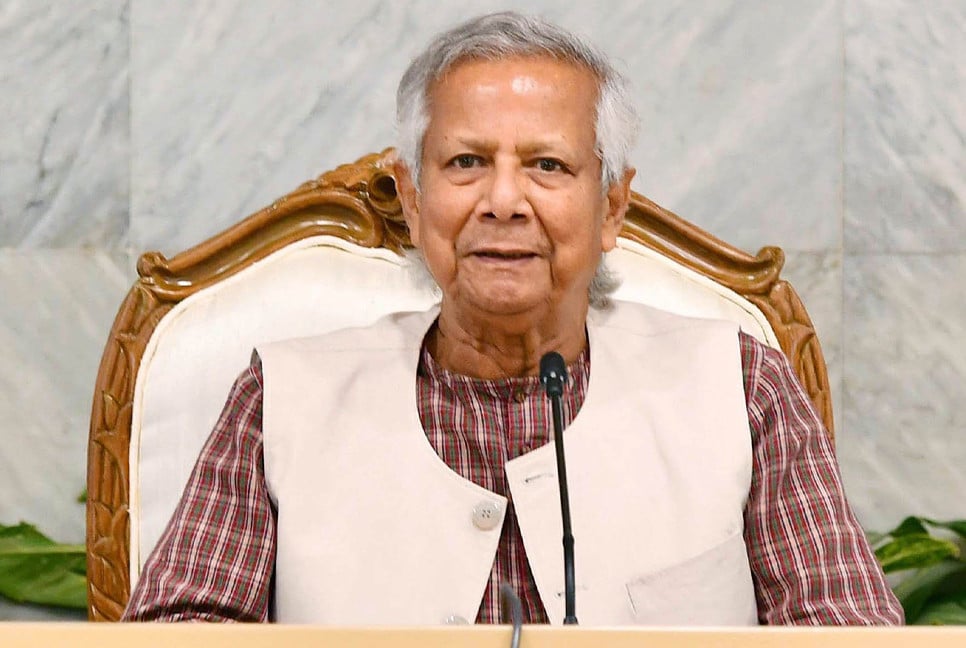
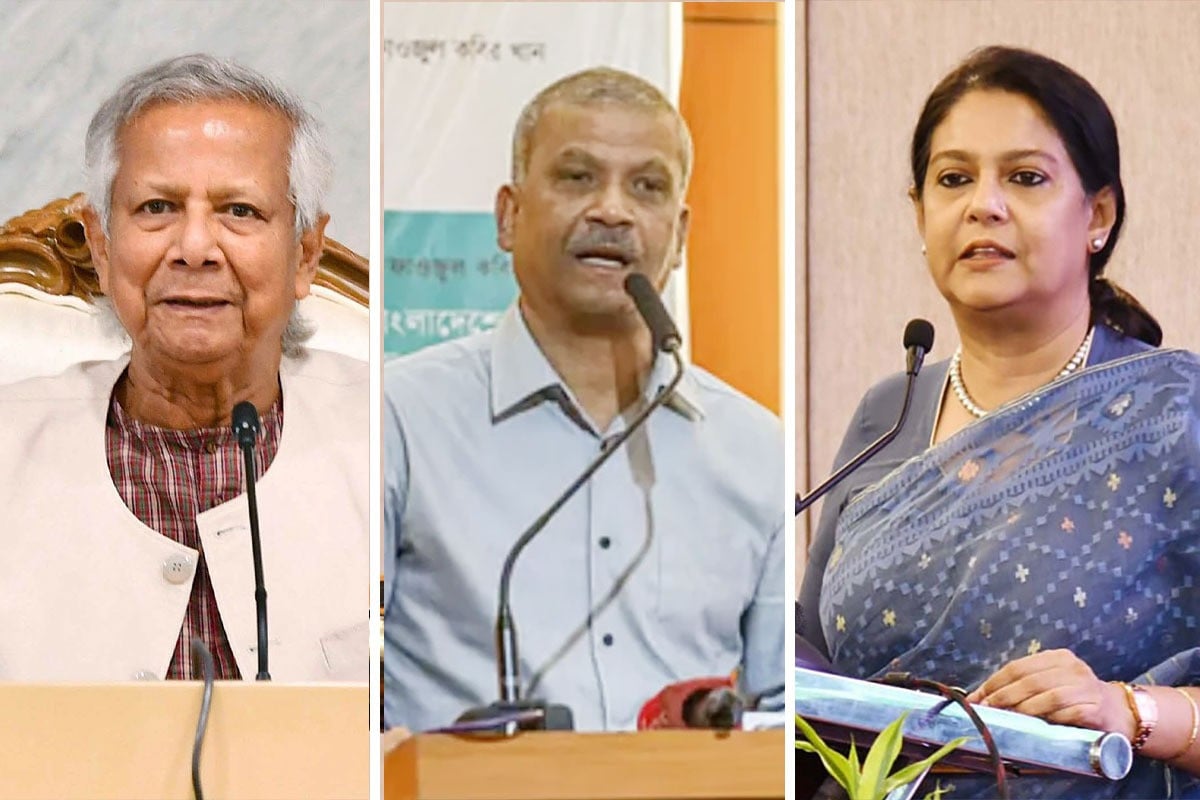
However, there is some hope. Even if late, the interim government has announced a tough stance against mob violence. Last Sunday, the chief adviser held a meeting on the law and order situation. At the meeting, he said that law and order must be kept under control at any cost before the upcoming national election. The meeting discussed in detail security measures surrounding Tarique Rahman’s return, Christmas celebrations, and English New Year festivities. The progress of the investigation into Hadi’s murder and the arrest of those involved was also discussed. The Chief Adviser instructed authorities to quickly arrest those involved in Hadi’s murder and other illegal activities.
Meanwhile, conscious citizens believe that enough has been said – it is now time to show action. Since assuming office, the Chief Adviser has consistently spoken of peace. He has repeatedly urged people not to take the law into their own hands and has called for restraint. But who listens? Those intent on creating chaos in the country place no value on such appeals. Polite words do not soften their hearts, nor do they stop criminal acts. Criminals perceive the government’s calls for peace as weakness.
Most importantly, for a long time there has been a certain sympathy toward mob perpetrators within various quarters of the state. Some have even tried to legitimise mob violence as a form of protest. We have also seen the government’s helpless surrender to mobs. Gradually nurtured under state indulgence, this destructive force is now challenging the state itself, openly defying the rule of law.
If these monsters are not contained before the election, not only will a peaceful election be impossible, but the lives and property of ordinary citizens will be gravely endangered. As days pass, public anxiety and fear continue to grow. There is serious doubt about whether people will voluntarily go to polling centers under such circumstances.
The Chief Adviser, however, has repeatedly said that the upcoming election will be festive – the best election ever. Last Monday evening, during a telephone conversation with US Special Envoy for South and Central Asia Sergio Gorr, the Chief Adviser said, “The national parliamentary election will be held on 12 February as scheduled. The nation is eagerly waiting to exercise its voting rights, which were taken away from them during the autocratic regime.”
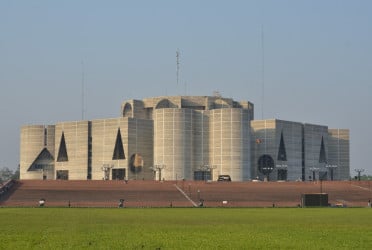
At the very moment he was reassuring the US envoy, a “Super Caravan” of 10 campaign vehicles set off to promote the 13th national parliamentary election and the referendum on the July National Charter. The journey was officially inaugurated at the South Plaza of the National Parliament building. The vehicles were launched by Information and Broadcasting Adviser Syeda Rizwana Hasan, Cultural Adviser Mostofa Sarwar Farooki, Senior Secretary of the Election Commission Secretariat Akhtar Ahmed, and the Chief Adviser’s Press Secretary Shafiqul Alam.
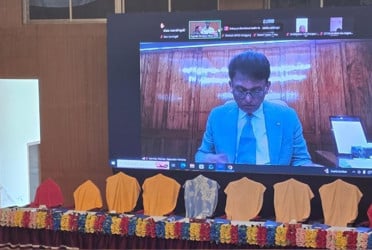
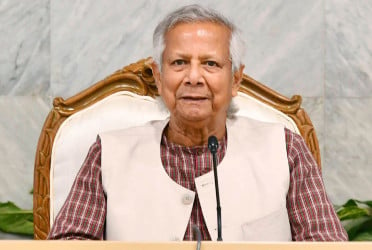
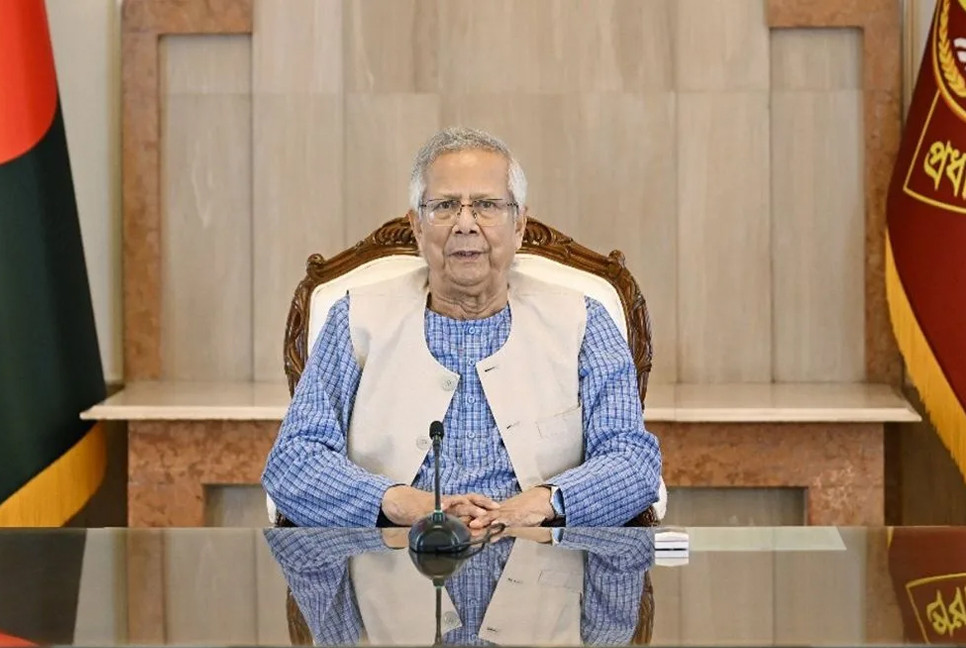
In a video message at the event, Chief Adviser Prof Muhammad Yunus said, “We have an upcoming national parliamentary election and a referendum on the implementation of the July National Charter. The Super Caravan will deliver information about the election and the referendum. These 10 vehicles will travel to all 64 districts and 300 upazilas, raising awareness about elections, referendums, and voting rights, and spreading the message of democracy.”
Calling on people to vote “Yes” in the referendum, he said, “In this election, you will cast one additional vote – for the July Charter. This charter has been prepared through meetings with all political parties over the past nine months. If the people approve it, the country will remain secure for many years to come. If you support this charter, be sure to vote ‘Yes’ in the referendum.”
He added, “Let us all work together to make this democratic journey successful. Let us vote – for ourselves, for the country, for future generations, for a new world.”
No one doubts the Chief Adviser’s sincerity. Prof Yunus is working tirelessly to hand over power to an elected government. But the reality is that anti-democratic forces are rearing their heads. With each passing day, they are becoming more dangerous. In this situation, there is no alternative but to take firm action against them. Time is running out. If visible action is not taken immediately against these criminals, the vehicle of the election will be hijacked halfway by bandits.
Bd-pratidin English/ ANI