Bangladesh’s ready-made garment (RMG) sector could generate more than $120 billion in export earnings over the next decade if adequate investment is ensured to address climate impacts, according to a new study by Cornell University's Global Labor Institute (GLI). However, failure to take effective climate adaptation measures could result in massive financial losses and significant job cuts during the same period.
The study estimates that with effective climate adaptation, export earnings from the garment sector could reach $122.01 billion by 2030. Conversely, in a scenario without climate impact mitigation, export earnings would be limited to $95.35 billion, representing a 21.85 percent reduction from the projected earnings.
The risks become far more severe by 2050, the study warns. With proper climate adaptation, garment exports could rise to $138.22 billion. Without adaptation, however, exports could fall to just $328.11 billion, implying a loss of nearly 68.40 percent of expected earnings.
The research highlights that over the past two decades, the number of days in Dhaka with temperatures above 35 degrees Celsius has increased by 56.1 percent, directly affecting workers’ health, working hours, and factory productivity.
According to the Wet Bulb Globe Temperature (WBGT) index, Dhaka may exceed the moderate heat stress threshold (30.5 degrees Celsius) for 64.81 days per year by 2030, rising to 104.48 days by 2050. In Chattogram, this figure could be 50.10 days in 2030 and 84.86 days in 2050.
The study finds that rising temperatures and flooding are directly reducing productivity. For every 1°C increase above 25°C on the WBGT index, average productivity declines by approximately 1.5 percent.
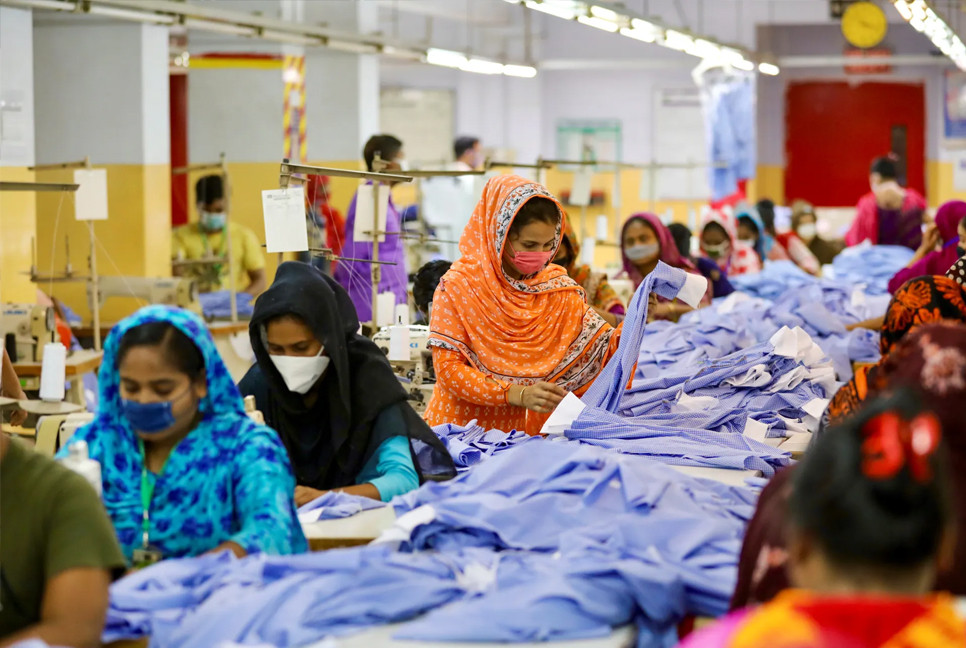
In terms of employment, if impact-mitigation measures are implemented by 2030, employment in the garment sector will stand at around 4.83 million. However, without such measures, the number would decline to 4.58 million, indicating a risk of losing approximately 250,000 jobs. By 2050, the gap would be even wider: with adaptation, the sector could support 6.31 million jobs, but without it, employment could drop to 5.005 million, risking the loss of around 1.27 million potential jobs.
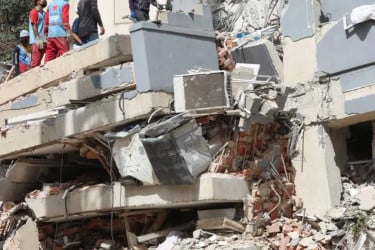
The research also notes an increase in the intensity of heavy rainfall in Dhaka. Average rainfall on heavy rain days rose from 41.5 millimeters during 2005–2009 to a peak of 46.5 millimeters in 2015–2019, and averaged 42.2 millimeters during 2020–2024. Flooding is causing major disruptions to business operations. In a once-in-a-century river flood scenario, nearly 27 percent of Bangladesh’s production facilities could be submerged, the study warns.
Garment workers in Bangladesh are identified as among the most climate-vulnerable workers in the world. To ensure the long-term sustainability of the industry, researchers recommend several key measures, including:
- Investment in climate adaptation and modern cooling systems
- Recognizing heat and flood-related health risks as labor rights
- Ensuring paid leave and medical benefits
- Granting workers the right to stop work in hazardous conditions without penalties or loss of income
- Enforcing mandatory standards through government and regulatory bodies
- Encouraging brands and retailers to follow voluntary compliance standards
The study concludes that if Bangladesh’s garment sector fails to adopt climate adaptation measures in the coming decades, it will face severe losses in exports and employment between 2030 and 2050. Conversely, timely and effective adaptation can secure the industry’s long-term sustainability while protecting worker safety and productivity. To remain competitive in the global market, addressing climate impacts is no longer optional for Bangladesh’s garment industry,it is an urgent necessity.
Bd-pratidin English/ ANI