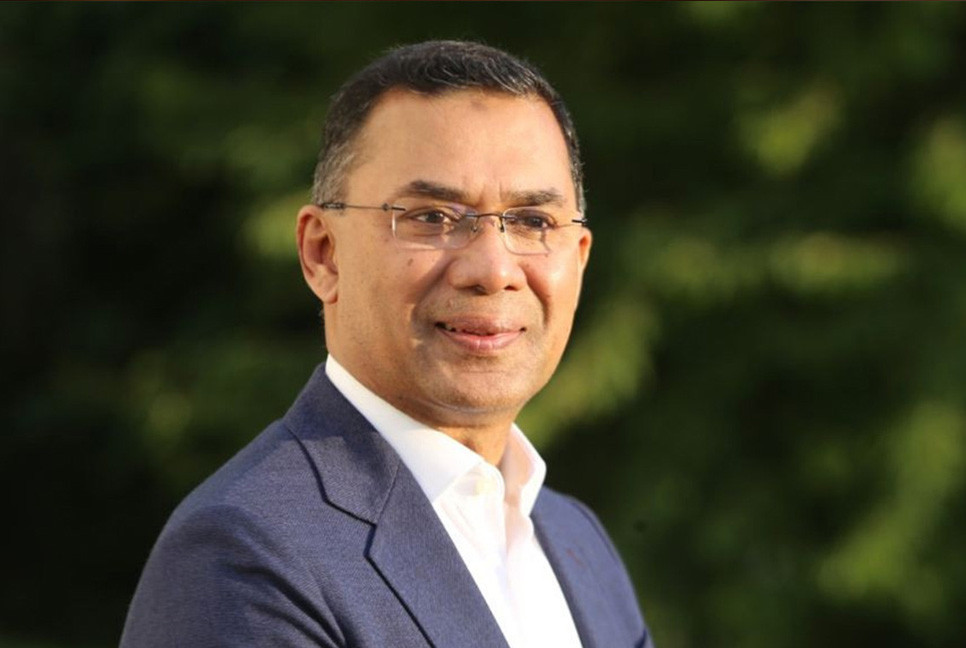
BNP Acting Chairman Tarique Rahman is returning to the country on 25 December. People across party lines—some 180 million citizens—are awaiting the return of this leader, widely regarded as the mastermind of Bangladesh’s struggle for democracy. He is coming home with the aim of restoring democracy and will lead the electoral battle in the upcoming elections to ensure the victory of pro-democracy and pro–Liberation War forces against anti-democratic, communal elements.
Tarique Rahman will call on the people to cast their verdict in favour of the BNP’s 31-point agenda in the next election. He will also work to build public opinion on why communal forces must be rejected at the polls and will encourage nationalist forces to unite and take to the field together.
Bangladesh achieved victory in its Liberation War at the cost of three million lives. During the war, communal forces acted as collaborators of the occupying Pakistani army, even handing over their own mothers and sisters to the occupying forces. If allies of the defeated forces of 1971 were to be ensured victory in an election, Bangladesh’s independence and sovereignty would be called into question. For this reason, every patriotic citizen is viewing Tarique Rahman’s return with great importance.
On the day of his homecoming, Bangladesh will truly awaken. At least five million people are expected to gather in the capital from across the country to welcome him, and preparations have already begun. There has also been an extraordinary response among expatriates, with several thousand people travelling to Bangladesh from the United Kingdom and various European countries to witness the return of Tarique Rahman, son of martyred President Ziaur Rahman and former Prime Minister Begum Khaleda Zia, whom they regard as a future national leader.
During the rule of the illegal One-Eleven regime, Tarique Rahman was arrested and subjected to brutal torture. Seriously injured, he was forced to go to the United Kingdom for treatment. With the connivance of the One-Eleven rulers, the government of Sheikh Hasina came to power. Instead of withdrawing the false cases filed against Tarique Rahman during the One-Eleven period, more cases were brought against him. Even after the mass uprising of 5 August, conspiracies continued to prevent his return to the country. As a result, despite the victory of the July mass uprising, Tarique Rahman had to remain in exile for a further 16 months. Under his leadership, the BNP will seek a public mandate in the upcoming election for its 31-point state reform agenda.
With the goal of building a corruption-free country, the agenda declares a policy of “zero tolerance” towards corruption. The BNP has pledged to publish a white paper detailing major corruption and money laundering that occurred over the past decade and a half, to take legal action against those identified, and to recover funds siphoned off abroad. Reforms to the Anti-Corruption Commission (ACC) and anti-corruption laws are also promised to enhance transparency and accountability. The long-delayed constitutional office of Ombudsman will be established immediately. These initiatives aim to rein in corruption and ensure good governance.
The 31-point agenda also promises to establish the rule of law at all levels and to restore human values and dignity. It clearly states that enforced disappearances, killings, extrajudicial executions, torture of detainees and similar abuses will be ended. The Human Rights Commission will be reconstituted with competent individuals to play an effective role in protecting and promoting human rights. The BNP has pledged to bring all those involved in enforced disappearances, killings in the name of “crossfire”, abductions, rape and brutal repression over the past decade and a half to justice through existing laws, and to ensure accountability for human rights violations.
Bangladesh’s free-market economy was introduced during BNP rule. To address mismanagement and inequality within the free-market system, the state reform proposal includes the formation of an Economic Reform Commission comprising expert economists, researchers, experienced bankers and corporate leaders. Its goal will be to reform economic policies and ensure equity. In line with the core spirit of the Liberation War—equality, human dignity and social justice—the BNP promises equitable distribution of economic benefits to reduce the gap between rich and poor.
Various reform commissions—constitutional, administrative, judicial, media and economic—will submit their reports within a specified timeframe to ensure swift implementation of recommendations. Based on the principle of “religion belongs to individuals, the state belongs to all,” the BNP is committed to ensuring full freedom of religious practice for every citizen. Constitutional rights and security of ethnic and religious minorities will be guaranteed, with strict measures promised to prevent attacks on temples, homes and businesses or the grabbing of minority property. Special attention will also be given to protecting the rights of all indigenous communities in both hill tracts and plains.
To ensure fair rights for working people, the reform agenda promises wage increases and improved working conditions. It includes setting minimum wages in line with inflation, eliminating child labour, ensuring safe workplaces and guaranteeing democratic trade union rights. State-owned jute mills, sugar mills, textile mills and other factories shut down during the previous government will be reopened in phases. The BNP is also committed to ensuring dignity and protection for migrant and expatriate workers.
Special programmes are promised to address long-standing socio-economic disparities in underdeveloped areas such as tea gardens, slums, chars, haor and baor regions, the poverty-stricken north and coastal areas. All indemnity and “black laws” in the power, energy and mineral sectors will be repealed. The party has pledged to end what it describes as “unlimited corruption against public interest” in electricity purchases from quick rental power plants, reduce import dependence, and prioritise renewable energy as well as exploration and extraction of local gas and mineral resources.
In foreign relations, the 31-point agenda prioritises Bangladesh’s national interest, sovereignty and security. Bilateral and multilateral issues will be resolved in accordance with international law, fairness and equality. Bangladesh’s soil will not be allowed to be used for terrorist activities, and firm action will be taken against domestic and international terrorism and extremism. At the same time, the BNP has pledged to stop the misuse of anti-terrorism laws to suppress dissent and opposition parties, arguing that this will enable real criminals to be identified and punished.
To safeguard independence and national security, the defence forces will be modernised and made more capable, while being kept above political controversy with their dignity preserved through professionalism and patriotism. If the BNP comes to power, state authority will be decentralised further to strengthen local government institutions. Union parishads, municipalities, upazila and district councils will be given greater financial and administrative authority to play effective roles in education, health and development, with measures to ensure accountability. No administrators will be appointed to elected local bodies during their tenure (except in cases of death or court verdicts), and elected representatives will not be suspended unless convicted by a court.
The 31-point agenda also commits to increasing women’s effective participation in national development through specific programmes. Plans will be formulated and implemented to improve the quality of life for women and children. The BNP has pledged to prioritise women in party nominations for parliamentary elections and to increase women’s representation in local government. For these reasons, 180 million people of Bangladesh are awaiting the return of Tarique Rahman, the architect of the 31-point state reform agenda.
Author: Former Information and Research Secretary of the BNP and President of JASAS