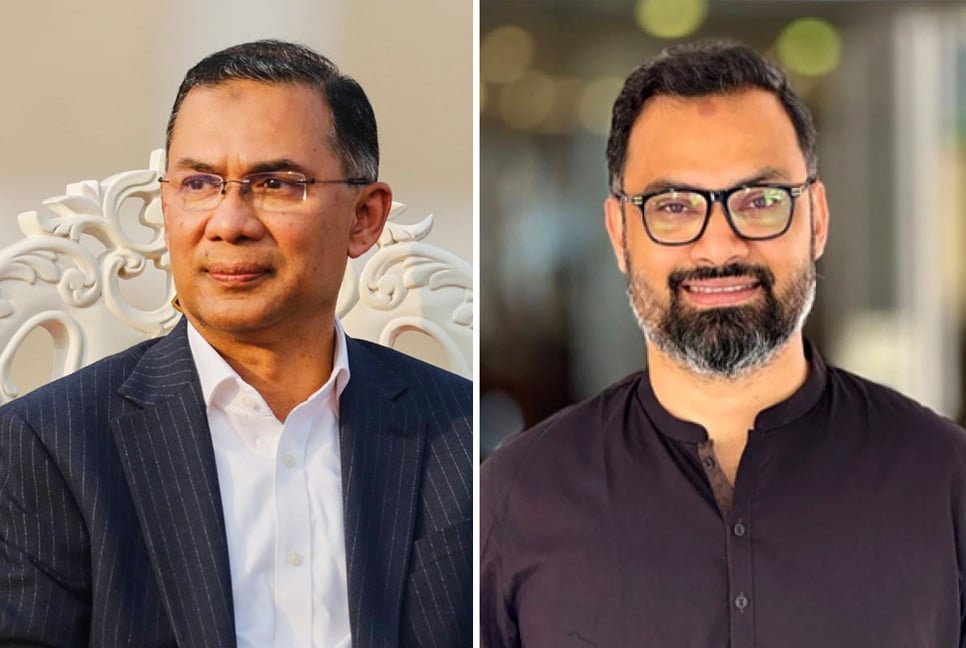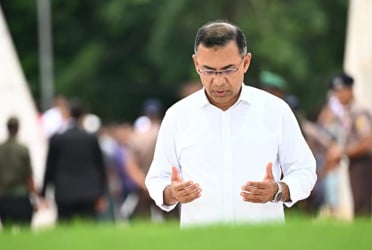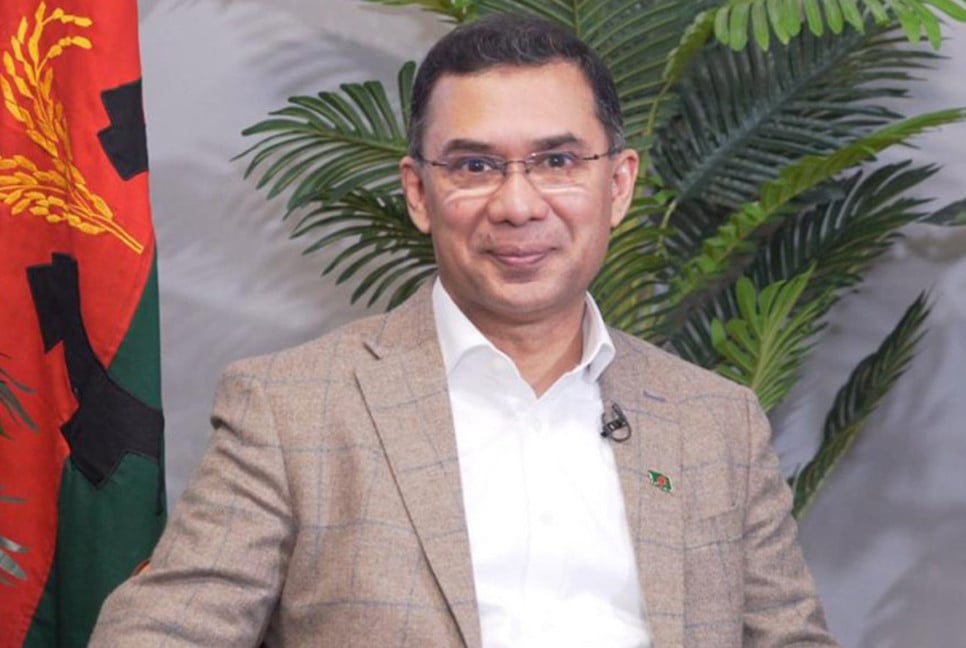
In Bangladesh’s political landscape, some names are more than individuals; they are living documents of history, symbols of democratic struggle, and embodiments of the hopes and sorrows that reside in the hearts of millions. Tarique Rahman is one such name. After 18 long years marked by waiting, yearning, resentment and expectation, the moment of his return to the homeland is finally drawing near. Tarique Rahman’s return to Bangladesh on 25 December is not merely a personal or party matter; it is an emotionally charged and profoundly significant chapter in the country’s political history.
News of the return of Bangladesh Nationalist Party (BNP) Acting Chairman Tarique Rahman, currently based in London, has triggered waves of joy among party leaders and activists across the country. The leader around whom movements, expectations and struggles have long revolved is finally returning in person to the soil of his homeland. Party members believe that his return will further consolidate the BNP’s organisational strength and inject fresh momentum into the electoral arena ahead of the 13th national parliamentary election.
Tarique Rahman was born into a historic political family. His father, the martyred President Ziaur Rahman, was the proclaimer of Bangladesh’s independence and the founder of the BNP. His mother, Begum Khaleda Zia, is a three-time prime minister and a towering political figure. Yet Tarique Rahman did not emerge as a leader merely by inheritance; every step of his political journey was earned through experience, struggle and organisational skill.
His formal political career began in 1989 as a primary member of the BNP. Following the party’s assumption of power in 1991, he gained practical experience in state governance by working closely alongside his mother. His organisational role behind the BNP’s historic victory in the 2001 general election received wide recognition within political circles. Many remarked at the time that “the shadow of Shaheed Ziaur Rahman is clearly visible in Tarique Rahman.” This rise, however, eventually made him a prime target of political conspiracy.
During the army-backed government that followed the events of 1/11 in 2007, Tarique Rahman was arrested in numerous controversial and politically questionable cases. Under the guise of remand, he was subjected to unspeakable inhumane torture. Severe injuries to his spine, ribs and knees left him on the brink of permanent disability. During the same period, his mother Begum Khaleda Zia and his younger brother Arafat Rahman Koko were also arrested—despite Koko having no involvement in politics. His arrest was widely viewed as an act of political vengeance. Koko later died prematurely in exile, plunging the Zia family into profound grief.
When Tarique Rahman’s health deteriorated to a life-threatening level following prolonged imprisonment and torture, he was sent to London in 2008 for advanced medical treatment under a court order. That journey, however, marked not merely a medical transfer but the beginning of a long separation from his homeland. Leaving behind his beloved country, his ailing mother, his younger brother, family members, comrades and the love of millions, he entered a lonely life in exile. Though described as exile in name, the following 18 years were, in reality, a silent and brutal banishment marked by pain, sorrow and uncertainty.
Despite being abroad, Tarique Rahman never detached himself from politics. Through modern technology—virtual meetings, video conferences and direct instructions—he kept the BNP united amid relentless conspiracies. As his mother’s health declined, he shouldered party responsibilities with even greater resolve. From 2009 to 2024, his leadership was decisive in the BNP’s movements, organisation and resistance against authoritarian rule. Political analysts also credit his foresight and strategic decisions as playing an important role behind the mass uprising of 2024.
Beyond politics, Tarique Rahman is known as a humane individual. He has quietly provided medical and financial assistance to the underprivileged, supported students’ education, stood beside families of martyrs and victims, fed stray animals and ensured treatment for injured animals and birds. Through “Amra BNP Paribar”, humanitarian work has become an inseparable part of his political philosophy. He has repeatedly said that politics is not merely about power, but about serving humanity.
At present, his beloved mother, Begum Khaleda Zia, is critically ill and undergoing treatment. Tarique Rahman has often expressed the pain of being unable to remain by her side during this time. However, visa complications, political realities and, above all, security risks long stood in the way of his return. Bangladesh’s political history is marked by brutal assassinations of state leaders and popular figures—from Shaheed President Ziaur Rahman to Indira Gandhi, Rajiv Gandhi and Benazir Bhutto—demonstrating that Tarique Rahman’s security risk is not merely personal, but national and international in dimension.
More recently, the country’s law and order situation has reached an alarming level. On 12 December, the day after the announcement of the election schedule, Sharif Osman bin Hadi, an independent candidate for the Dhaka-8 constituency, was shot in the head in broad daylight in Dhaka in an apparent attempt to assassinate him. Despite being taken to Singapore for advanced treatment, he died on 18 December. On the same day, the body of Jannatara Rumi, joint coordinator of the NCP Dhaka South (Dhanmondi) unit, was recovered from the Jigatala area under Hazaribagh police station.
Following Hadi’s killing, a climate of fear and insecurity has intensified nationwide. Intelligence reports suggest attempts are being made to destabilise law and order around the election, with allegations that leaders and activists of the ousted Awami League are actively involved in violent conspiracies. Intelligence sources have also revealed the existence of a so-called “hit list” containing the names of 50 to 60 political figures, including leaders from the BNP, NCP and other parties.
Violence has spread across the country. On 5 November, armed attackers targeted the election campaign of Ershad Ullah, BNP-nominated candidate for Chattogram-8 and convener of the city BNP, in the Bayezid Bostami area, leaving three people shot, including Ershad Ullah, while Sarwar Hossain Babla died on the spot. On 30 November, two people were shot dead in public at the Khulna court premises. On 17 November, the killing of a Jubo Dal leader inside a shop in Mirpur sent shockwaves across the nation. These are not isolated incidents, but reflections of a deeply troubling trend.
Headlines paint a grim picture. On 15 July 2025, Bangladesh Today reported: “3,554 murders, 4,105 rapes, 819 abductions in 10 months.” A Somoy TV report on 15 October stated that “an average of 11 people were killed every day over the past eight months.” Such reports underscore that the country is increasingly trapped in a vicious cycle of violence and insecurity. Political violence, mob justice, illegal arms and factional clashes have rendered the security of high-profile leaders extremely precarious, compounded by fears of domestic and foreign conspiracies.
Tarique Rahman is the political linchpin of the BNP. At this moment, there is no alternative leader of his stature capable of steering the party. Any harm to him would not merely damage a political party but pose a grave threat to the country’s democratic future. Ensuring his maximum security, therefore, is not a matter of goodwill but an urgent necessity.
Defying fear and uncertainty, Tarique Rahman is returning home on 25 December as a beacon of public trust. It is easy to foresee unprecedented scenes in the capital, with vast crowds lining the route from the airport to Gulshan, filling the streets with emotion, expectation and love. Tragically, this very sea of people could also become his greatest security risk. History teaches us that assassins seek opportunity amid massive crowds. No one can guarantee that an attempt will not be made on his life.
The reality is harsh: the risk to his life is serious and immediate. In this context, his security is not a ceremonial or political courtesy—it is the state’s highest responsibility. Without a strict security cordon, intensive intelligence surveillance and pre-emptive measures throughout his journey from the airport to his residence, not a single step should be taken. At the same time, party leaders and supporters must demonstrate the utmost discipline and restraint. Uncontrolled crowds formed in the name of love could prove to be his greatest danger.
A single misjudgement, a moment’s negligence or the slightest lapse could invite irreparable disaster. History has repeatedly warned that complacency on security is never forgivable. Tarique Rahman’s return must carry only messages of hope and celebration, not sorrow and tears. This solemn responsibility must be fulfilled by the government, state institutions and all concerned with the highest degree of professionalism, restraint and wisdom.
After an 18-year wait, Tarique Rahman’s return will undoubtedly usher in a new chapter of hope in Bangladesh’s politics. It is not merely the homecoming of a leader—it is a historic turning point. At this moment, what is required is not recklessness, but the fullest application of caution, restraint and statecraft. May Tarique Rahman’s return become a beacon of hope for the nation—this is the shared aspiration of millions today.
The writer is a senior journalist, convener of “Amra BNP Paribar”, and a member of the BNP Media Cell.