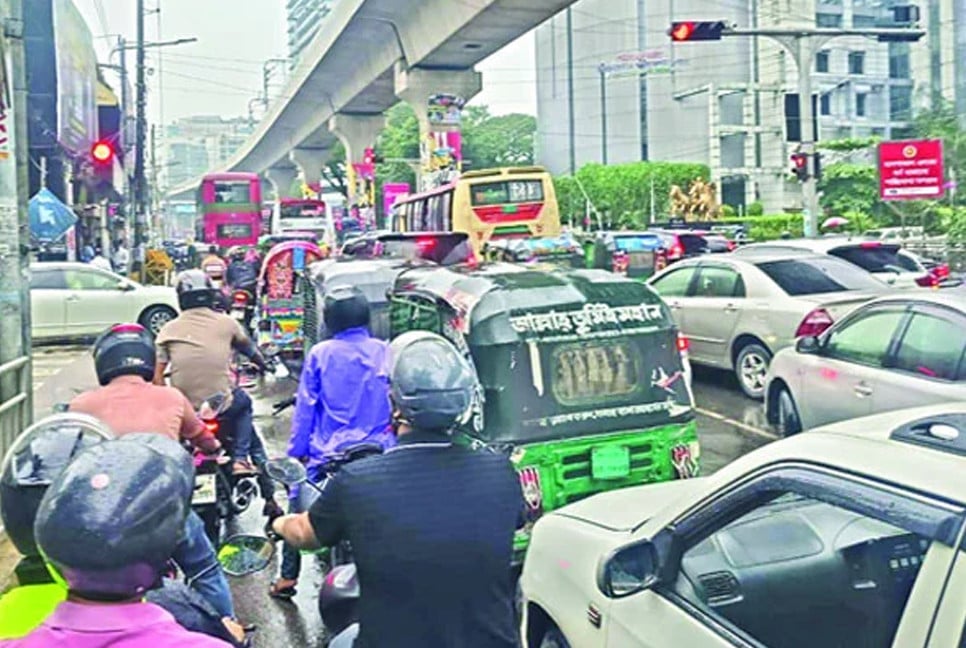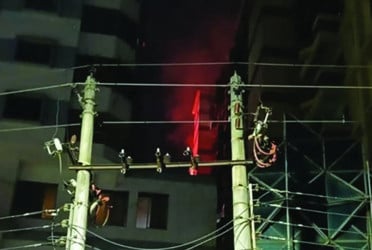
Because the revolutionaries failed to do what was necessary after the success of the July Revolution, chaos has now spread across the country. Centering on the killing of Sharif Osman Hadi—one of the leaders of the revolution and spokesperson of the Inqilab Moncho—new incidents of arson, vandalism, and looting are taking place in different parts of the country. The unity and discipline that existed among the revolutionaries during the movement and up to its success are no longer present.
Despite thousands of allegations against India—accusing it of sheltering the ousted former prime minister, nearly the entire leadership of her party, former ministers, almost all Awami League members of the dissolved 12th National Parliament, and beneficiaries of the former regime, as well as of fueling instability in Bangladesh—issuing threats from a position of responsibility to break apart a part of another country is politically and diplomatically unethical and runs counter to the spirit of the revolution.
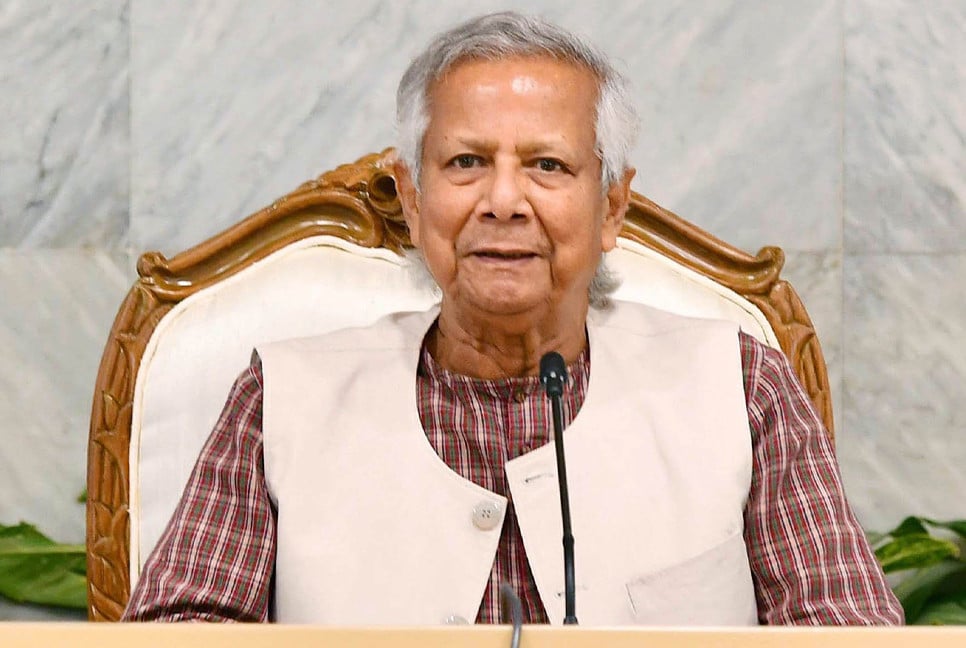
India’s ruling BJP government, and even the opposition Congress, remain deeply distressed over the fall of Sheikh Hasina’s government. Nearly a year and a half has passed since Sheikh Hasina fled the country. Meanwhile, a special tribunal has sentenced her and her former Home Minister Asaduzzaman Khan Kamal—who is sheltered in India—to death in a case involving crimes against humanity. Although the Bangladesh government has repeatedly requested Sheikh Hasina’s extradition, India’s refusal has created ongoing tension between the BJP government and the interim government led by Dr Yunus.
In such a situation, statements by Hasnat Abdullah, a leader of the National Citizen Party (NCP) formed by leaders of the July Revolution, about breaking up India, as well as threats from others to disrupt the security of Indian diplomats stationed in Bangladesh, effectively mean pushing the country toward danger. India has already announced the closure of two of its visa centers in Bangladesh.
If the current situation had emerged immediately after August 5, 2024, and lasted for a few days, it would have been consistent with post-revolutionary conditions seen in many countries around the world. The revolution began with a shared goal. What is happening now, however, is the reaction of angry youths to the murder of Sharif Osman Hadi—one of the revolution’s key leaders and a pillar of courage for the revolutionaries.
To believe that an ominous party like the Awami League—one that worships individuals rather than the country or its people, and considers all crimes, even the elimination of opponents, justified—has been sitting idle for the past year and a half would be naïve. Although its leaders fled to India, its activists did not vanish into thin air. Countless Awami League and banned Chhatra League activists are lying in wait among us, hiding in alleys and by-lanes, ready to create chaos. They targeted Hadi while being physically close to him.
They also harbor deep affection for India, which remains a safe haven for them in any crisis. India’s borders are open to them; they cross without permission or visas. While India’s Border Security Force (BSF) is notorious for shooting Bangladeshi citizens accused of illegal border crossings, it does not treat Awami League leaders and activists crossing without visas as illegal, nor does it fire upon them.
Osman Hadi spoke out against Indian hegemony. He spoke against India-loving Bangladeshi intellectuals patronized by the Awami League. Therefore, he was an enemy of India—and for the same reason, an enemy of the Awami League. He was an educated young man, an exceptional orator skilled in logical argument. Audiences listened to him spellbound. Neither the Awami League nor India considered him safe. As a result, this fearless young leader had to leave this world prematurely under the combined blows of the Awami League and India.
They knew exactly what the reaction would be to killing a fiery leader like Osman Hadi. Everything unfolded according to their plan. Youths took to the streets, vandalized property, and set fires. It is hard to believe, however, that Awami League thugs—deprived of power, extortion rackets, and privileges for the past year and a half—did not incite or participate in this chaos. Provocation from Delhi was already there.
A year and a half after the revolution’s success, two new symptoms of chaos have emerged: attacks, vandalism, and arson at the offices of the newspapers Prothom Alo and The Daily Star, causing extensive damage, and similar attacks on the offices of the cultural organizations Udichi and Chhayanaut. Newspaper offices in Dhaka have been attacked before. After August 5, 2024, various media houses were attacked and set on fire. Even earlier, the offices of Amar Desh and Sangram were attacked, and the editors of both dailies were physically assaulted and arrested.
The Awami League’s love for India has never been hidden. Yet many find it puzzling why the party was so deeply dissatisfied with Prothom Alo and The Daily Star, despite their perceived pro-India stance. On April 10, 2023, while serving her third consecutive term as prime minister, Sheikh Hasina named Prothom Alo in parliament and said:
“A well-known, very popular newspaper—its name is Prothom Alo. But it lives in darkness. Prothom Alo is an enemy of the Awami League, an enemy of democracy, an enemy of the people of this country. I say this with great sorrow: they never want this country to be stable.”
During Awami League rule, Prothom Alo and The Daily Star were deprived of government advertisements for long periods. Even so, the party never sent musclemen to attack their offices. Many political and religious organizations held human chains and chanted slogans in front of Prothom Alo’s office, but they never attacked it or harassed its journalists.
Even after the July Revolution, the two newspapers did not change their stance. Many angry people protested outside their offices. In one of Osman Hadi’s speeches from that time, he said:
“Those standing in front of Prothom Alo’s office—are we standing with them? We say no. If you can, create ten alternatives to Prothom Alo. What is your business standing in front of their office?”
Why, then, did such unprecedented attacks and arson occur this time at the offices of the two newspapers and at Udichi and Chhayanaut? The easy answer from the Awami League and its allied leftist groups is that the attackers were Jamaat-Shibir and extremist fundamentalists—wearing caps, long panjabis, beards, and chanting “Allahu Akbar.”
Those making such accusations conveniently forget that the Awami League itself has an “Awami Ulema League” and numerous affiliated organizations known for their sycophancy. Some groups that received various favors from Sheikh Hasina and even conferred upon her the title of “Mother of Qawmi” rarely appear on the streets without beards, caps, and panjabis. Law enforcement intelligence agencies would do well to consider their possible role in fueling protests that turned into attacks on newspaper and cultural organization offices following Osman Hadi’s murder.
After a revolution succeeds, entrusting the country’s governance to a loosely structured interim government—rather than forming a revolutionary government—led by a single individual described merely as “honest and internationally renowned” has proven increasingly inconsistent at every step. Two revolutionaries were initially included in this government; now not a single one remains. Not forming a revolutionary government as the fruit of the revolution effectively meant abandoning the revolution midway.
One of the great heroes of the French Revolution was a young man named Louis Antoine de Saint-Just. He was only 22 when the revolution began in 1789, and at 26 he became president of the French National Convention. A radical revolutionary, he famously said:
“Those who make half a revolution dig their own graves. To succeed, a revolution must eliminate its enemies. If enemies are forgiven and allowed to survive, they may one day become the cause of the revolutionaries’ deaths.”
The murder of Inqilab Mancha spokesperson Osman Hadi is the inevitable consequence of halting the July Revolution halfway and retreating from its revolutionary spirit. If revolutionaries fail to learn from Hadi’s killing, it is difficult to predict how many more Hadis will fall victim to assassins’ bullets. What is certain, however, is that the long-awaited national parliamentary election scheduled for February 12 will be placed at serious risk.
Author: US-based senior journalist.