On paper, Shamim’s salary should be enough to support his family. He earns Tk75,000 a month at a private firm in Dhaka. In reality, it no longer stretches far enough to cover the medicine keeping his mother alive.
Living in Uttara with his wife, two children and elderly mother, Shamim has been forced into debt to pay for pegfilgrastim, a vital supportive-care drug required monthly as part of his mother’s cancer treatment. When he first bought the medicine last year, it cost Tk8,000. Despite now being produced locally, the price has climbed sharply to Tk15,000.
With savings exhausted, he has begun borrowing to continue the treatment. “As long as I can go hungry, I will,” Shamim said, adding, “But how can you save a critically ill patient without medicine?”
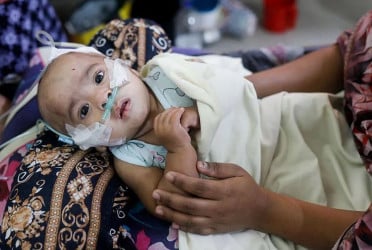
His struggle mirrors a growing national emergency. Across Bangladesh, soaring medicine prices are pushing thousands of families to the brink, forcing many patients to delay, abandon or never begin treatment.
According to the World Health Organization, around 167,256 people are diagnosed with cancer every year in Bangladesh, while 116,598 die annually.
Research indicates that many of those deaths occur because patients either never start treatment or discontinue it midway – largely due to financial hardship.
Just 15 years ago, Bangladesh relied almost entirely on imported cancer medicines, spending more than Tk1,000 crore annually.
Many patients simply could not afford treatment. Since then, local pharmaceutical companies have entered the market and now meet about 95 percent of domestic cancer drug demand.
Yet a critical question remains: if most cancer medicines are now produced locally – and enjoy tax and duty exemptions – why are prices still spiralling out of control?
Pegfilgrastim offers a stark example. In Bangladesh, the drug costs between Tk10,000 and Tk20,000 depending on the manufacturer. Internationally, the same medicine sells for Tk5,000 to Tk9,000. In neighbouring India, it costs around 1,500 rupees – just over Tk2,000.
Experts say the answer lies in weak government regulation and the dominance of powerful pharmaceutical syndicates.
Under existing law, the Directorate General of Drug Administration (DGDA), operating under the Ministry of Health, is responsible for approving drug prices and ensuring quality.
Selling medicines without DGDA approval is a punishable offence. Yet the market remains flooded with substandard drugs, while prices are effectively dictated by manufacturers.
For more than 15 years, the pharmaceutical market has reportedly been controlled by a syndicate led by Salman F Rahman, widely known as “Darbes”.
Industry insiders say his word was final, with the DGDA and the health ministry operating under pressure. Arbitrary price hikes – often without notifying regulators – became routine.
Research shows that medicine prices in Bangladesh have increased at least threefold over the past five years.
After the fall of the Awami League, hopes were raised that this grip would loosen. Instead, over the past 18 months, prices of more than two dozen medicines, including antibiotics, gastric drugs and diabetes medicines, have risen further, in some cases by as much as 110 percent.
Anaflex Max-500, used for arthritis, now sells at Tk21 per tablet, up from Tk10. Marvan 100 mg, a painkiller for toothache, has risen from Tk400 to Tk700 for a box of 10 strips. Famotac 20 mg has climbed from Tk25 to Tk45 per strip.
The box price of Doxoma, used for asthma and respiratory conditions, has reportedly jumped nearly 60 percent to Tk400.
In India, Anaflex Max-500 sells for just 3 rupees per tablet. Public health experts say such disparities reflect unrestrained profit-taking by local manufacturers.
Consumers also complain of widespread overcharging above the Maximum Retail Price (MRP), with prices varying from pharmacy to pharmacy.
A bottle of 60 Milkcal tablets, printed at Tk600, has been found selling for Tk5-10 more in many neighbourhood pharmacies across Dhaka, while some online platforms list it for Tk550.
Brand-wise price variation further adds to consumer confusion. Gastric medicines dominate the market: data from U.S.-based analytics firm IMS Health show that five of Bangladesh’s top ten best-selling drugs are for gastric problems.
Sergel tops the list, with sales revenue of Tk918 crore in the first nine months of 2024.
A 20 mg capsule sells for Tk7. Comparable alternatives range from Tk3.50 to Tk8 per capsule, depending on the brand.
Manufacturers blame rising raw material costs, higher operating expenses and dollar price volatility. Public health experts, however, argue that such claims warrant close scrutiny, given Bangladesh’s WTO exemptions on raw materials and intellectual property.
In August, the government announced plans to fix prices for 260 essential medicines to rein in the market. The decision, however, remains unimplemented.
According to IQVIA, Tk44 out of every Tk100 spent on healthcare in Bangladesh goes to medicines – nearly three times the global average.
The 2022 Household Income and Expenditure Survey found that around 6.1 million people were pushed below the poverty line due to high medicine costs.
For families like Shamim’s, those figures are not statistics – they are a daily fight for survival.
Bd-pratidin English/TR