A new phase of strain has emerged in Bangladesh-India relations. For the past few days, diplomatic tension has been ongoing between the two countries. Analysts view the summoning of the high commissioners of both nations within a span of two days as an indication of renewed tension in Dhaka-Delhi relations.
Last Sunday, when Bangladesh’s Ministry of Foreign Affairs summoned Indian High Commissioner Pranay Verma in Dhaka, the situation was not mirrored in the same manner when Bangladesh’s High Commissioner to India M Riaz Hamidullah was summoned in Delhi. Pranay Verma had been informed a day in advance about the summons. In contrast, on Wednesday morning, Bangladesh’s High Commission received a phone call, and within an hour and a half, Riaz Hamidullah was summoned to India’s Ministry of External Affairs at Jawaharlal Nehru Bhavan in Delhi.
Tensions between Bangladesh and India have continued for the past 16 months. In recent days – especially after the announcement of the schedule for the 13th National Parliamentary Election on 11 December – new dimensions have been added to the relationship. Following the announcement, statements and remarks opposing the interim government and the election were circulated by Sheikh Hasina and the Awami League.
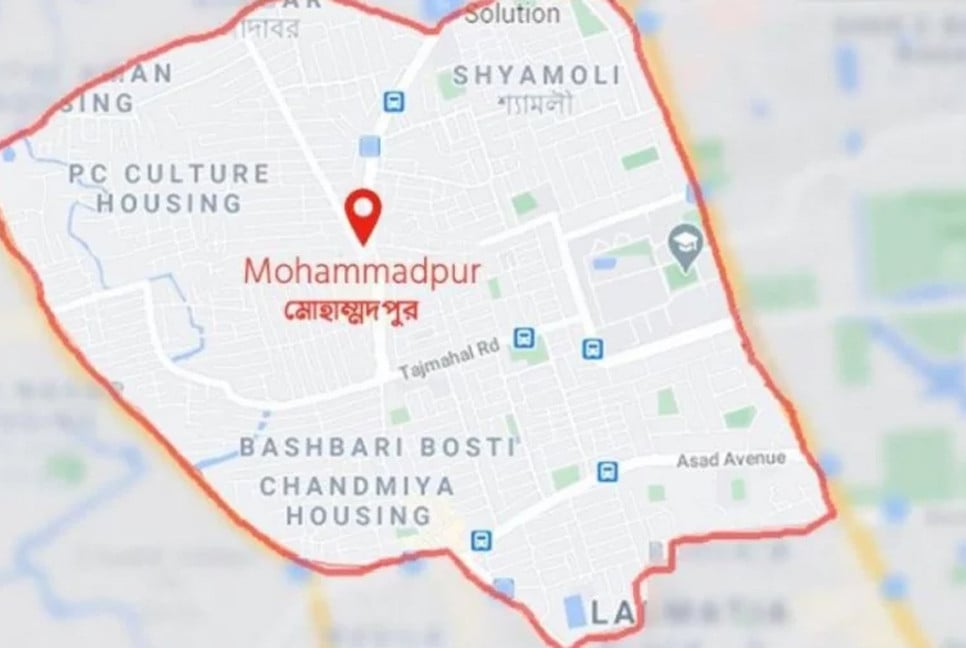
On the other hand, on 12 December, the day after the election schedule was announced, Sharif Osman bin Hadi – convener of the Inqilab Mancha, a supporter of the July mass uprising, and a prospective candidate for the Dhaka-8 constituency – was shot at with intent to kill. He is currently in critical condition and receiving treatment at a hospital in Singapore. There is discussion that those involved in the attempt on his life fled to India.
In this context, on 14 December, the Ministry of Foreign Affairs summoned Indian High Commissioner Pranay Verma. He was informed that Dhaka wants an immediate end to anti-Bangladesh activities by ousted prime minister Sheikh Hasina, who has fled to India. Bangladesh also called for the arrest and repatriation of suspects involved in the attempted murder of Hadi if they had entered India.
Following the summons, a statement from India’s Ministry of External Affairs said that India never allows its territory to be used for activities contrary to the interests of the friendly people of Bangladesh. India reiterated its consistent position in favor of holding free, fair, inclusive, credible, and peaceful elections in Bangladesh. India also expressed its expectation that Bangladesh’s interim government would take all necessary measures, including ensuring internal law and order, to facilitate peaceful elections.
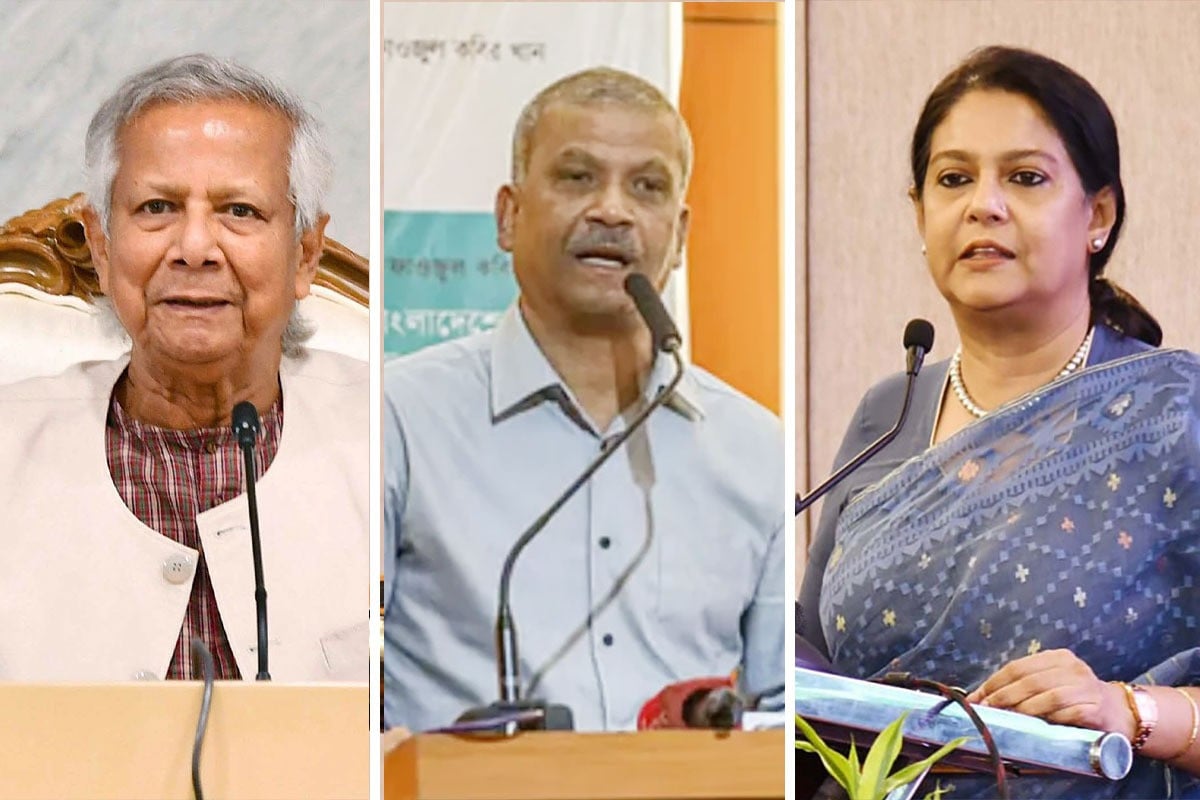
Are these recent developments pushing the relationship between the two countries into a new phase? Responding to this question, Foreign Affairs Adviser Touhid Hossain said, “From the very beginning, we have said that we want a good working relationship. It’s not something that will happen just because we want it. Both sides have to make efforts to move the relationship forward. I think perhaps both sides have not progressed enough, which is why the tension has remained.”
Touhid Hossain further said, “In the latest statement (from India), we have been advised. I don’t think there is any need for that. We do not seek advice from our neighbours on how elections should be held in Bangladesh.”
The foreign affairs adviser added that the interim government has been clearly stating its intention to hold elections of a “very high standard,” creating an environment in which people feel encouraged to vote – an environment that did not exist over the past 15 years.
India is Bangladesh’s largest neighbour. Bangladesh and India share a 4,156.56-kilometre (2,582-mile) international border, the fifth-longest land border in the world. The relationship between the two countries has a long history, marked by both friendship and tension. However, analysts believe that relations are currently at their coldest point in recent times.
Such deterioration is good for no one. The current situation will harm both countries. Bangladesh–India relations are mutually interdependent. Just as Bangladesh depends on India in many ways, India also depends on Bangladesh in various respects. Instability in India affects Bangladesh, and internal problems in Bangladesh also have repercussions in India. For this reason, a relationship based on mutual respect is essential.
One thing must always be remembered: everything can be changed, but neighbours cannot. No country can achieve its desired development by being hostile toward its neighbours.
If we look around the world, we see that countries recognised as successful have maintained good relations with their neighbours. The United States and Canada, as well as Malaysia and Singapore, are prime examples. Conversely, many promising countries suffer due to their inability to maintain good relations with neighbours – the Russia-Ukraine conflict is the most recent example. Therefore, there is no alternative to good relations with neighbours. This applies equally to Bangladesh and India.
India’s assistance during Bangladesh’s Liberation War is undeniable. But India must remember that Bangladesh is an independent and sovereign state. India often adopts a “big brother” attitude toward its neighbours. It is frequently said that India does not enjoy good relations with any of its neighbours. As the largest country in the subcontinent, India is accused by many of harboring a hegemonic mindset. Many believe this domineering attitude is the root cause of tensions with neighbouring countries.
There are also allegations of Indian interference in the internal affairs of Bangladesh and other countries. India is accused of attempting to control the politics of neighbouring states. India must free itself from these accusations. Instead of authoritarian behavior, India should win the hearts of its neighbours through friendship. India must understand the changed realities of Bangladesh and grasp the sentiments of its people. Otherwise, Bangladesh–India relations will not improve.
At the same time, all segments of Bangladeshi society must act with restraint and responsibility. It must be remembered that the core principle of Bangladesh’s foreign policy is “friendship with all, malice toward none.” Responsible behavior in the face of all forms of provocation is essential. No statements should be made that could be construed as threats to the territorial integrity or sovereignty of another state.
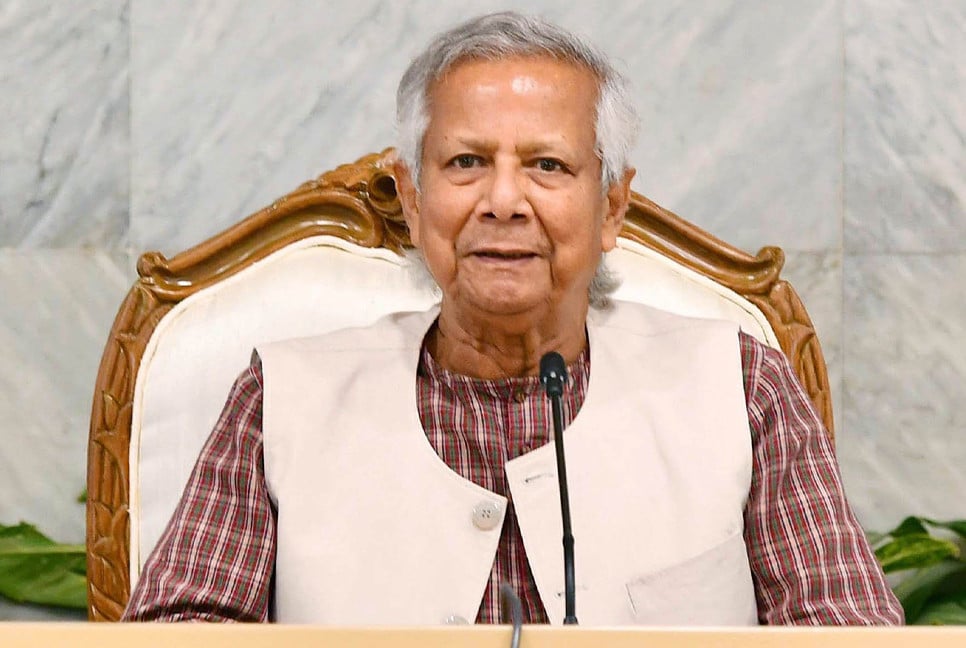
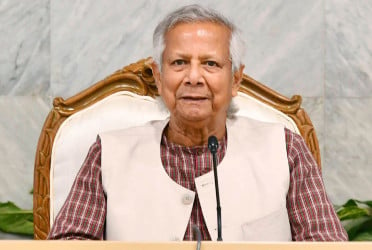
The chief adviser has consistently stated that Bangladesh stands for peace and is against violence. Bangladesh’s territory will never be a safe haven for separatists. We want to stand tall in the world with dignity and honor. Bangladesh was achieved through the blood of millions of martyrs. Bangladesh does not bow its head to anyone.
Audite Karim is a writer and playwright.